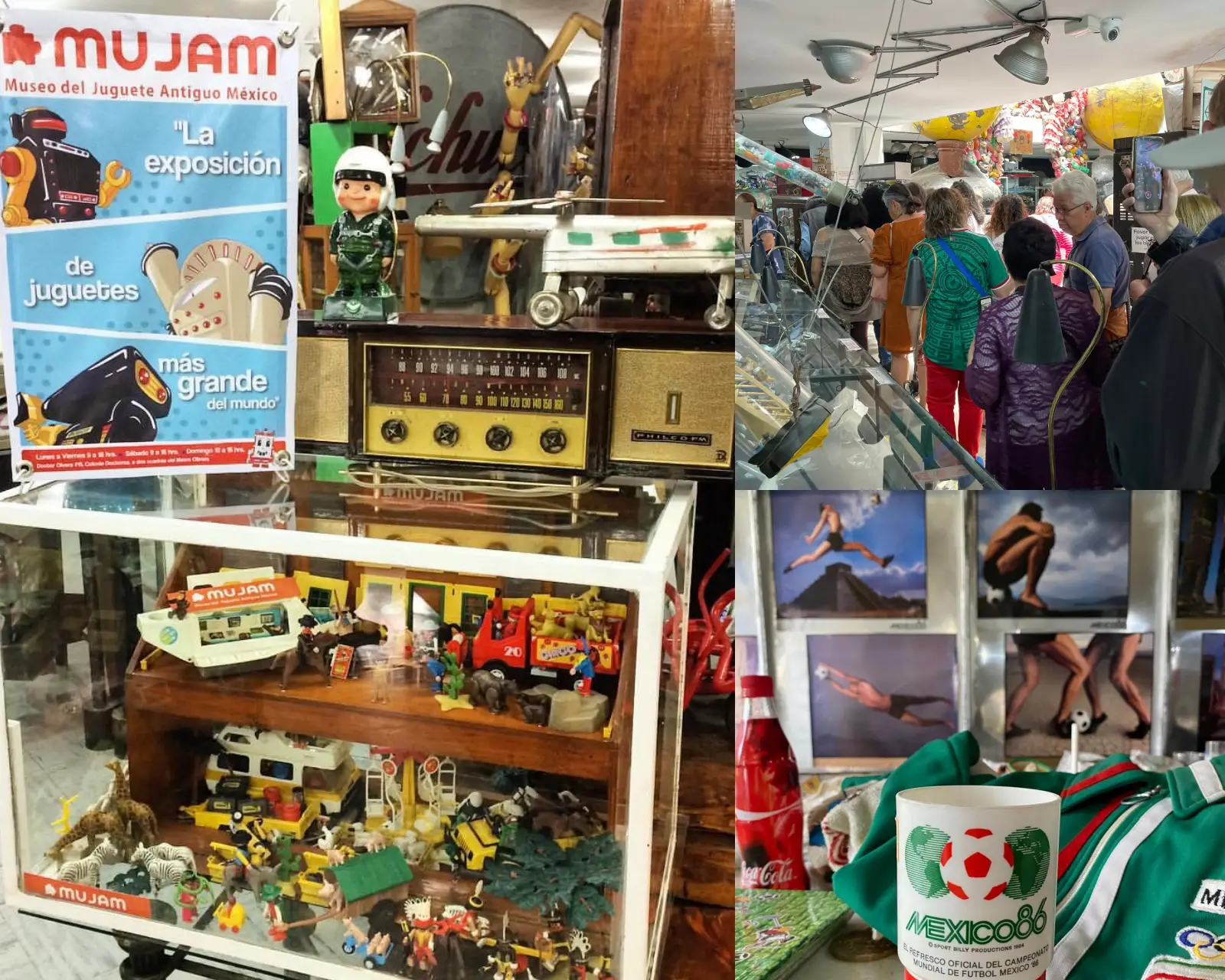
Mexico City’s Museo del Juguete Antiguo, known as MUJAM, has grown from a family home into one of the capital’s most unusual attractions.
Founded by the son of Japanese immigrants in the house where he grew up, the museum now draws visitors with a vast collection of toys and pop culture objects.
The museum contains 20,000 toys and is widely described as a toy wonderland. Its setting gives it a distinctive character, with displays packed into the spaces of the former family home, creating an experience that feels both personal and eccentric.
MUJAM has become a must-see stop for travellers looking for something beyond the city’s better-known museums and landmarks. The collection reflects decades of collecting and preserves toys as cultural objects rather than simple playthings.
Founded by the son of Japanese immigrants, the museum was built around the house he grew up in. That origin story helps explain why MUJAM feels intimate even as it houses such a large number of items.
Visitors encounter a wide range of toys from different eras, arranged in a way that encourages browsing rather than a quick walk-through. The museum’s appeal lies partly in its scale and partly in its sense of surprise, with each room offering a different mix of objects.
For Mexico City, MUJAM adds another layer to a destination already known for art, history and food. It offers a more playful alternative for travellers who want to explore the city through its everyday objects and memories.
The museum’s rise to popularity also reflects a broader travel trend, as visitors increasingly seek out venues with strong personal stories and unusual collections. In MUJAM’s case, the story begins at home and expands into a public attraction that has become part of the capital’s cultural landscape.
Although the museum’s subject is toys, its reach goes beyond nostalgia. It gives travellers a look at how collecting, family history and urban culture can come together in one place.
For many visitors, that mix is what makes MUJAM memorable. It is not only a museum of toys, but a record of the city’s appetite for creativity and reinvention.