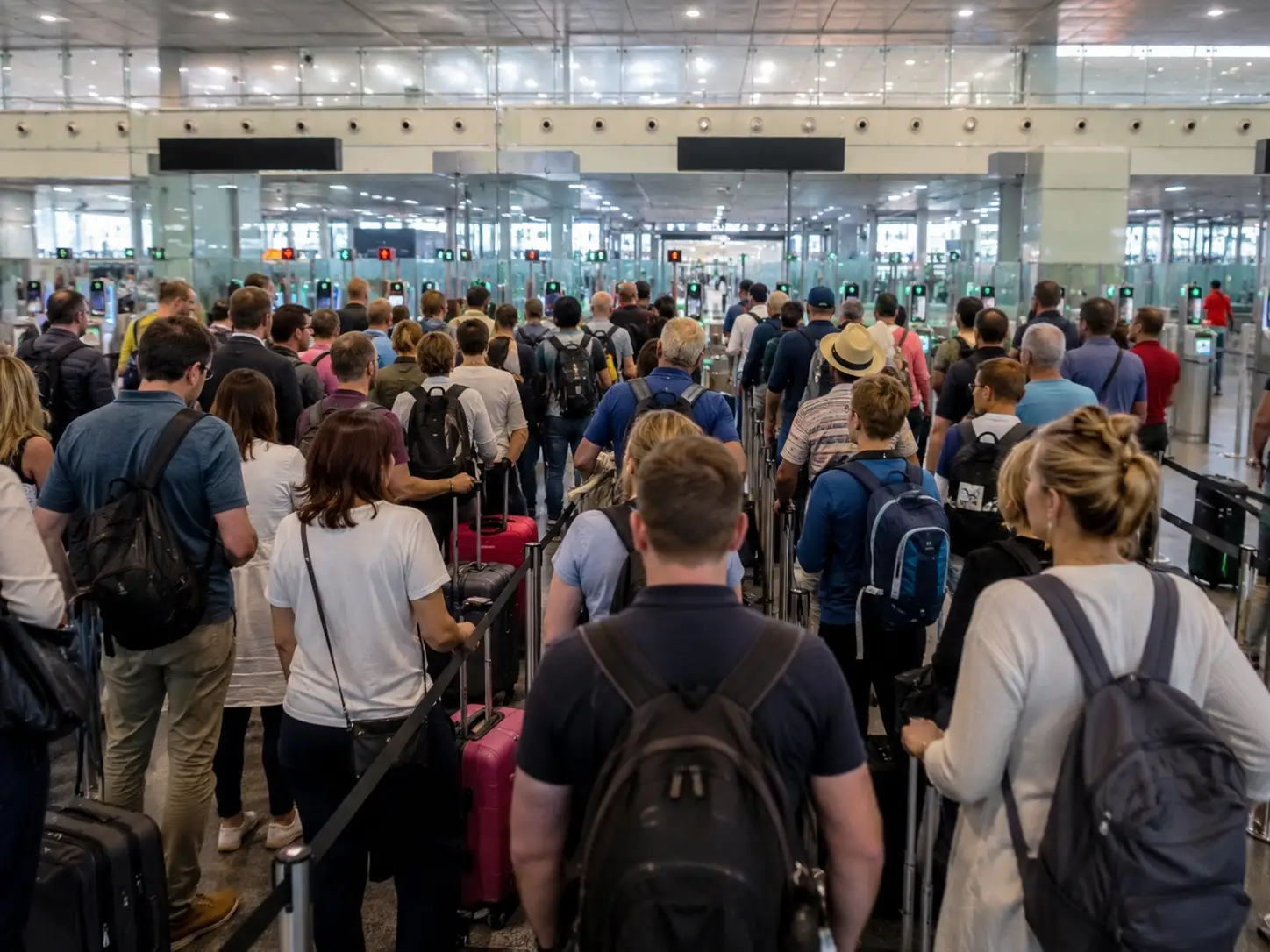
Portugal has begun temporarily suspending biometric border checks at airports during periods of heavy congestion, as pressure grows across Europe over the rollout of the European Union’s new Entry/Exit System (EES).
The move follows mounting complaints from airlines, airport operators and travellers about long queues, missed flights and overcrowded terminals caused by the new system, which requires non-EU passengers to register fingerprints and facial images when entering or leaving the Schengen Area.
Portugal’s Infrastructure Minister Miguel Pinto Luz said the government would allow border checks to be paused whenever airport operations or the country’s image risked being damaged by excessive delays.
Speaking in Coimbra, the minister said authorities were working with the European Commission and domestic agencies to improve the situation but admitted the system had created operational limits at airports.
“We cannot put at risk the service provided by airports or the image of the country,” he said, adding that controls would be suspended when congestion became unmanageable.
The new EES officially became fully operational across much of the Schengen zone in April 2026 after years of delays and technical setbacks. The system replaces manual passport stamping with digital records linked to biometric data, including fingerprints and facial scans.
British travellers have become one of the largest groups affected because UK citizens are now treated as non-EU nationals following Brexit. First-time travellers using the system must register in person at airport kiosks before passing through border control.
Airports in Lisbon, Porto and Faro have reported some of the longest queues since the rollout intensified this spring. Portuguese police temporarily suspended biometric data collection at several airports in April after passengers faced long waiting times during busy departure periods.
The pressure has been especially severe at Lisbon’s Humberto Delgado Airport, which was already struggling with capacity constraints before the EES launch. Portuguese authorities had previously delayed full implementation at Lisbon following reports of multi-hour queues and severe bottlenecks.
The latest measures place Portugal among a growing number of southern European tourism destinations attempting to soften the impact of the new border regime during the busy summer travel season.
Greece has already relaxed enforcement for some British tourists until at least September, while Italy has also faced calls to suspend or reduce checks at peak times. Airlines including Ryanair have urged governments across Europe to pause the system during summer months to avoid disruption.
Ryanair said passengers were being forced to wait at passport control for longer than the duration of some short-haul flights. The airline warned that families travelling during school holidays could face missed departures unless governments introduced more flexibility.
The Airports Council International Europe organisation has also warned that queues could become “unmanageable” during peak summer weeks unless airports are given wider powers to temporarily suspend registration procedures.
The European Commission has defended the system, arguing that it strengthens border security, improves monitoring of visa overstays and helps detect identity fraud. Officials say the EES has already identified thousands of overstayers and potential security concerns since its phased introduction began.
However, aviation groups argue that many airports were not fully prepared for the scale of the operational changes required. Some airports have reported registration times lasting several minutes per passenger, far longer than early EU estimates.
The system applies to travellers from countries outside the European Union who do not require visas for short stays, including visitors from the United Kingdom, the United States, Canada and Australia.
Children under 12 are exempt from fingerprint collection, although facial images are still required. Once passengers complete their first registration, future border crossings are expected to become faster because biometric information will already be stored in the system.
The EES is also considered a precursor to the European Travel Information and Authorisation System (ETIAS), a separate travel authorisation programme expected to launch later in 2026 for visa-exempt visitors travelling to Europe.
For now, Portugal’s decision highlights the growing tension between tighter border security and the realities of handling millions of summer tourists at some of Europe’s busiest holiday gateways.