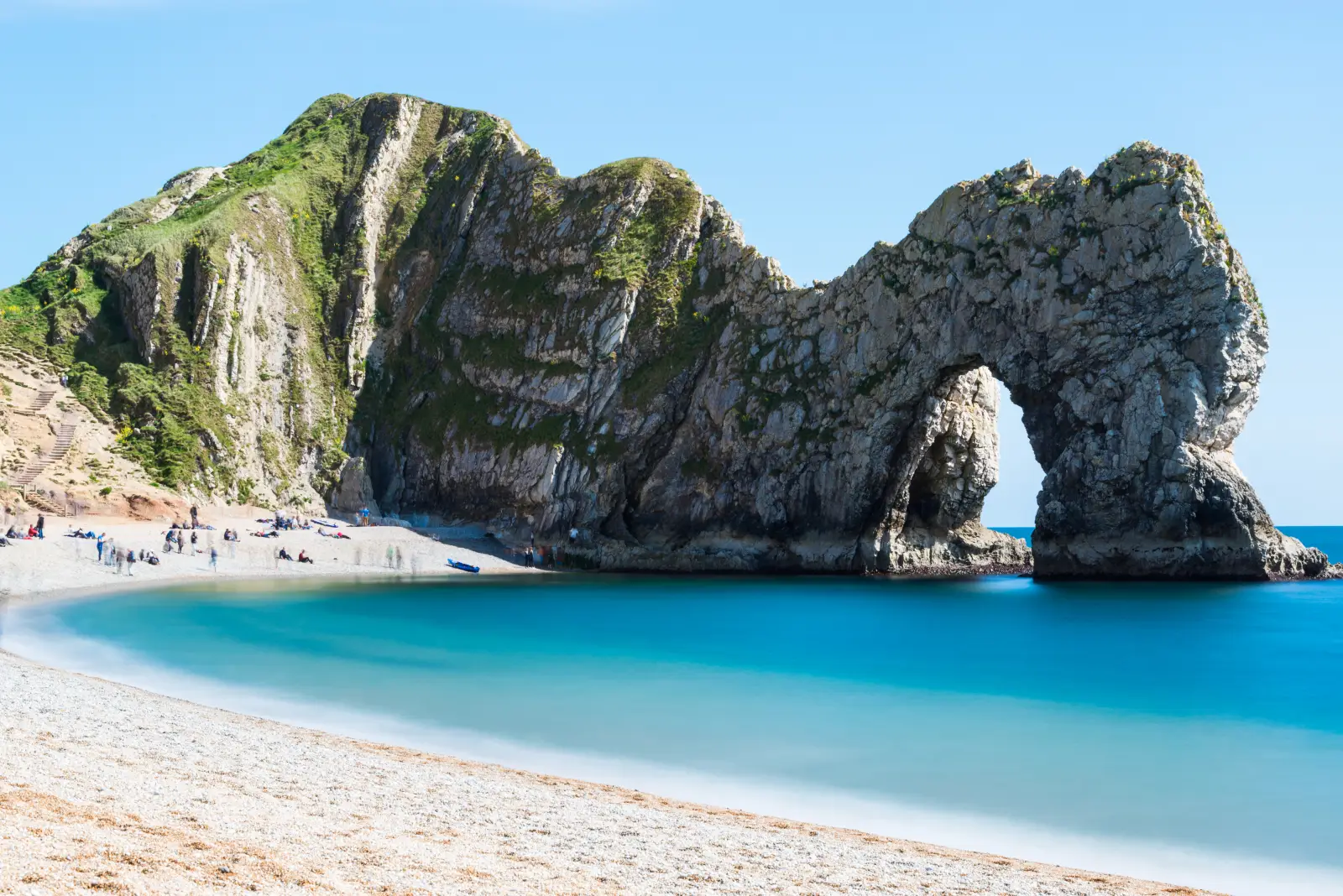
The coastal arch of Durdle Door in southern England has emerged as a major travel draw after appearing in the 2026 film Project Hail Mary, one of the year’s biggest global box office hits. The adaptation of Andy Weir’s novel, starring Ryan Gosling, has brought renewed attention to parts of the Jurassic Coast used in the film’s final scenes.
Although much of the science fiction story is set in space and filmed in studios, key outdoor sequences were shot on location in England. Among them, the limestone arch at Durdle Door and the nearby Man o’War Cove in Dorset feature prominently as the setting for the film’s closing moments.
The sites lie along the Jurassic Coast, a UNESCO World Heritage Site known for its geological significance and dramatic landscapes. Tourism operators and local authorities report increased interest from visitors keen to see the filming locations in person.
In the film’s final sequence, the character Ryland Grace, played by Gosling, arrives on an alien world. Rather than relying entirely on computer-generated imagery, filmmakers used the natural scenery of Dorset to create the extraterrestrial setting. The result blends real coastal features with visual effects to depict an otherworldly environment.
Durdle Door is one of the most recognisable landmarks on England’s south coast. The limestone arch extends from a headland connected to the mainland by a narrow strip of land. It has been shaped over thousands of years by wave erosion, which carved a hole through the rock to form the arch seen today.
The formation is widely regarded as one of the UK’s most striking geological features. Its distinctive shape and coastal setting have long made it a popular destination for walkers, photographers and holidaymakers.
Just to the east lies Man o’War Cove, a sheltered bay framed by steep cliffs. The cove is accessible via a staircase descending from the cliff top and offers sweeping views of the surrounding coastline. Visitors can observe the arch from the beach or from elevated vantage points along the cliffs.
The area’s visual appeal has made it a frequent filming location, but Project Hail Mary is expected to bring a new wave of international attention. Travel experts say film tourism continues to influence destination choices, particularly when high-profile productions showcase natural landmarks.
Local infrastructure supports visitors to the site, with parking available within walking distance of both Durdle Door and Man o’War Cove. The accessibility makes it a feasible day trip for travellers exploring southern England, including those based in nearby towns such as Wareham, Weymouth or Bournemouth.
The Jurassic Coast stretches for 150 kilometres along the English Channel and is known for its cliffs, fossils and unique rock formations. It has been a UNESCO World Heritage Site since 2001, recognised for its record of 185 million years of Earth’s history.
Tourism bodies in the region are encouraging visitors to respect the natural environment, as increased footfall can put pressure on fragile coastal ecosystems. Authorities advise sticking to marked paths and following safety guidance near cliff edges.
The release of Project Hail Mary has added a new dimension to the area’s appeal, linking its natural heritage with contemporary cinema. For fans of the film, the Dorset coastline offers a rare opportunity to step into a landscape that doubles as a distant planet on screen.
With its combination of cinematic exposure and natural beauty, Durdle Door is likely to remain in the spotlight as both a geological landmark and a film tourism hotspot in the coming months.
Photo Credit: Konmac / Shutterstock.com