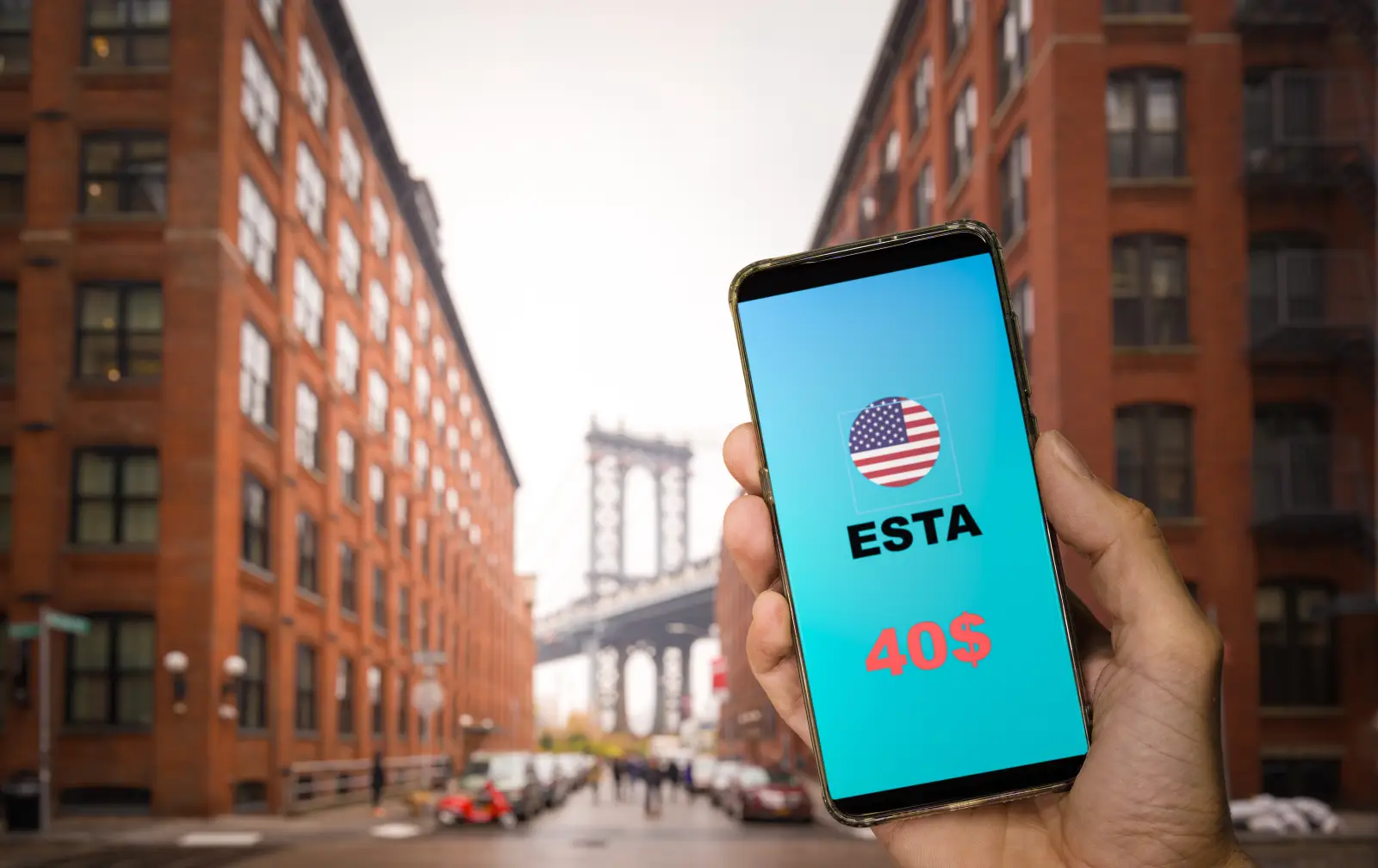
The United States government has confirmed that the cost of the Electronic System for Travel Authorization (ESTA) will double from $21 to $40 starting September 30.
The change affects travelers from all 42 countries participating in the Visa Waiver Program, including Spain, who use ESTA for short-term visits of up to 90 days for tourism, business, or transit.
The Department of Homeland Security (DHS) stated that the increase applies to all applications submitted on or after September 30, as well as pending applications that remain unpaid on that date. The new fee combines travel promotion charges, operational costs, and a recently added contribution to the U.S. General Treasury Fund.
How much will ESTA cost?
Until now, the ESTA fee has been $21 (around €18). Under the new pricing, the cost will rise to $40 (about €34). The fee is divided into three parts: a travel promotion charge, an operational fee, and a General Treasury Fund contribution. The latest adjustment increases the Treasury share by $13 while also raising operational expenses.
This marks one of the most significant changes to ESTA pricing since its introduction in 2009. DHS explained that the additional revenue will support border operations, travel promotion efforts, and general government funding needs.
When does the increase take effect?
The higher fee takes effect September 30. Any application filed before that date and fully paid will remain at the current $21 rate. However, applications that are still pending payment as of September 30 will automatically be subject to the $40 charge.
Authorities recommend that travelers planning U.S. trips in the coming months submit their ESTA applications early to secure the lower fee, noting that approvals are valid for two years from the date of issuance.
How do travelers apply for ESTA?
The ESTA application must be completed online through the official DHS website. The process requires travelers to upload a passport photo and a personal photo, and to fill in details such as name, nationality, date of birth, contact information, and accommodation address in the United States. Applicants must also provide information on health status and criminal records.
Payment can be made by credit card or PayPal, and approvals or denials are typically issued within 72 hours. Once granted, the ESTA is valid for two years, though each entry must still meet Visa Waiver Program requirements.
What are the requirements for ESTA?
To qualify, travelers must intend to stay in the United States for 90 days or less, for tourism, business, or as a stopover en route to another country. They must hold a valid passport from a Visa Waiver Program country, travel on an approved airline or ship, and have a confirmed return or onward ticket.
The trip may not terminate in a neighboring U.S. territory or adjacent islands unless the traveler is a resident of that area. Failure to meet these conditions can result in ESTA denial or refusal of entry at the border.
Why is ESTA important for travelers?
Since its introduction in 2009, ESTA has streamlined travel for millions of international visitors by replacing paper forms with an electronic pre-screening process. It has also become a key security measure for U.S. border authorities. While a full visa remains necessary for longer stays or other purposes, ESTA is the fastest and most cost-effective option for short visits under the Visa Waiver Program.
The doubling of the fee represents a major policy shift at a time when global tourism is rebounding. For individuals, the added cost may be manageable, but for families and groups, the increase could significantly raise travel expenses. Still, authorities emphasize that ESTA remains less costly and less time-consuming than applying for a traditional visa.
Photo Credit: Ivan Marc / Shutterstock.com