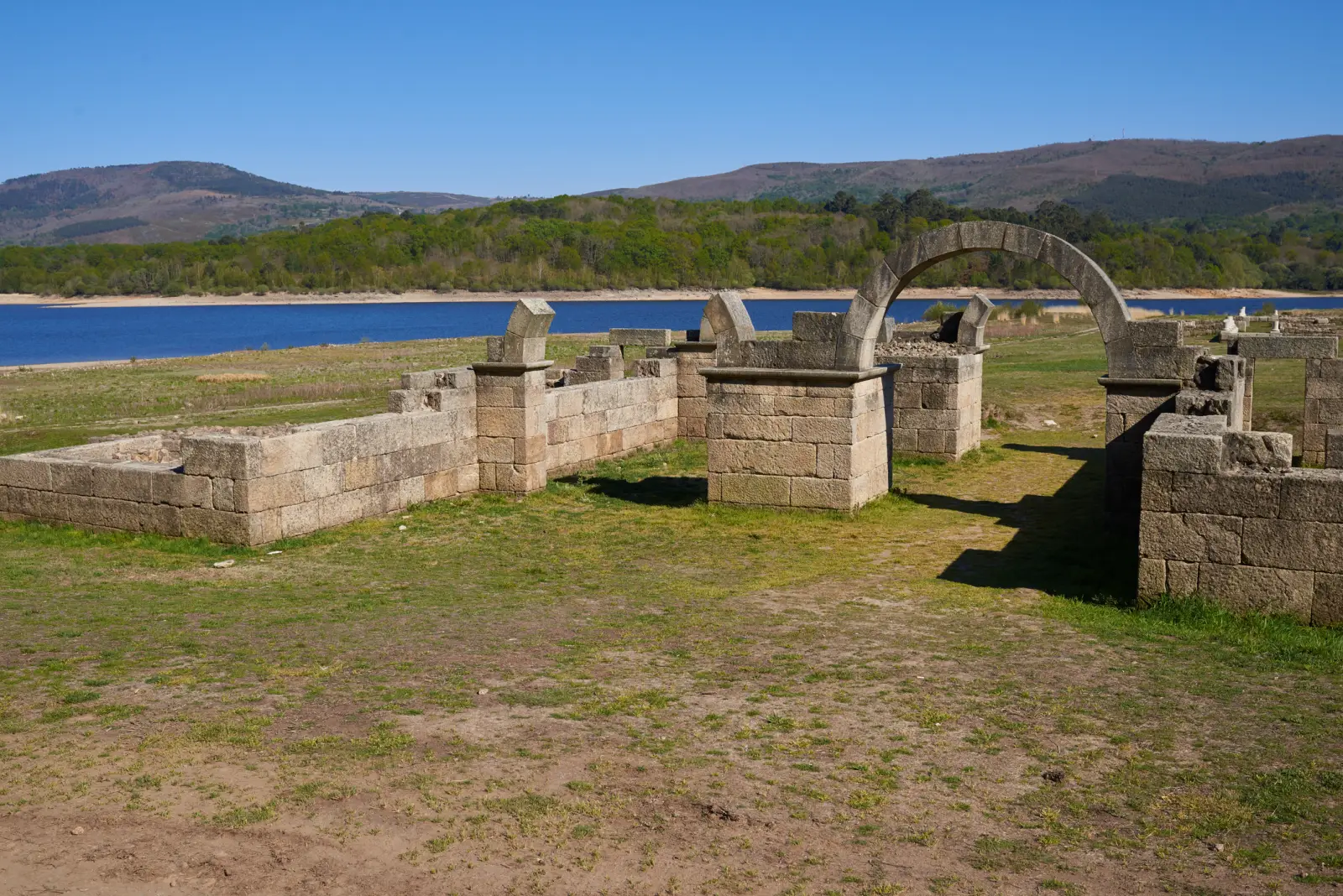
Forgotten Roman ruins are reappearing across Spain as a result of prolonged drought conditions, drawing curious visitors to ancient sites that have long been submerged under water.As reservoir levels plunge to historic lows, remnants of towns, military camps, bridges, and religious structures are once again visible—raising both interest and concern across the country.
The Rise of Drought Tourism in Spain
As temperatures soar and rainfall becomes increasingly scarce, water levels in Spain’s reservoirs have dropped dramatically. This has given rise to a new phenomenon: drought tourism. People are flocking to locations where the retreating waters have exposed ruins of once-buried settlements, churches, and Roman infrastructure.
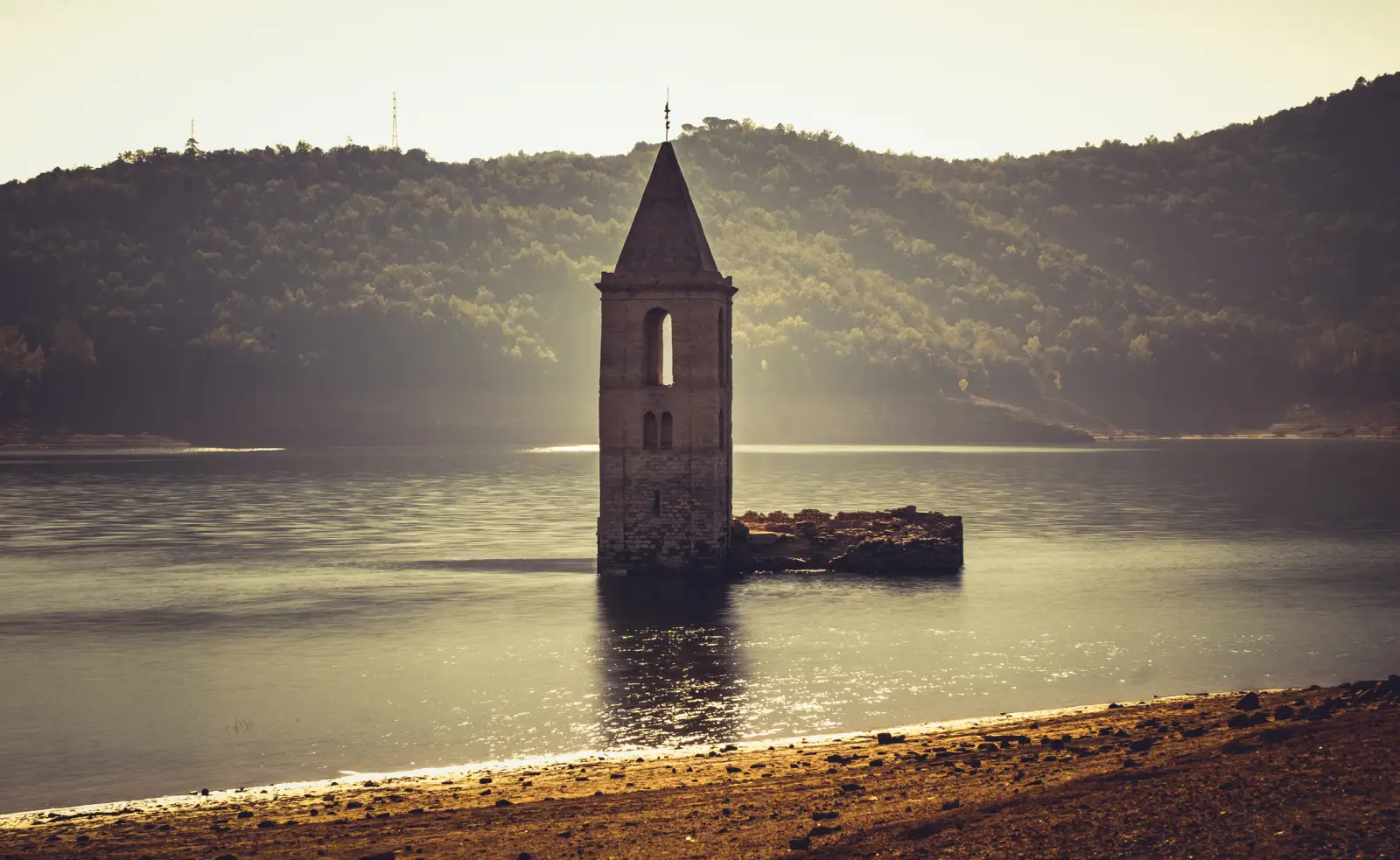
Among the most visited sites is the church of Sant Romà in the Sau reservoir, Catalonia. Submerged in 1962, the church now stands completely exposed, attracting a growing number of tourists eager to photograph the haunting spectacle. However, the mayor of Vilanova de Sau, Joan Riera, warns that this influx is not to be celebrated. “We don’t have to celebrate this influx of tourists because it’s the result of a natural disaster,” he said, citing traffic congestion, uncivil behavior, and increased waste as major concerns.
Galicia’s Hidden Treasures Resurface
In Galicia, the drought has uncovered a host of historic sites, prompting a surge in visits. In Bande, a town of just 1,500 residents, the Roman military camp of Aquis Querquennis—also known as “A Cidá”—has become a focal point. The archaeological site, which normally lies submerged, now offers a rare glimpse into Roman military life in the province of Ourense.
Nearby, the ruins of Aceredo have also reemerged in the Lindoso reservoir, on the Spanish-Portuguese border. The village was flooded in 1992 following a controversial agreement between the Franco and Salazar regimes. Today, the ghostly remains of Aceredo and neighboring villages like O Bao and A Reloeira are attracting tourists from both countries, fascinated by the eerie relics of a not-so-distant past.
Other Regions Reveal Centuries of History
The reappearance of submerged heritage isn’t limited to Galicia or Catalonia. Across Spain, similar stories are unfolding:
- Lugo: The “Galician Atlantis” of Portomarín on the Miño River now lets visitors stroll through ancient town streets normally hidden by water.
- Cantabria: The Ebro reservoir has revealed the ruins of the Noguerol Bridge and the ghostly “cathedral of fish.”
- Asturias: In Grandas de Salime, visitors walking the Primitive Way of St. James can now see the old slate walls of the submerged town of Salime.
- Córdoba: The Iberian site beneath the Sierra Boyera reservoir, normally inaccessible, is now being studied by researchers from the University of Granada.
- Andalusia: The Iznájar reservoir has exposed ancient Roman ruins and an Iberian necropolis, drawing interest through guided tours.
- Extremadura: The 14th-century La Mesta bridge in Villarta de los Montes is once again walkable, along with the famed Dolmen of Guadalperales in the Valdecañas reservoir.
- Aragon: The Mediano reservoir reveals the esconjuradero tower and submerged village structures when water levels drop.
- Castilla y León: In Soria, the Roman bridge of Vinuesa and the bell tower of La Muedra have reemerged. In Palencia, the medieval bridge of the long-gone town of Villanueva del Río can also be seen.
Balancing Tourism with Preservation
While many communities welcome the economic boost brought by increased tourism, others are struggling to manage the environmental and social impacts. In Vilanova de Sau, for instance, the local government has started restricting access to the reservoir in response to overwhelming crowds and waste management costs. According to Mayor Riera, recent weeks have seen more trash collected than in the entire rest of the year.
Alberto Zamorano | Dreamstime.com
This so-called “Instagram effect”—in which visually stunning but environmentally sensitive sites go viral on social media—has created a new layer of complexity for tourism management. Some regions, like Iznájar, are trying to take a proactive approach by organizing educational guided tours to inform visitors about the cultural significance of the ruins.
Meanwhile, other towns like Aguilar de Campoo in Palencia have not yet seen any business benefits despite the reemergence of medieval ruins. Officials there are taking a wait-and-see approach, balancing preservation with the potential for future tourism development.
A Glimpse Into the Past—But at What Cost?
From Roman camps to medieval bridges, these forgotten Roman ruins and other historic structures offer a rare, tangible connection to Spain’s past. Yet their reappearance also serves as a stark reminder of the present-day climate crisis. While drought tourism might offer short-term interest and economic gains, it also raises questions about sustainability, preservation, and the true cost of climate-driven tourism trends.
As Spain continues to grapple with increasingly extreme weather, these newly visible landmarks may soon become the subject of not just fascination—but regulation. The challenge now is to protect both the history being unearthed and the communities that stand in its shadow.
Main Photo credit: ID 185929798 | Aquis Querquennis ©
Rubén Carbó | Dreamstime.com