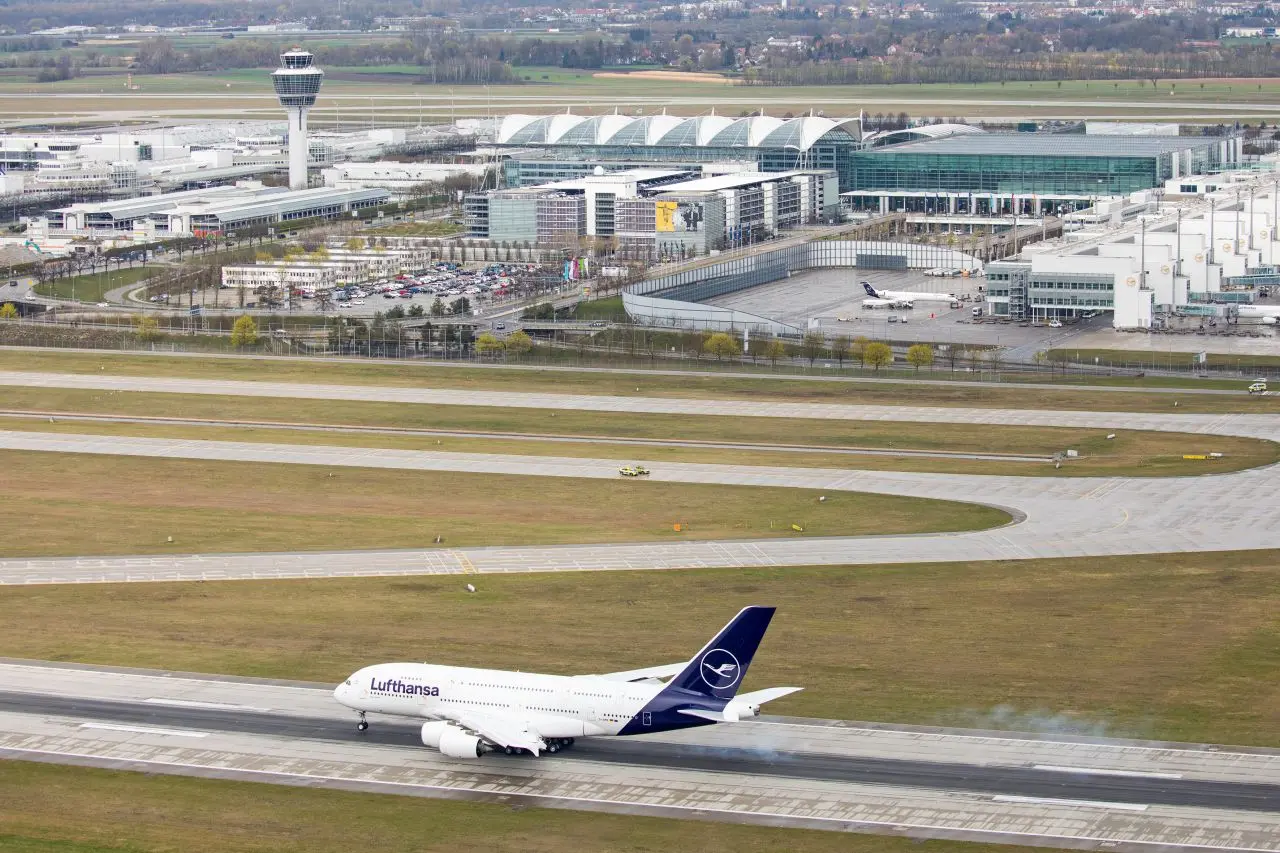
Unmanned cockpit incident forces Lufthansa plane to land in Madrid after a co-pilot suddenly became incapacitated mid-flight over the Iberian Peninsula.
The serious aviation event occurred on February 17, 2024, during a regularly scheduled Lufthansa flight from Frankfurt Airport in Germany to Seville Airport in Spain. The aircraft involved, an Airbus A321, was carrying 205 people on board—six crew members and 199 passengers—when the incident unfolded without passengers’ awareness.
Co-Pilot Left Alone in the Cockpit
The flight progressed normally until the aircraft crossed into Spanish airspace. At that moment, the captain briefly left the flight deck to use the forward lavatory, leaving the co-pilot alone in the cockpit. Approximately 10 minutes later, the captain attempted to return, using the standard re-entry procedure, but was unable to access the cockpit. Believing the access code may have been entered incorrectly or that the co-pilot was occupied, he made several additional attempts.
With no response from inside, and after three further entry attempts and an unanswered intercom call, the captain triggered the emergency door access protocol. Just before the security timer expired, the co-pilot managed to manually open the cockpit door, allowing the captain to enter. Upon entry, the captain found the co-pilot visibly unwell—pale, sweating, and moving erratically. He immediately took control of the aircraft and requested assistance from cabin crew.
Emergency Diversion to Madrid
The situation escalated quickly. A trained medical professional traveling as a passenger responded to assist the co-pilot, who was soon diagnosed with signs of a potential heart condition. The captain made the decision to divert the aircraft to Adolfo Suárez Madrid-Barajas Airport, where the plane landed safely approximately 20 minutes later. Once on the ground, the co-pilot was transported to a hospital for further evaluation and treatment.
The incident passed unnoticed by passengers until details were later released through an official report filed with Spain’s Ministry of Transport. Authorities have confirmed that the incapacitation was due to symptoms of a previously undiagnosed medical condition that had not been identified in prior medical examinations or by the pilot himself.
Safety Report Findings and Recommendations
The Civil Aviation Accident and Incident Investigation Commission launched an inquiry into the event and issued key findings. Among its conclusions, the report emphasized the risks of leaving a single pilot alone in the cockpit, even temporarily. It noted that having a second authorized person—typically a member of the cabin crew—present in the cockpit when one pilot exits could significantly reduce response time in emergency situations.
| Key Safety Concern | Investigation Recommendation |
|---|---|
| Solo pilot in cockpit | Place a second authorized person in cockpit during absences |
| Delayed response to incapacitation | Enhance crew training on emergency cockpit access |
| Undetected health condition | Review aeromedical screening protocols |
The commission is currently considering submitting a formal recommendation to the European Union Aviation Safety Agency (EASA) to review existing protocols. The goal is to strengthen operational safety and physical security procedures when one pilot temporarily exits the cockpit for physiological or operational reasons.
Impact on Airline Procedures and Crew Protocols
While the incident ended without injury to passengers or damage to the aircraft, it has raised broader questions within the aviation community about cockpit staffing and emergency preparedness. Airlines may soon face increased pressure to reevaluate in-flight policies, especially in long-haul or multi-crew operations, where the likelihood of one pilot leaving the cockpit is routine.
Although the Airbus A321 landed safely in Madrid and passengers reached their final destinations later, the event serves as a sharp reminder of the importance of redundant safety measures—even when all appears normal in the air. The outcome could lead to procedural changes not just within Lufthansa but across the broader network of European carriers.
In the wake of this incident, operational guidelines that ensure continuous monitoring of cockpit conditions may soon become a standard part of pilot and cabin crew training. The aviation sector continues to learn from close calls to enhance traveler safety across all international routes.