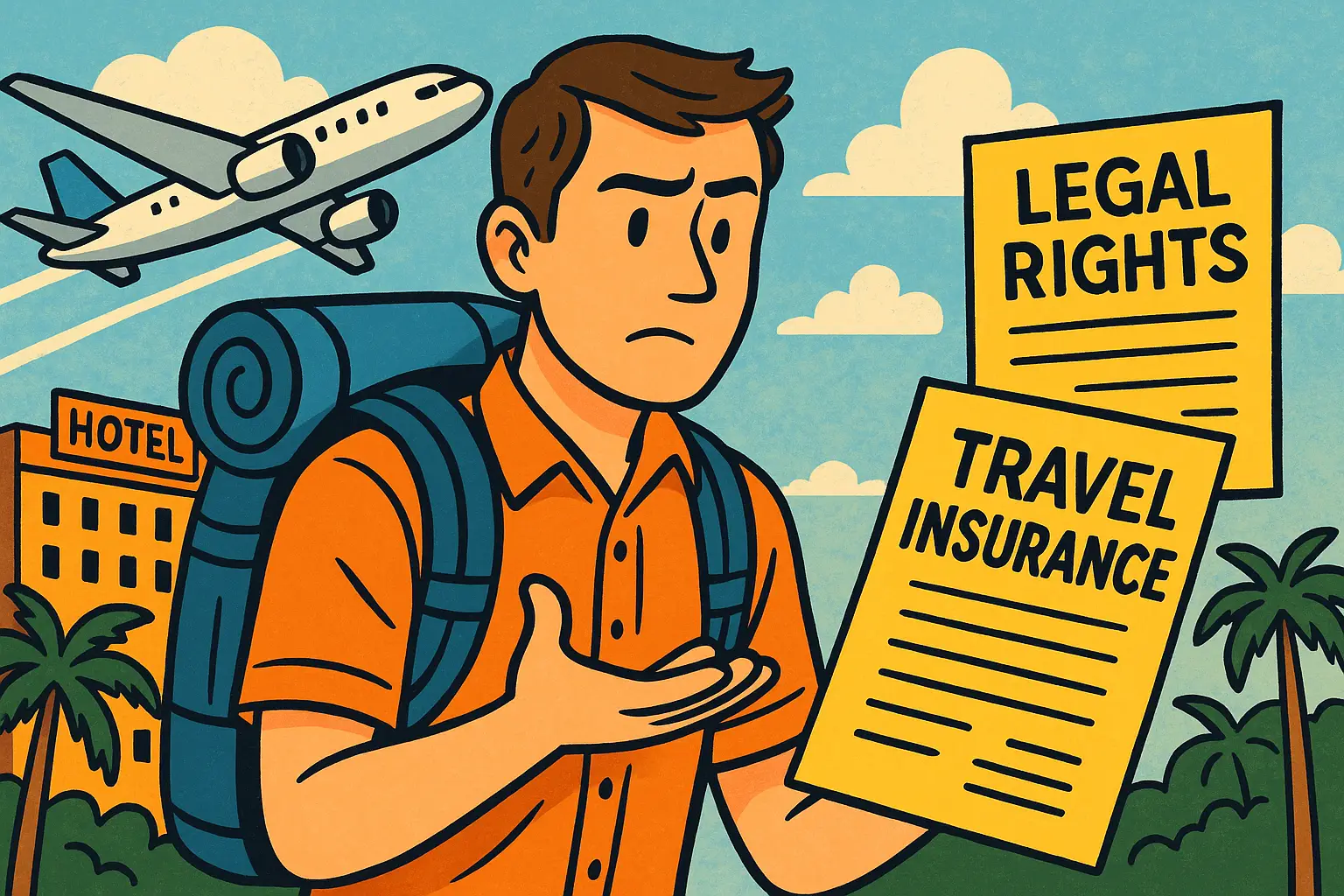
Travel insurance may not provide sufficient protection for your $1,000 vacation. Many travelers depend on it, but I’ve found some worrying gaps in coverage. A typical travel insurance policy costs 4-10% of your trip’s price, which means $200 to $500 for a $5,000 vacation. The coverage mainly provides reimbursement for canceled or interrupted trips.
Your next adventure needs more protection than just travel insurance. Most policies don’t cover epidemics and pandemics, and several travel expenses remain non-refundable, including many airline tickets. Travel insurance becomes essential if you can’t afford to cancel and rebook your trip or if your health insurance doesn’t cover international travel. The question remains – does it protect you enough? In this piece, I’ll explain the legal rights travelers must understand beyond simple travel insurance coverage, what your policy actually covers, and the additional protections you might need to safeguard your experience completely.
The legal gaps in standard travel insurance
Travel insurance companies reject claims more often than you might think. Industry data indicate that 40% of claims are denied due to exclusions, inadequate coverage, or misinterpreted policies. The number of rejected claims jumped 32% in 2023 compared to pre-pandemic levels. These numbers reveal a worrying trend – travelers often lack a clear understanding of what their policies cover.
Why travel insurance doesn’t cover everything
Your travel insurance primarily helps you recover your money when trips are canceled or cut short. These policies are most effective in specific situations rather than protecting you from every possible problem during your trip. Most people learn this the hard way when something goes wrong. Here’s something to consider: getting airlifted in a medical emergency can cost anywhere from $25,000 to $100,000. Many basic policies won’t cover these amounts, or they might not cover certain types of evacuations.
Common legal exclusions to watch for
Medical conditions you already have won’t be covered unless you buy special waivers soon after booking your trip. Your policy won’t help if you get hurt participating in adventurous activities like scuba diving, parasailing, zip-lining, or hiking at high altitudes.
Mental health creates another big gap in coverage. Insurance companies usually won’t cover anxiety, depression, or other psychological issues. They also tend to skip pregnancy complications and childbirth. The same goes for any accidents that happen after you’ve been drinking.
Your standard policy won’t cover cancellations due to violence, war, or chaos at your destination. Dire weather forecasts won’t get you a refund either. You’ll only get covered if a storm damages where you’re staying.
How to read the fine print like a lawyer
Insurance policies typically range from 15 to 30 pages of legal jargon. Most travelers just glance at these vital details or skip them entirely. You can better understand your policy by reading all the headings first to get the overall picture. After that, focus on the parts that matter most to your specific trip.
PDF policies let you search for specific words quickly. Look carefully at how they define essential terms, such as “exclusion,” “pre-existing medical condition,” and “epidemic.” Know when you need to file claims – deadlines range from seven to 30 days. If your policy seems overwhelming, read it in short 10-15 minute chunks instead of all at once.
Your rights when travel plans go wrong
Legal protections can save your trip when travel plans go wrong. As of April 2024, travelers have stronger rights than ever before, particularly during common travel disruptions.
Flight delays, cancelations, and compensation laws
The U.S. Department of Transportation has made it easier to get automatic refunds for airfare, baggage fees, and in-flight services. Airlines must now give you a refund if your domestic flight is delayed by more than three hours or your international flight by six hours. You’ll receive up to 200% of your one-way fare (up to $775) if an airline bumps you due to overbooking and your new flight arrives within 1-2 hours of your original scheduled time. This goes up to 400% of your fare (up to $1,500) for delays over two hours. Airlines can’t keep you on the tarmac for more than three hours on domestic flights without letting you off the plane. They must also give you food and water after two hours.
Hotel overbookings and refund rights
Hotels overbook rooms just like airlines do. All the same, you have certain rights when they “walk” you to another property. The original hotel usually covers your alternative accommodations and transportation costs. Different hotel chains have their policies. Marriott’s elite members can earn up to $200 and 140,000 points when staying at luxury properties. Hyatt offers a complimentary night at a comparable hotel and covers transportation costs. Florida’s law doesn’t require refunds for canceled reservations unless hotels are overbooked and can’t accommodate you.
Tour cancelations and breach of contract
Tour cancellations often lead to breach of contract claims. You’ll need to demonstrate that a valid contract existed, you fulfilled your part, the company failed to deliver, and you suffered a financial loss. Tour companies that cancel trips must follow their state’s refund laws. Your credit card can be your best friend here – the Fair Credit Billing Act protects you from “charges for goods and services you didn’t accept or weren’t delivered as agreed.”
Criminal offenses
If you commit a criminal offence, then it’s usually the case that your travel insurance won’t cover you. If you are charged with a criminal offence, you may have to pay independently for a federal criminal defense attorney. Again though it’s very much worth checking the small print. It is dangerous for Westerners to go to some jurisdictions because of the various punitive laws that operate in these locations. So some insurers will actually provide basic levels of legal care.
How to protect yourself legally while traveling
Good documentation serves as the legal foundation for any travel claim. Travel insurance alone won’t protect you – you need to know how to safeguard yourself throughout your experience legally.
Documenting your trip and expenses
Your future claims depend on detailed documentation. Save all your receipts, booking confirmations, and itineraries. Take photos of damaged items, medical bills, and any communications with service providers. Car travelers should track mileage using official Department of Transportation websites or mapping services. Make digital copies of everything since many travelers misplace their paper documents during trips.
Filing a claim: legal steps and timelines
You must file travel insurance claims within 90 days of the incident. Late submissions will likely face denial. Insurance companies need to acknowledge consumer complaints within 30 days and respond in writing within 60 days. Gather all supporting documents before starting your claim process. You can file through phone, website, or mobile app with most providers.
When to escalate to a travel ombudsman or regulator
You should contact higher authorities if airlines or travel providers don’t resolve your issues properly. The Department of Transportation’s Office of Aviation Consumer Protection addresses problems related to air travel. Many countries offer Tourism and Travel Ombudsmen services. These services require you to submit a written complaint to the company first and wait up to 2 months for their response before escalation.
Understanding accident codes and medical documentation
Medical records utilize standard ICD-10 codes to describe travel accident injuries accurately. These codes serve as standardized evidence in insurance claims and legal cases. Insurance providers use them to evaluate injuries and set compensation amounts. Your claim value depends on accurate coding, and when it comes to traffic-related incidents, it also helps to understand the essential vehicle and transportation codes that may apply to your case.
Legal alternatives and supplements to travel insurance
Most travelers are unaware that their current insurance policies often cover many travel-related situations, which means they may not need additional travel insurance.
Homeowners’ and renters insurance for travel
Your homeowners or renters policy usually covers personal property that gets stolen or damaged during travel. These policies protect your belongings even when they’re away from home. There are some limits, though. A policy might pay only $1,500 for stolen jewelry, regardless of its actual worth. Your homeowners coverage also helps if you accidentally damage a rental property or hurt someone while traveling.
Health insurance abroad: what’s legally required
U.S. health insurance plans typically do not cover medical care outside the country. Medicare rarely covers overseas treatment except in rare cases. Due to this coverage gap, some countries now require visitors to prove they have travel health insurance before entering. To cite an example, several European Schengen countries require visa applicants to demonstrate sufficient coverage.
Credit card protections and legal limitations
Credit cards can include travel protection if you pay for your trip with that card. While helpful, these benefits have strict limits. They usually cap trip cancellation payouts at $10,000 per person, but separate travel policies might offer up to $100,000. Credit card coverage typically does not assist with existing medical issues, extended trips, or travel to areas considered war zones.
Conclusion
Travel insurance helps protect your vacation investment, but it falls short as a complete safety net. Legal rights extend way beyond the reach and influence of purchasing a policy. Denied claims statistics show how many travelers find coverage gaps when they need protection the most.
The best protection combines proper insurance with a deep knowledge of your legal rights. You can get compensation for flight delays, hotel overbookings, and tour cancellations even when insurance doesn’t cover them. Documentation remains your strongest ally in this process. Save receipts, take photos, and create digital backups to file successful claims.
Your existing homeowners insurance, health coverage, and credit cards may provide some protection against travel mishaps. A clear understanding of these overlapping protections helps you make more informed decisions about necessary supplemental coverage.
Next time you plan a trip, consider looking beyond the standard travel insurance offering. Take time to read policies, understand exclusions, and know your traveler’s legal rights. This detailed approach offers better protection than relying solely on travel insurance. You can travel with confidence and peace of mind when you know your exact protections and potential coverage gaps.