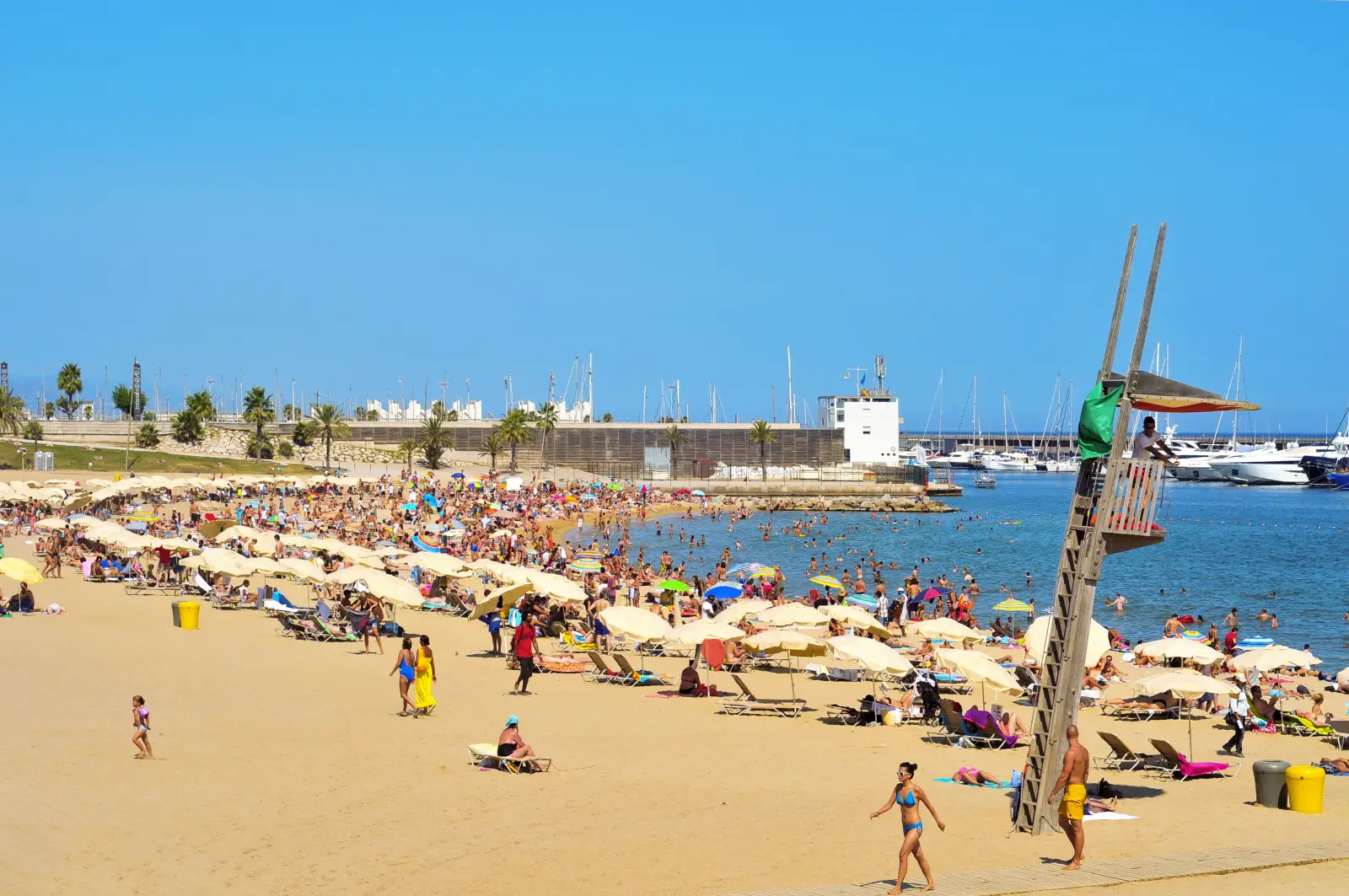
Tourists and residents strolling along Barcelona’s sun-soaked coastline this Friday were met with an unusual sight: lifeguard towers standing partly unmanned, banners fluttering in the breeze, and the rhythmic crash of waves punctuated by the sound of whistles and megaphones.
On the first official day of an indefinite strike, the city’s beach lifeguards took to the streets in front of City Hall to demand significant improvements in working conditions and beach safety measures.
The demonstration, organized by approximately 40 lifeguards, was not a typical summer protest. With umbrellas, megaphones, and banners declaring “Water safety = labor rights”, the lifeguards sought to capture the attention of city leaders, locals, and the millions of visitors who flock to Barcelona’s coastline each year. While the beaches remained open, the strike coincided with a 50% minimum service requirement, a measure enforced by the Catalan Government to maintain some degree of safety along the bustling shoreline.
Barcelona’s Lifeguards Demand Year-Round Services
The heart of the lifeguards’ grievance lies in what they call “absolute precariousness” affecting those who work on the city’s popular beaches. According to their union, the CGT (Cluster of Workers’ Workers), lifeguards, medical technicians, nurses, boat captains, and crew members are all employed under conditions that leave them vulnerable. Their responsibilities extend beyond monitoring swimmers; they are first responders in emergencies and the frontline guardians of beach safety.
In a public statement during the protest, CGT Lifeguards’ General Secretary Ignacio García called for the beach safety service to be extended throughout the year, not just during the busy summer months. He stressed that more staff are essential to ensure that Barcelona’s coastline is secure, even during shoulder seasons when the Mediterranean can still attract swimmers and surfers. By highlighting the need for more personnel, the lifeguards are also emphasizing the city’s obligation to protect the millions of visitors who see Barcelona as a year-round destination.
The demand for year-round service reflects a growing reality for major coastal travel hubs: tourism no longer follows a strictly seasonal pattern. Warm autumns and mild winters in the Mediterranean often draw visitors well outside of the peak summer months. Without consistent lifeguard coverage, beachgoers could be left vulnerable to emergencies, particularly during off-season periods when fewer locals are around to assist.
A Strike Rooted in Safety and Worker Rights
While visitors might perceive lifeguards as symbols of leisure, the lifeguards’ message makes clear that their job is far from casual. García emphasized that this is “not a game or a personal issue with beachgoers”. Instead, the strike highlights a dual mission: to improve their own working conditions while simultaneously ensuring the safety of those who enjoy Barcelona’s beaches.
The strike is indefinite, and lifeguards have signaled their readiness to continue until an agreement is reached. They note that many workers hold multiple jobs, a situation that reflects both the economic pressures of the role and their determination to persist in their demands. Despite the strike, the minimum service rule requires that at least 50% of posts remain staffed, a compromise designed to prevent complete abandonment of beach safety during peak tourist season.
City Hall Protest and Union’s Call for Dialogue
Friday’s protest in front of Barcelona City Hall was as much a plea for dialogue as a display of collective frustration. The lifeguards and their union are urging both the City Council and FCC Medioambiente, the company responsible for some aspects of beach management, to engage in meaningful talks. Their goal is to establish an updated agreement that guarantees adequate staffing, fair conditions, and consistent oversight from municipal authorities.
For visitors strolling through the historic streets near Plaça Sant Jaume, the gathering may have appeared as another colorful expression of local civic life. Yet for Barcelona’s beaches, this protest marked the beginning of a pivotal period that could influence both local labor policies and tourist safety standards. Union representatives insist that municipal authorities must take an active, ongoing role in implementing changes, rather than treating beach safety as a seasonal afterthought.
Implications for Tourists and Travel Safety
For travelers planning to enjoy Barcelona’s beaches this summer, the strike carries immediate and practical implications. Although lifeguards are still present under the 50% minimum service requirement, the reduced coverage means response times in emergencies may be slower. Beachgoers are being advised to exercise extra caution, pay close attention to posted warnings, and avoid venturing into unsafe areas of the water.
Signs have been posted on lifeguard towers informing visitors of the strike and the reduced services in effect. These notices serve as reminders that while Barcelona’s beaches remain open, the safety net tourists often take for granted is temporarily compromised. Travel safety experts recommend that visitors swimming during the strike stay in designated zones, avoid swimming alone, and keep an eye on weather and sea conditions.
The Growing Role of Beach Safety in Tourism
As a global travel destination, Barcelona has cultivated an image that blends culture, gastronomy, and coastal leisure. Its beaches, from Barceloneta to Nova Icaria, are integral to that image. However, the lifeguard strike underscores how essential behind-the-scenes services are to sustaining a safe and enjoyable visitor experience. A single high-profile incident could affect the city’s reputation as a secure urban beach destination.
Tourism boards across the Mediterranean are watching closely, as similar labor and safety challenges can arise in other major coastal cities. With increasing tourist flows, climate variability, and changing travel patterns, cities are facing pressure to ensure that beach services and safety protocols are not just seasonal conveniences but permanent infrastructure.
Barcelona’s lifeguards have made it clear that they are prepared for the long haul. The strike is not simply a negotiation tactic but a broader call for systemic change in how the city manages its beaches. If successful, the movement could lead to year-round lifeguard services, better staffing levels, and improved working conditions that, in turn, enhance safety for residents and tourists alike.
As the strike unfolds, the city’s administration will need to balance public safety, labor rights, and tourism considerations. For now, the sight of lifeguards rallying with umbrellas and banners in front of City Hall serves as a vivid reminder: the people who watch over the sand and sea are demanding to be seen, heard, and supported. For travelers, it’s an invitation to approach Barcelona’s famed coastline with both enjoyment and awareness, knowing that the city’s iconic beaches are currently at the center of a very human story.
Photo credit: nito / Shutterstock.com