Kings are usually remembered for their conquests, their treaties, or—if things went terribly wrong—their untimely beheadings. King Ludwig II of Bavaria, however, is remembered for something quite different: an obsession with castles so extravagant that even Disney might have told him to tone it down.
While other monarchs were busy running countries, Ludwig was busy sketching turrets. And the results—now officially stamped onto UNESCO’s World Heritage List after the update in July 2025—make Bavaria one of Europe’s strangest and most enchanting destinations.
A Mad King With a Vision
Ludwig II, who reigned from 1864 to 1886, is often called “the Mad King.” The label seems a bit unfair. Most of us would go a little strange if we were handed a crown at 18 with no manual included. Ludwig’s quirks included avoiding state business like the plague, wandering alone in the mountains, staging elaborate theatrics, and spending ruinous sums of money on buildings that looked like they’d leapt out of an illustrated storybook.
For decades, his creations were treated as curiosities—the odd remains of a troubled monarch. Yet when UNESCO added his palaces to the World Heritage List, it felt like Ludwig’s final wink. He may have emptied the royal purse, but in the long run he left behind treasures for everyone. In a sense, he failed as a budget manager and succeeded as a travel impresario.
The Four Castles of Ludwig’s Dreams
What earned this honor? Four palaces, scattered around Bavaria, each more peculiar than the last. Together, they form what UNESCO calls “The Palaces of King Ludwig II of Bavaria.” Think of them as the physical remains of one man’s fever dream—part fairy tale, part folly, and part architectural therapy session.
Neuschwanstein Castle: The Postcard Superstar
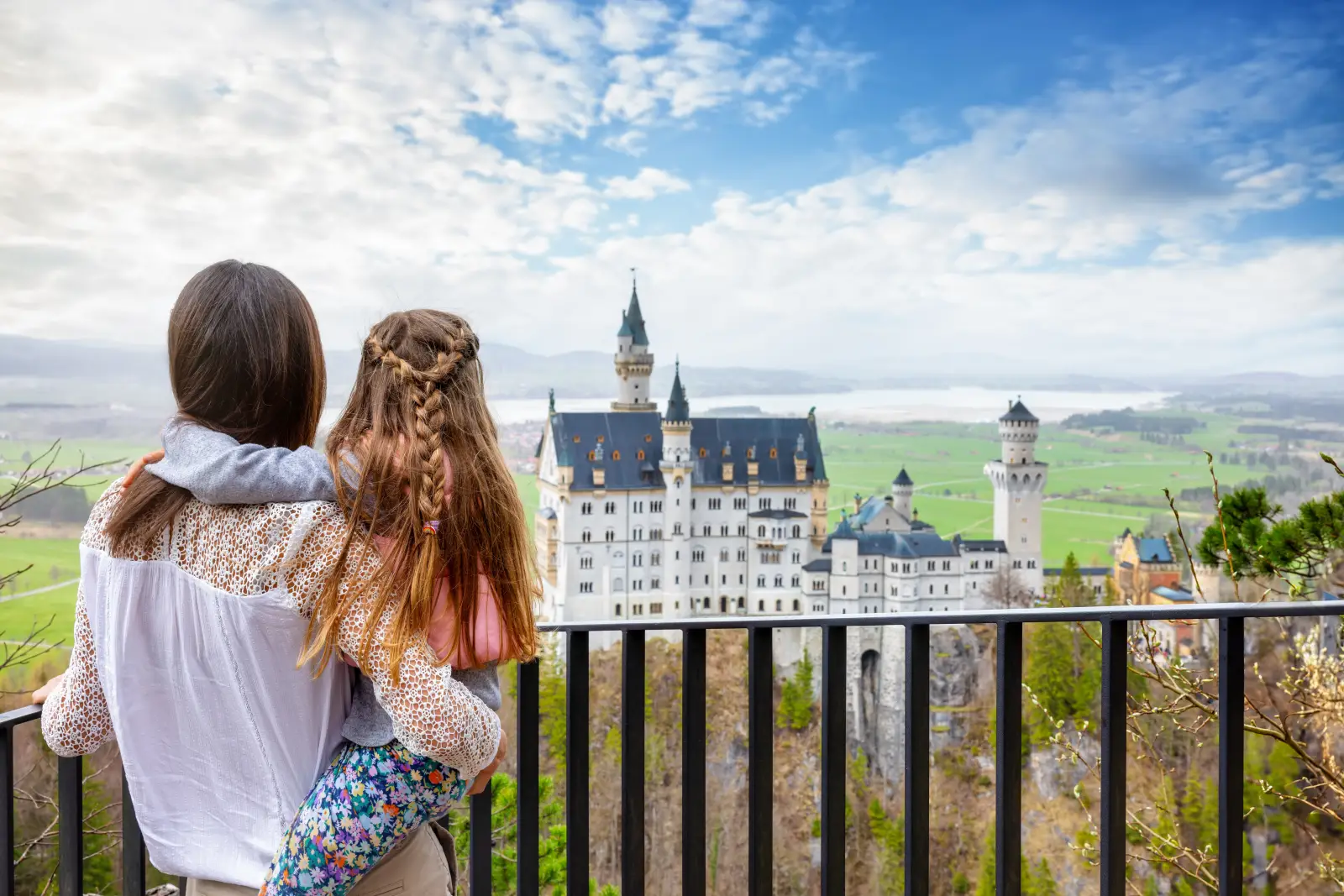
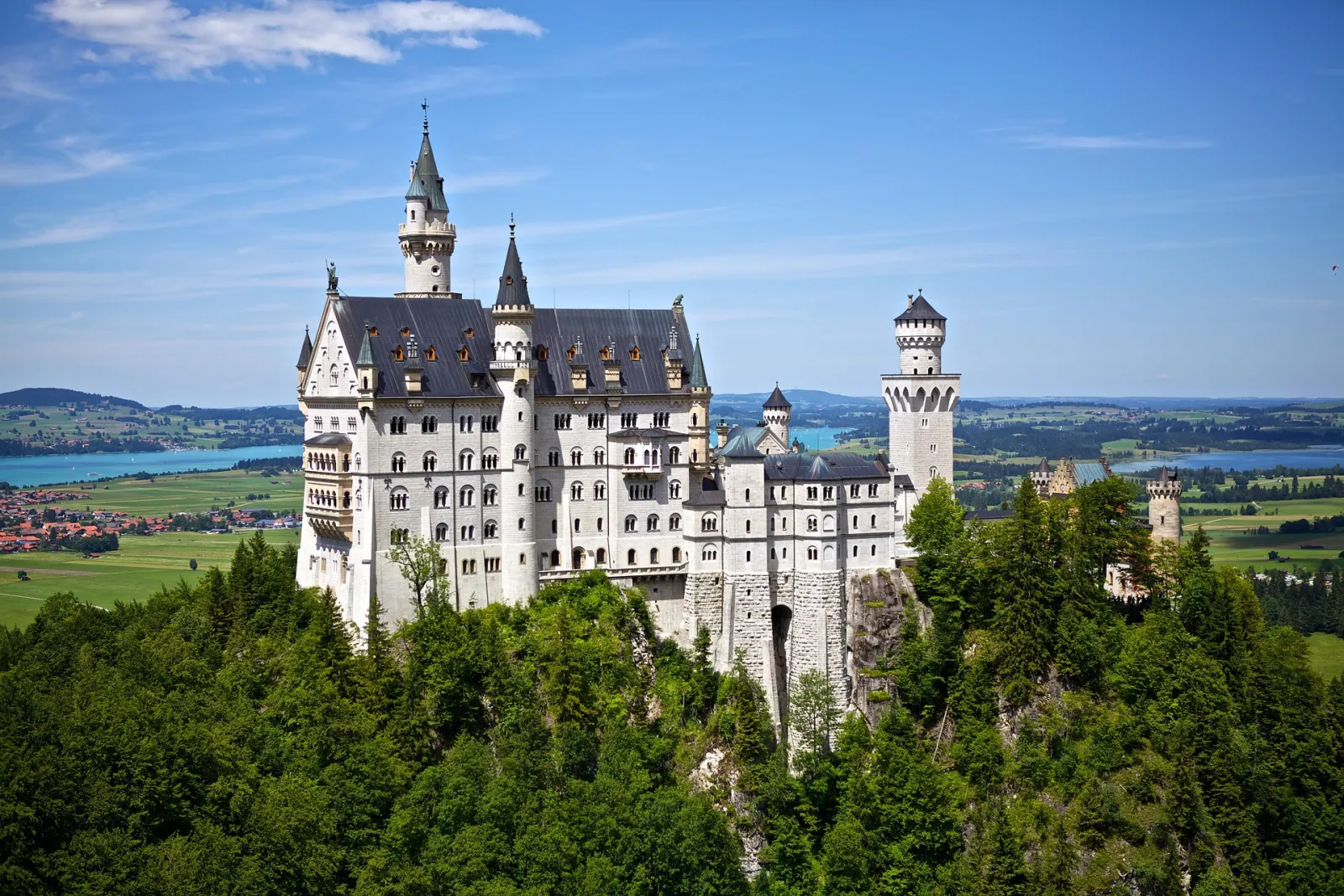
If you’ve ever seen a brochure for Germany, a jigsaw puzzle at your grandmother’s house, or the opening of a certain Disney movie, you’ve seen Neuschwanstein Castle. Rising from the Bavarian Alps like it was painted into existence, Neuschwanstein is Ludwig’s most famous creation.
Here’s the twist: despite its global fame, Neuschwanstein wasn’t officially recognized as a World Heritage Site until the 2024 update. In other words, the most iconic castle in Europe was, until very recently, playing in the minor leagues of cultural recognition.
Neuschwanstein was intended as Ludwig’s retreat, a fortress of solitude where he could indulge his love for myths, operas, and Wagnerian drama. He died before it was finished—which is probably for the best, because otherwise he might have kept adding wings until the mountain gave up. Today, it draws huge crowds who climb spiral staircases and gasp at murals of medieval heroes, then step outside to views that seem engineered to make phones run out of storage.
Herrenchiemsee Palace: Bavaria Does Versailles
If Neuschwanstein is a dream, Herrenchiemsee is a copy—and proudly so. Ludwig adored Louis XIV and the Palace of Versailles so much that he built his own version on an island in Lake Chiemsee. Imagine Versailles surrounded by alpine water and mountains, and you’ll get the idea.
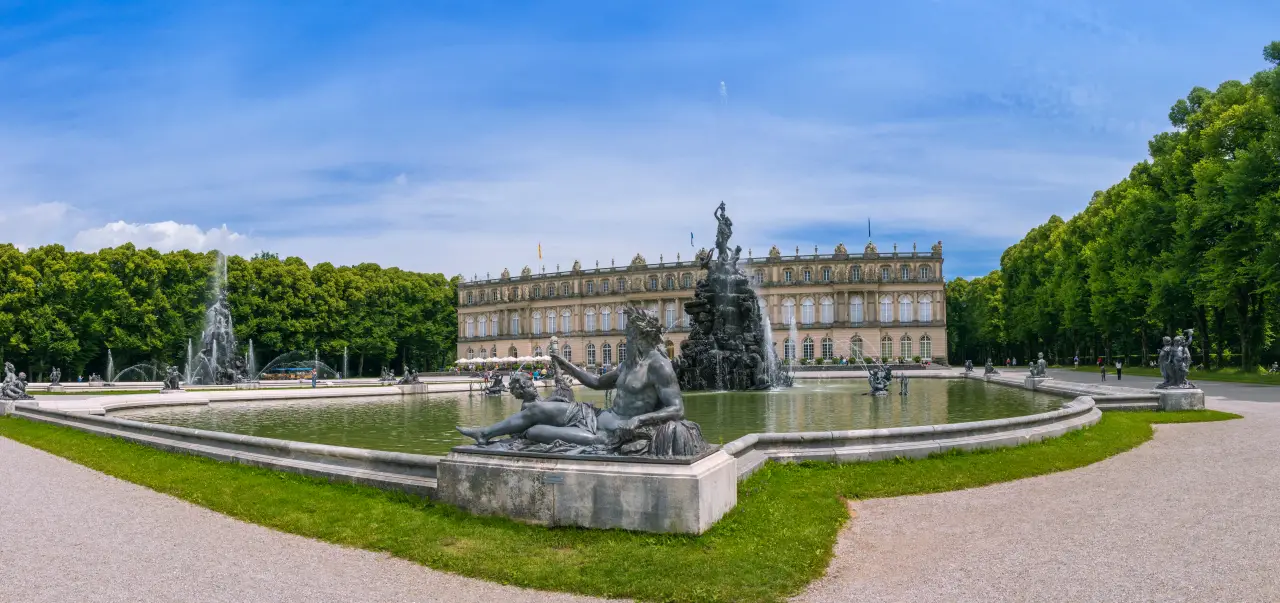
Ludwig intended a full-scale replica, but—as usual—money proved finite. Even incomplete, the place is staggering: gilded halls, endless mirrors, gardens manicured with near-obsessive precision, chandeliers so large they could double as lifeboats. Walking through, you wonder whether Ludwig knew he was copying or believed he was improving the original. Either way, it’s the sort of palace that makes you grateful someone with shaky budgeting once sat on a throne.
Linderhof Palace: Small but Mighty
If Herrenchiemsee was Ludwig’s attempt to outshine Versailles, Linderhof was his jewel-box version. It’s the only palace he lived to see completed, and though it’s the smallest of the four, it might be the most delightful.
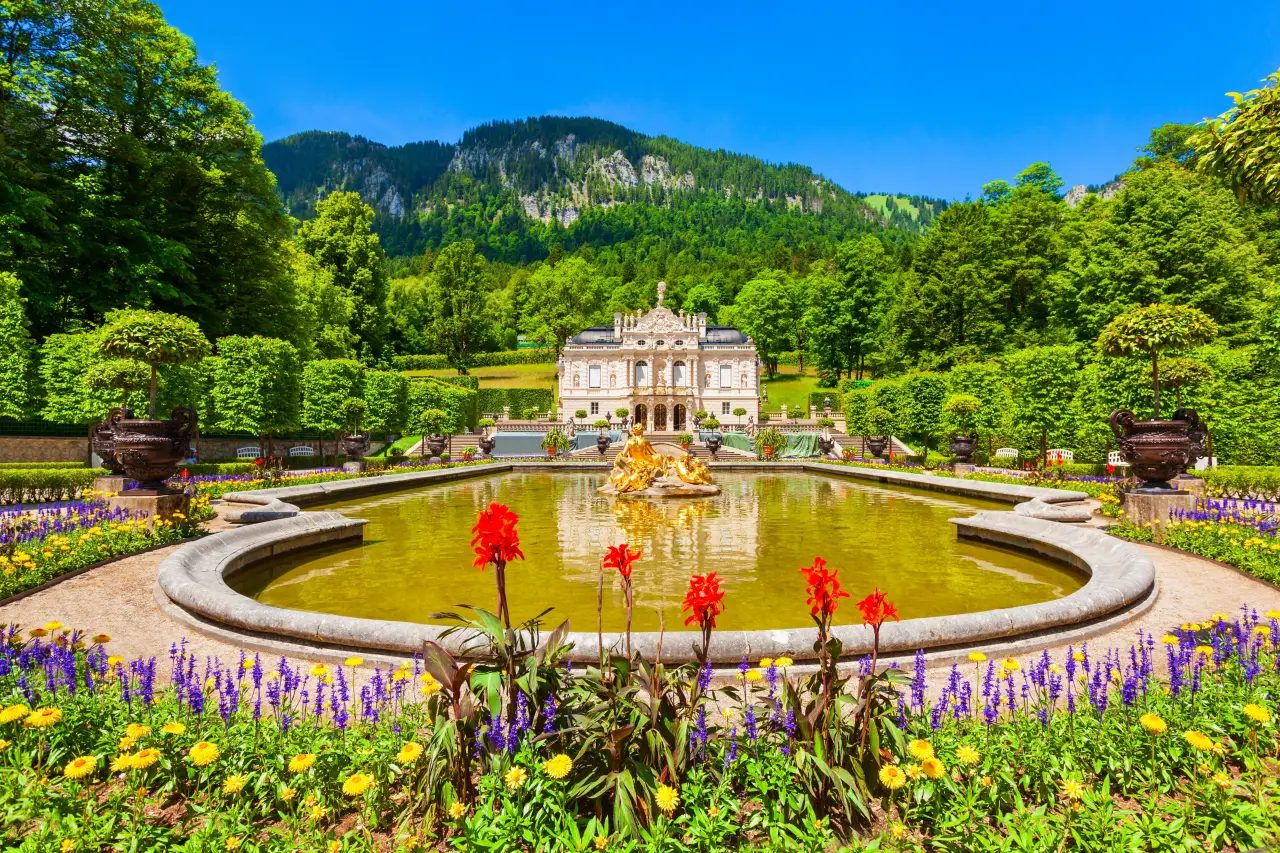
Linderhof glows. Every surface gleams; every corner is adorned with carving, paint, or gilt. The gardens are theatrical, with sightlines and fountains that seem timed for applause. The strangest highlight is the Venus Grotto—a man-made cave where Ludwig staged private opera performances. Picture colored lights flickering on rock, a swan boat on an indoor lake, and music echoing off stone. It’s either madness or the birth of the theme-park ride.
Schachen Palace: A Cabin in the Clouds
Then there’s Schachen, perched high in the Alps at nearly 1,900 meters. From outside, it looks like an alpine lodge—wooden, quaint, almost modest. Inside, you stumble into an explosion of Middle Eastern décor: rich carpets, golden chandeliers, and an upstairs hall built for royal parties at the top of the world.
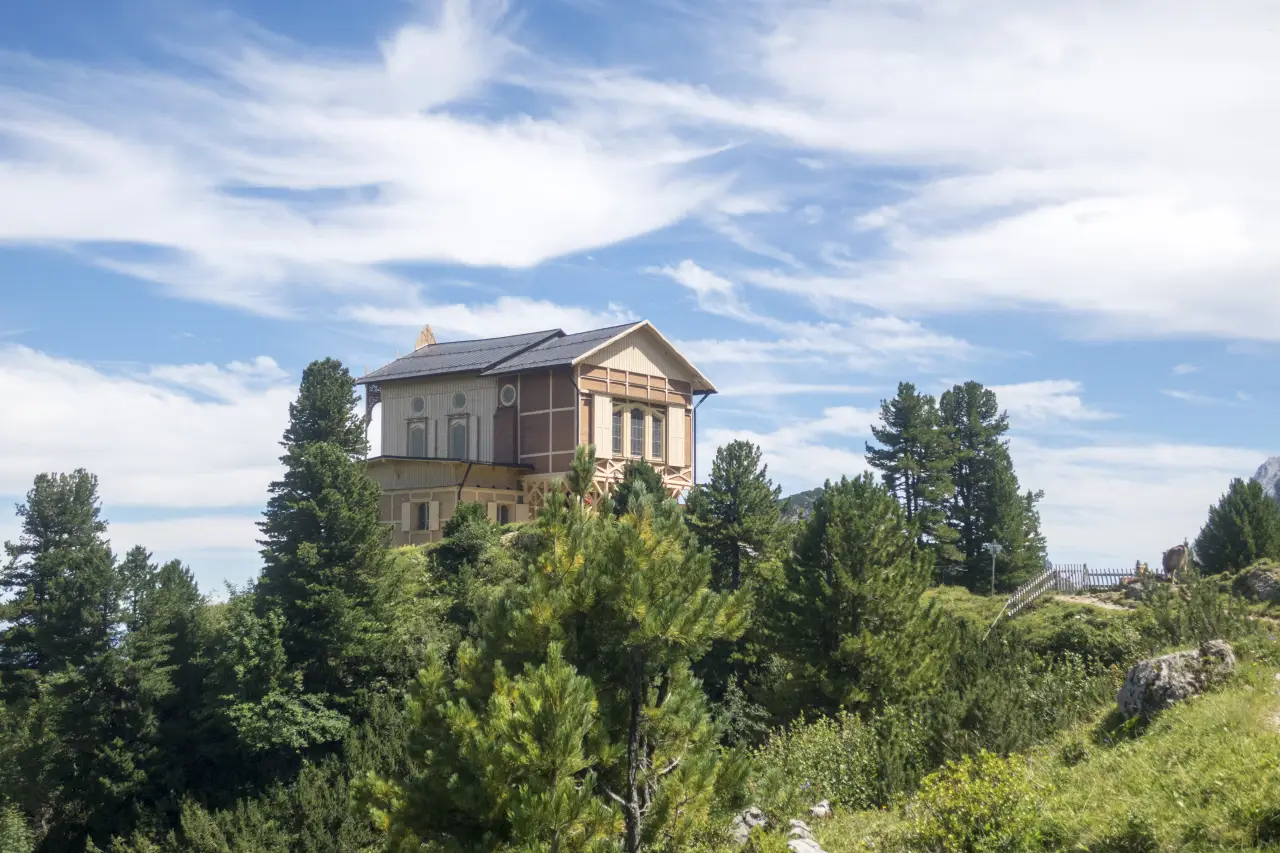
Getting there takes effort—a hike or a very determined uphill walk—but that’s part of its charm. Schachen feels like Ludwig’s secret, a hideaway for no one but himself. Thanks to UNESCO, his mountaintop daydream is now preserved as a monument to the art of the eccentric retreat.
Bavaria: The Backdrop to a King’s Daydreams
It’s not only the castles. It’s the settings. Bavaria is one of those regions where every mountain looks painted, every village spills geraniums from window boxes, and every lake seems designed for a fairy tale. Traveling from palace to palace is less about highways and more about weaving through postcards.
This may be Ludwig’s true genius: his castles pull you across Bavaria like beads on a string. Start at Neuschwanstein’s cliffs, ferry out to Herrenchiemsee’s island, wander Linderhof’s trim gardens, then climb to Schachen’s clouds. By the end, you haven’t only seen four palaces—you’ve seen Bavaria.
Madness or Legacy?
It’s easy to laugh at Ludwig’s spending. He nearly bankrupted the kingdom, was declared unfit to rule, and died under mysterious circumstances in a lake. But look at the millions of visitors who now pour into Bavaria to marvel at his creations, and you might argue he was simply playing the long game.
Other rulers built empires that crumbled. Ludwig built fantasies that endure. With UNESCO’s nod, those fantasies have been stamped into our shared heritage.
Planning Your Own Castle-Hopping Adventure
For travelers, the designation is more than a headline—it’s an invitation. The four palaces are reachable within Bavaria, perfect for a road trip or a chain of day trips. Each offers guided tours, layered history, and enough eccentricity to make you wonder whether Ludwig was truly mad or slyly modern.
Practical expectations: prepare for crowds at Neuschwanstein, grandeur at Herrenchiemsee, intimacy at Linderhof, and a satisfying sense of discovery at Schachen. Between stops, hearty Bavarian food and local beer keep spirits high, and Wagner has a way of sneaking into your head whether you planned for it or not.
The Final Word
So, was Ludwig II mad, or was he a genius? The truth probably lives somewhere in the fog between a mountain hut and a hall of mirrors. But one thing is certain: he built too many castles—and somehow got away with it. If you wander through them yourself, you’ll be very glad he did.
Top Photo Credit: Sven Hansche / Shutterstock.com