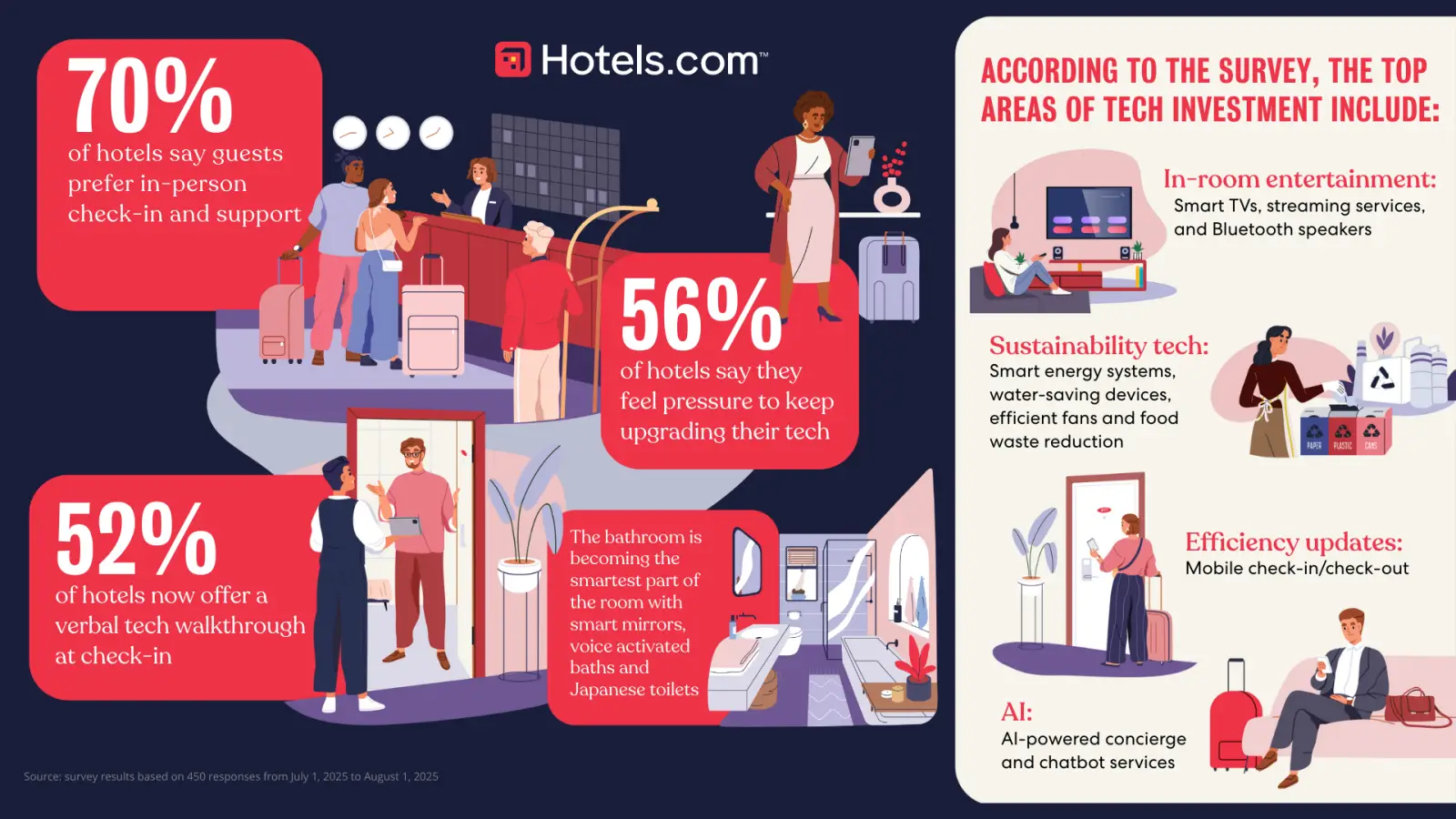
Hotels.com has released its 2025 Hotel Room Innsights survey, revealing that smart hotel room technology is on the rise globally—but also presenting challenges for guests.
The survey, which gathered responses from over 450 hotels worldwide between July 1 and August 1, found that more than half of properties now offer verbal tech walkthroughs to help guests navigate increasingly complex room features.
According to the findings, 56% of hotels feel pressure to keep upgrading their technology offerings. Key areas of investment include AI-powered concierges, smart mirrors, and robot butlers, but most hotels are focusing on practical upgrades that enhance comfort and usability, often referred to as “ComfortTech.”
Hotels Prioritize ComfortTech Over Automation
The survey shows that hotels are increasingly investing in smart fans, customizable lighting, and high-speed Wi-Fi rather than fully automated services. While robotic staff and voice-controlled rooms are being tested, the majority of upgrades are geared toward improving guest comfort. Common features now include smart TVs, Bluetooth speakers, and mobile check-in/check-out options.
Sustainability also plays a significant role in the technology upgrade trend. Hotels reported adopting smart energy systems, motion-sensor faucets, and food waste reduction technologies. Accessibility innovations, such as voice-activated bath filling and adjustable bathtubs for wheelchair users, are gaining traction in newer smart bathroom designs.
Guest Confusion Prompts Verbal Tech Walkthroughs
As rooms become more technologically advanced, guests are often struggling to operate basic functions. Lighting systems, Wi-Fi, entertainment centers, and climate control are the most common sources of confusion. In response, 52% of hotels now offer verbal instructions at check-in to help guests understand how to use room technology.
Despite the rise in automation, human interaction remains a cornerstone of hospitality. The survey found that 70% of hotels report guests still prefer speaking with staff during check-in and when resolving issues. Some properties have even removed tech elements, such as breakfast-serving robots, after finding they did not enhance the guest experience.
AI, Robotics, and Personalization
Hotels continue to explore new technologies to improve personalization and efficiency. Desired future upgrades include AI-driven concierge services, real-time translation tools, and robotic staff for cooking, cleaning, and luggage delivery. Sleep monitoring devices, biometric access, and voice-controlled environments are also among the innovations under consideration.
Hotels.com is also evolving its own platform to support this shift, introducing features like automated Hotel Price Alerts and AI search filters to help travelers find suitable accommodations faster. “From smart showers to room service-delivering robots, this year’s Innsights survey shows hotels around the world are using tech in ways from functional to novel,” said Melanie Fish, vice president of global public relations. “It’s also clear there’s a sweet spot when it comes to smart hotel rooms: intuitive and personalized, but still easy to navigate.”
Examples of high-tech hotels already leading the way include Hotel EMC2 in Chicago, Grand Hyatt Jeju in South Korea, and FlyZoo Hotel in China. These properties feature technologies such as robotic room service, facial recognition check-in, and in-room smart assistants. Hotels in Singapore, Norway, and New York are also implementing QR-based room controls, digital art curation, and tablet-driven personalization features.
For full survey results and travel tools, guests can visit the Hotels.com app or website.