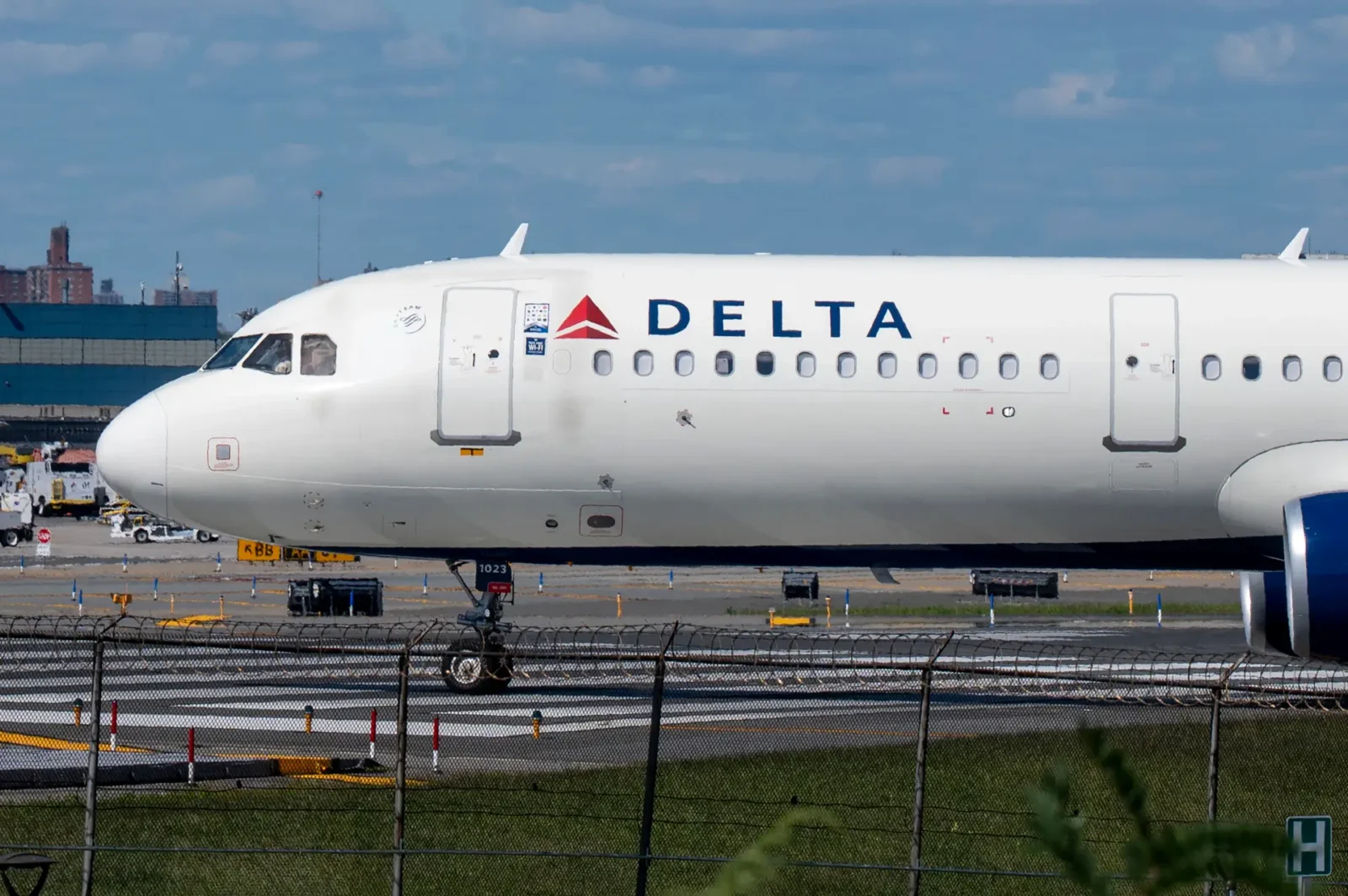
Two Delta Air Lines regional jets collided while taxiing at New York’s LaGuardia Airport on Wednesday evening, injuring a flight attendant and prompting a federal investigation. The low-speed impact occurred when one aircraft’s wing struck the nose and fuselage of another, according to preliminary reports.
One jet was preparing for departure to Roanoke with 28 to 32 passengers on board, while the other had just arrived from Charlotte carrying 57 to 61 passengers. No passengers were reported injured. The incident did not disrupt airport operations, according to the Port Authority and Delta Air Lines.
Collision Details and Response
The collision involved two Bombardier CRJ-900 aircraft operated by Endeavor Air, a regional subsidiary of Delta. Air traffic control recordings indicated that damage included a cracked cockpit windscreen and internal display issues. Videos and photographs shared by passengers showed visible dents to the nose of one aircraft and damage to the wing of the other.
A Delta spokesperson confirmed that the airline is cooperating with authorities. “We apologize to customers for the inconvenience and are working to re-accommodate them,” Delta said in a statement. The airline provided buses to return passengers to the terminal, along with meal vouchers, hotel accommodations, and rebooking options for onward travel.
The injured flight attendant was transported to a local hospital with non-life-threatening injuries. Passengers described the collision as abrupt. One said the plane “jerked to the right” upon impact, while another recalled the pilot telling passengers, “Hey, we’ve been in a crash, everyone remain calm.”
Investigation and Safety Context
The Federal Aviation Administration (FAA), National Transportation Safety Board (NTSB), and Port Authority are investigating the incident. The inquiry will examine taxiway procedures, crew actions, and air traffic control protocols in what is one of the busiest airports in the United States. Authorities will also review ground movement spacing and communication standards between pilots and controllers.
Delta operates more than 300 flights daily at LaGuardia, relying heavily on regional jets such as the CRJ-900 for short-haul routes. The collision adds to a series of recent ground incidents and close calls across the U.S. aviation system, which have drawn heightened scrutiny from regulators and the public.
Business Insider reported that this incident highlights operational challenges in congested environments like LaGuardia, where limited space and heavy schedules increase risks during taxi and runway operations. Investigators are expected to determine whether crew decisions or ground traffic management played a role in the collision.
Passenger safety remains a central focus for the airline industry following a series of near-misses in recent years. Delta emphasized that it is cooperating fully with regulators and reaffirmed that safety is its top priority. The outcome of the FAA and NTSB investigation will determine whether procedural or operational changes will be required at LaGuardia and potentially at other major airports.
The two damaged aircraft have been taken out of service for inspection and repairs. Passengers from both flights were rebooked on alternative services. As of Thursday morning, flight operations at LaGuardia Airport continue without interruption.
Photo Credit: Ron Adar / Shutterstock.com