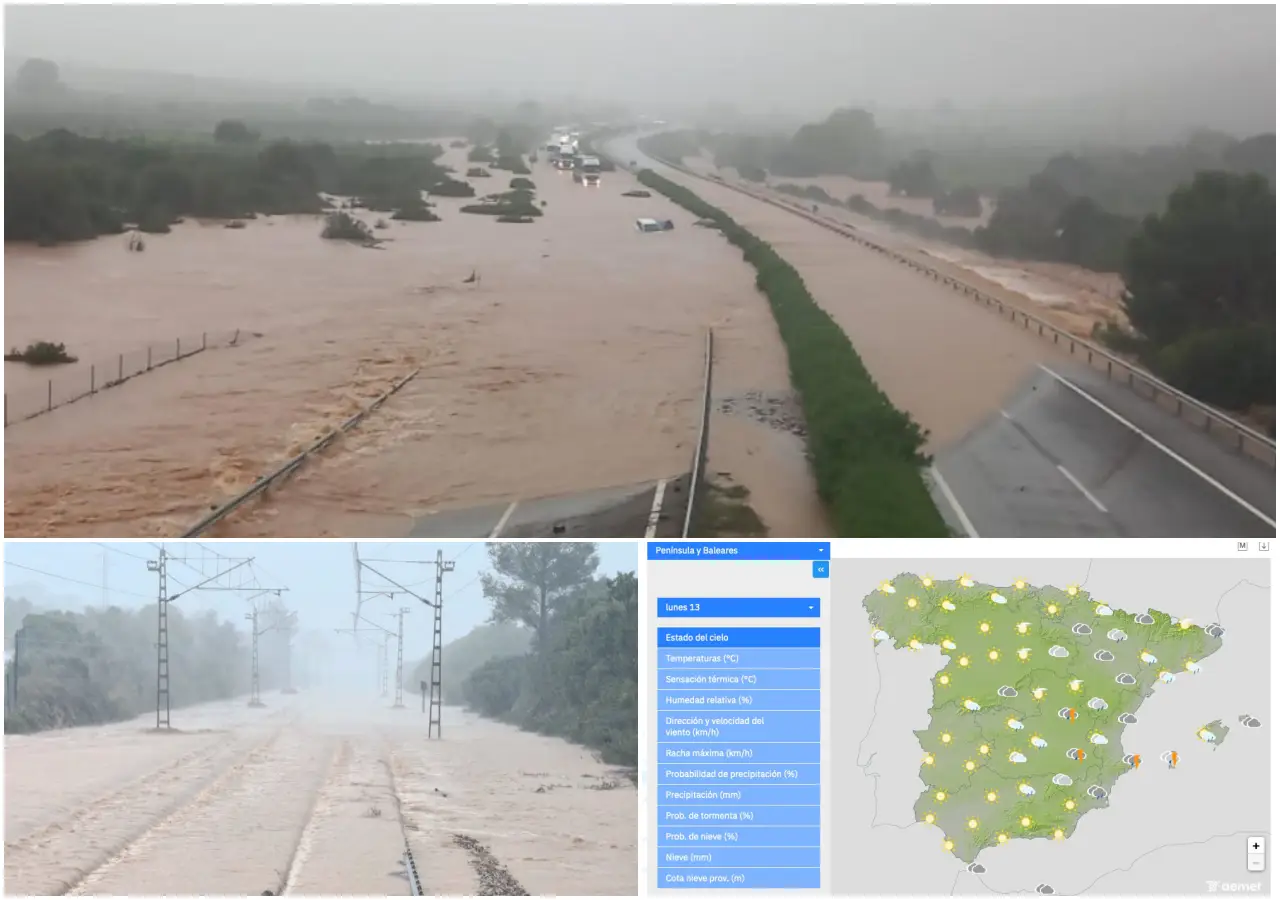
Severe weather from Storm Alice has caused widespread transport disruptions across eastern Spain since the weekend, flooding highways, halting rail traffic, and forcing thousands of residents and travelers to evacuate coastal areas in Catalonia and Valencia.
Train services along the Mediterranean Corridor between Barcelona and Valencia remain suspended as floodwaters continue to submerge tracks and nearby infrastructure.
The heavy rain, described by Spain’s national meteorological agency AEMET as one of the most intense in recent years, has led to multiple road closures, power outages, and flight delays in parts of Catalonia, Valencia, and the Balearic Islands. Emergency services have carried out hundreds of rescues in low-lying areas after vehicles were trapped by flash floods triggered by the slow-moving storm system.
Major Transport Corridors Paralyzed
Rail operator Renfe suspended long-distance and regional services on the Mediterranean Corridor between Barcelona and Valencia after tracks near Ulldecona and L’Aldea were inundated. According to Hosteltur, at least 17 trains and more than 3,000 passengers have been affected by cancellations and diversions since Sunday. A Rodalies R16 commuter train was forced to stop near Ulldecona when rising water blocked the line, prompting emergency evacuations of passengers.
In Tarragona province, sections of the AP-7 motorway between Ulldecona and Freginals were closed in both directions as floodwaters overtook the road surface. The national N-340 route between Amposta and Alcanar and several regional roads—including the C-12, T-331, and TP-3311—were also shut down due to flooding and landslides, regional media reported. Authorities have warned motorists to avoid travel in affected zones until water levels recede.
@jordisebfer Càmera de l’AP7 a Freginals #Catalunya ♬ original sound jordisebastià
“Extreme rainfall has made several transport routes impassable, and the situation remains unstable in parts of southern Catalonia,” said a spokesperson for the Civil Protection Service of Catalonia, as quoted by RTVE. Officials have urged residents to stay indoors and avoid underground or coastal areas where flash flooding may intensify.
Airports and Coastal Areas Hit
Ibiza Airport temporarily suspended operations on Sunday after parts of the terminal flooded, leading to power cuts and the cancellation of at least 24 flights. Flights at Valencia and Barcelona airports have experienced delays due to poor visibility and high winds, although most services have since resumed with caution.
In Tarragona and nearby municipalities such as La Ràpita and Santa Bàrbara, emergency teams rescued drivers from submerged vehicles and evacuated about 1,000 people to temporary shelters in sports centers. Local authorities activated the national ES Alert system, sending mobile warnings to residents across the Ebro Delta and the coastal corridor from Alcanar to Salou to avoid unnecessary movement.
The Spanish Meteorological Agency (AEMET) maintained red alerts in parts of Catalonia through Monday, forecasting up to 180 millimeters of rainfall in 12 hours and isolated peaks exceeding 250 millimeters. The storm has also caused disruptions in the Balearic Islands, where localized flooding in Ibiza and Formentera blocked roads and cut electricity to several towns.
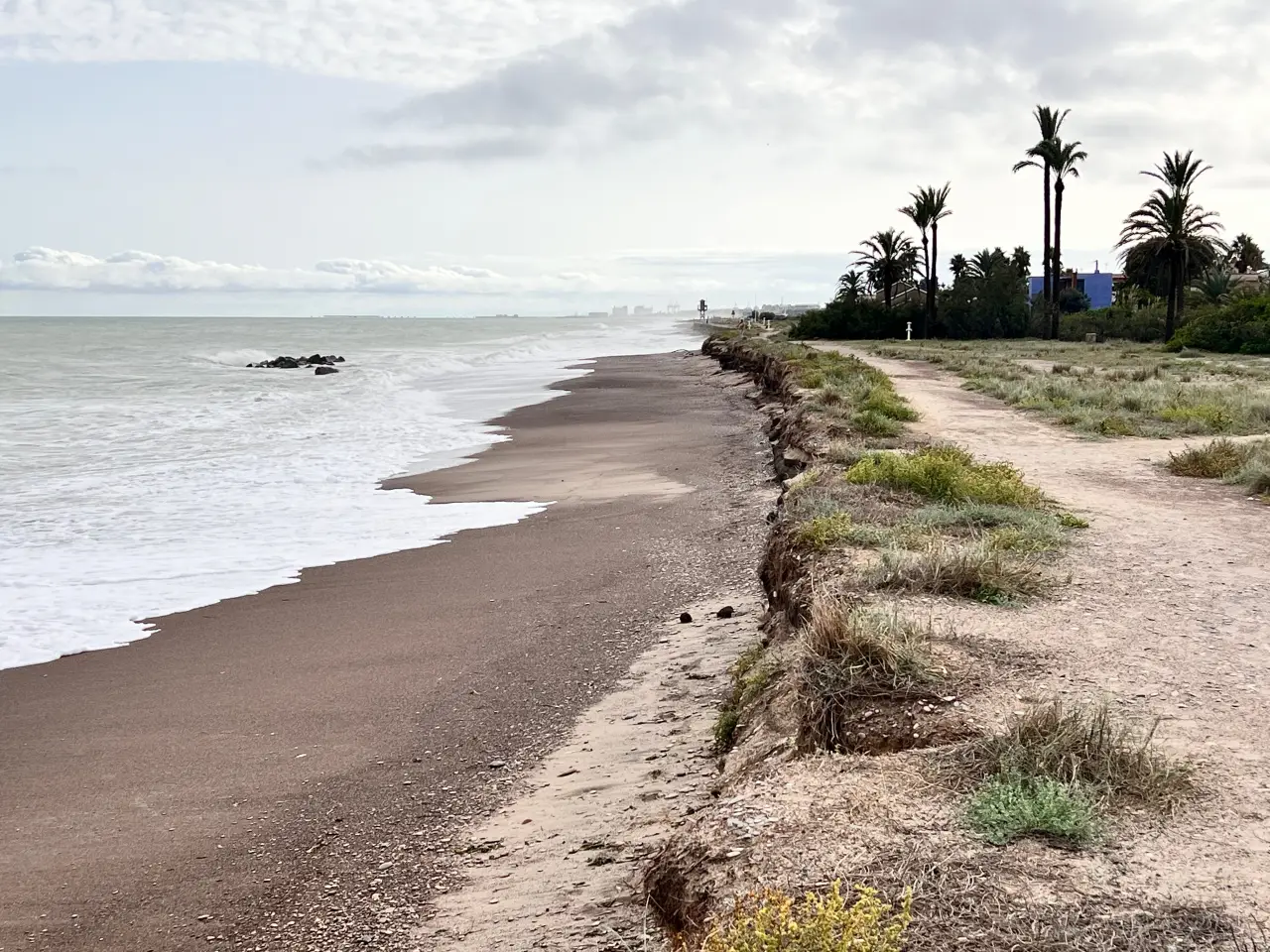
Along Spain’s eastern coastline, strong waves from Storm Alice have eroded several beaches in the Valencia region, leaving parts of the shorelines visibly damaged. Local reports describe stretches of sand swept away by rough seas, particularly near resort areas south of Valencia city. Coastal authorities are assessing beach erosion and warning that restoration may take weeks once the storm system clears.
Tourism and Travel Implications
The flooding has dealt a major blow to Spain’s autumn tourism season, particularly in resort areas along the Mediterranean coast. The AP-7 and the Barcelona–Valencia rail line are key transport routes for both domestic and international travelers heading to Spain’s eastern beaches. Tour operators have advised clients to monitor local travel advisories and confirm itineraries before departure.
Spain’s Ministry of Transport said engineers are assessing damage to the affected railway tracks and bridges. Preliminary reports indicate that cleanup and repair operations could take several days before normal service resumes. Road maintenance crews are working to clear debris and restore access to key national highways once floodwaters subside.
Storm Alice, a low-pressure system known locally as a “DANA” (Depresión Aislada en Niveles Altos), formed over the western Mediterranean late last week and moved slowly across eastern Spain. The phenomenon is common in autumn but has intensified in recent years, often leading to severe flooding episodes. Meteorologists link these stronger storms to warming sea surface temperatures that increase atmospheric moisture over the region.
While no fatalities have been confirmed as of Monday, authorities warned that conditions remain dangerous due to unstable river levels and saturated terrain. Regional governments in Catalonia and Valencia have requested national emergency assistance and additional resources to reinforce flood defenses in the most affected areas.
As cleanup operations begin, Spain’s emergency agencies continue to urge caution. Travelers are advised to check updates from AEMET, Renfe, and regional transport authorities before attempting any journeys through Catalonia, Valencia, or the Balearic Islands in the coming days.