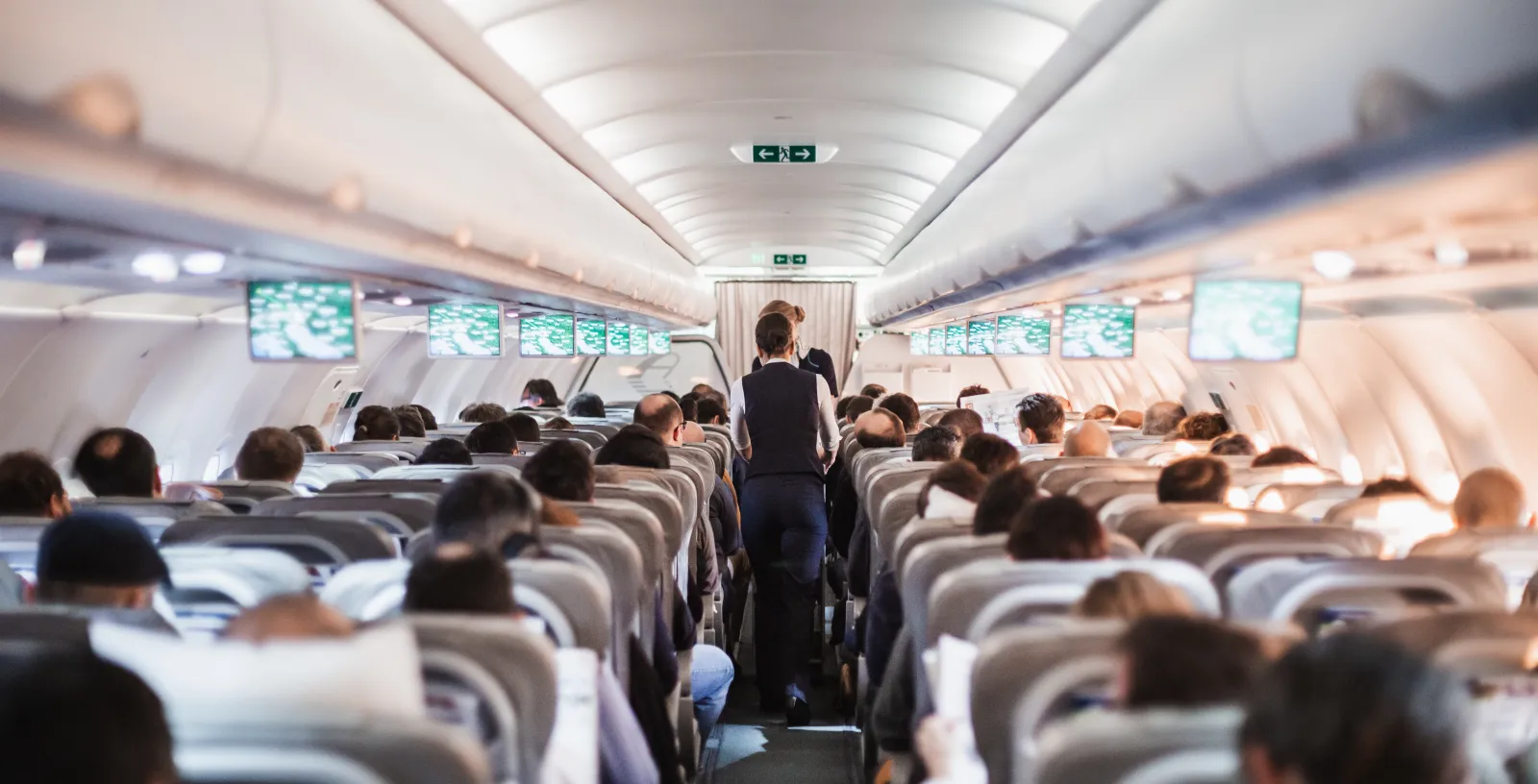
For many travelers, the calm hum of a cruising aircraft feels routine. Seatbelts click, lights soften, and cloudscapes drift by like distant shorelines. The quiet is deceptive: every moment aloft depends on a carefully managed atmosphere sealed inside the fuselage. That system is cabin pressurization, the invisible scaffold that lets long-haul dreams unfold at 35,000 feet.
Commercial jets fly in air too thin for unassisted breathing. Pressurization pumps conditioned air into the cabin and holds it at the equivalent of roughly 6,000 to 8,000 feet, even when the aircraft cruises far higher. According to the Federal Aviation Administration, this protects passengers from hypoxia, the oxygen shortage that can quickly impair judgment and consciousness.
Without cabin pressurization, breathing at cruising altitude would be nearly impossible. Oxygen levels are about one-third of those at sea level, and the air pressure is so low that moisture in the body could begin to evaporate. That’s why, in the rare event of a depressurization, passengers are instructed to don oxygen masks immediately — the drop-down devices supply life-sustaining air while pilots descend to a safe altitude.
For travelers, the effects of this hidden engineering feat are more familiar than they might realize. Pressurization is the reason your ears pop during takeoff and landing, and why some feel fatigued on long-haul flights. “Cabin pressure affects everything from how we breathe to how our senses perceive taste and smell,” explained aviation medicine specialist Dr. Ana Muñoz in an interview with Spain’s Aviation Health Institute. “At altitude, air pressure decreases, humidity drops, and oxygen levels shift, influencing how travelers experience flight comfort.”
Modern aircraft balance this delicate system with remarkable precision. Most pressurized air comes from the engines, where it’s bled, cooled, and circulated through the cabin in a controlled flow. Advanced jets like the Boeing 787 Dreamliner and Airbus A350 have improved this experience using composite materials and advanced air systems that maintain a lower “cabin altitude,” meaning passengers experience less fatigue and dehydration on long flights. Boeing notes that the 787’s pressurization system simulates conditions closer to 6,000 feet rather than the traditional 8,000, significantly improving passenger comfort on intercontinental routes.
For frequent flyers, those details translate into tangible benefits — fewer headaches, better sleep, and even improved mood. Many travelers report that newer aircraft feel “fresher” or less stuffy after long hours aloft, a result of the controlled humidity and gentle air pressure. Airlines use this as part of their wellness strategy for premium travelers, combining improved air quality with ergonomic cabin design and lighting systems that mimic natural circadian rhythms.
Still, the risks of losing pressurization, though rare, are taken seriously across the aviation industry. In 2005, the Helios Airways Flight 522 tragedy in Greece, caused by undetected cabin pressure loss, underscored how critical monitoring systems are to flight safety. Today, multiple sensors, automatic alarms, and manual controls give pilots instant warnings if air pressure changes unexpectedly. “It’s one of the most closely watched systems onboard,” shared a spokesperson from the European Union Aviation Safety Agency (EASA). “Redundancy and real-time data ensure that crews can respond within seconds.”
Turbulence and Cabin Pressure: Two Different Forces in the Sky
Many passengers often confuse turbulence with changes in cabin pressure, since both can make a flight feel physically intense. In reality, the two phenomena are unrelated. Turbulence occurs when an aircraft moves through unstable air currents — shifts in wind speed, temperature, or pressure that cause the plane to jolt or dip. Cabin pressurization, meanwhile, is an internal process that keeps the air inside stable and breathable regardless of what’s happening outside.
Even during severe turbulence, the aircraft’s pressurization system continues to operate normally. The bumps passengers feel come from the plane adjusting to uneven air masses, not from fluctuations in oxygen or cabin air. As aviation safety experts often remind travelers, turbulence is a comfort issue, not a structural or pressurization concern.
Beyond the science, there’s something poetic about this invisible technology. While travelers gaze at the curve of the Earth from 35,000 feet, they’re sitting in a carefully maintained bubble of breathable air — an artificial atmosphere that allows human comfort in a realm meant for birds and stars. For aviation enthusiasts and casual tourists alike, that balance of physics and design is part of what makes modern flight such a triumph of human ingenuity.
For those interested in learning more about cabin pressurization and in-flight health, both the FAA and EASA provide accessible resources on passenger safety and flight physiology.
Photo credit: Matej Kastelic / Shutterstock.com