The Spanish government has begun a formal process to renew the Madrid–Zaragoza–Barcelona bus concession as a way to prevent foreign operators from entering the national passenger bus market, following a years-long legal dispute with Germany’s FlixBus over cabotage rights on international routes.
The Ministry of Transport has opened a 30-day public consultation to prepare a draft law that would re-establish an active concession on the corridor, the only mechanism under EU rules that could block FlixBus from picking up and dropping off domestic passengers along its proposed Germany–Spain service. The move aims to maintain control of a route historically operated under Spain’s monopoly-based concession model.
The consultation marks the government’s latest attempt to preserve its concession system after losing successive decisions before the European Commission and the Court of Justice of the EU, which sided with the German state of Rhineland-Palatinate in its complaint over cabotage barriers. Under EU law, cabotage allows international operators to transport domestic passengers along part of an international route, but Spain has long avoided its application due to expired or absent concessions on many key lines. By restoring a valid concession on the Madrid–Barcelona corridor, the ministry is invoking the only EU-recognised exception that can halt foreign operators from entering the domestic market.
The Ministry of Transport’s action responds to the final stage of a dispute that began when FlixBus, backed by German regional authorities, sought to operate a Trier–Madrid service with domestic stops in Madrid, Guadalajara, Zaragoza and Barcelona. Previous rulings determined that Spain’s failure to maintain current concessions on many state-managed routes weakened its legal position. Ministry officials now argue that renewing the Madrid–Barcelona concession complies with EU obligations while preserving national control over strategic corridors.
According to sources cited by the European Commission, the existence of an active concession is the only valid reason under EU law to deny cabotage, placing significant pressure on Spain to restore the legal framework underpinning its bus network. The ministry’s plan includes not only revalidating the central corridor but also maintaining the existing 45 stops across municipalities with a combined population of more than 7.1 million. These stops stretch across the provinces of Barcelona, Tarragona, Lleida, Huesca, Soria, Zaragoza, Guadalajara and Madrid.
Sector associations in favour of liberalisation argue that many concessions have been expired for years, weakening the legal basis for Spain’s resistance to foreign operators. Small and medium-sized passenger transport companies have also criticised the government’s approach, noting that the new model consolidates service areas into larger blocks, a configuration they say favours major operators such as Alsa rather than increasing competition.
New connections and service adjustments
The ministry plans to introduce adjustments to the corridor despite the recently approved Sustainable Mobility Law, which requires maintaining existing routes and stops. Transport officials intend to allow more direct and semi-direct services by combining sections of different lines, potentially improving travel times on certain stretches. Companies bidding for the concession will be required to operate both end-to-end services between Madrid, Guadalajara, Zaragoza and Barcelona, as well as routes currently covered under two additional concessions: Madrid–Zaragoza–municipalities of Lleida and Tarragona, and Zaragoza–Señorío de Molina–Alto Tajo.
New connections planned under the corridor include Alcolea del Pinar–Calatayud, Alcolea del Pinar–Zaragoza, Calatayud–Guadalajara, Madrid–Manresa, Madrid–Sabadell, Madrid–Tarragona, Madrid–Zaragoza and Sabadell–Tarragona. A new stop will also be added at Barcelona’s El Prat Airport, expanding access to the national network and connecting long-distance bus services with air travel.
Alongside these changes, the ministry forecasts a 25.8% reduction in the price per passenger-kilometre for the company that secures the concession. Officials present this as both a service improvement and an economic adjustment designed to meet evolving mobility demands across the corridor. The government maintains that the new structure will preserve territorial cohesion while adapting to shifts in travel patterns.
While the Madrid–Barcelona corridor undergoes its consultation phase, the Council of Ministers is expected to approve the first renewal of a state bus concession under Spain’s future concession map: the Bilbao–Castro-Urdiales line. That redesign keeps links between nine municipalities—Abanto y Ciérvana-Abanto Zierbena, Barakaldo, Bilbao, Castro-Urdiales, Muskiz, Ortuella, Portugalete, Santurtzi and Valle de Trápaga-Trapagaran—within the 30-kilometre route but divides the service into five segments, including new direct routes.
These steps signal the government’s intent to reinforce the concession model before further EU challenges arise. Whether the strategy ultimately prevents foreign companies from entering Spain’s domestic market will depend on how Brussels assesses the renewed concessions and whether they meet the conditions for limiting cabotage under EU law. For now, the ministry continues to press ahead with its plan to preserve control of high-demand routes while restructuring services to align with new mobility and cost-efficiency goals.
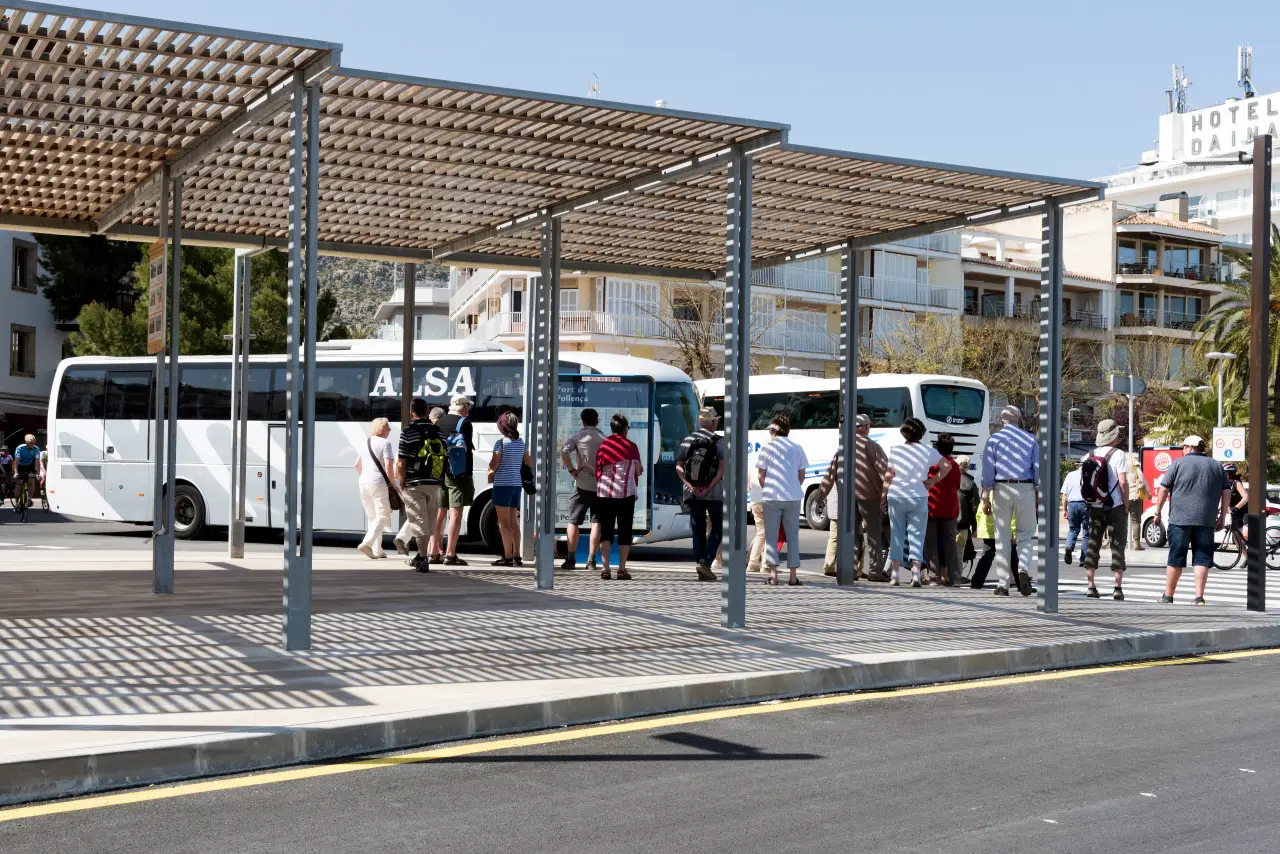
Photo Credit: Peter Titmuss / Shutterstock.com