Moving through a major European city often means choosing between crowded roads, packed trains, or slow suburban connections. In Paris, travelers now have a way to cross part of the city while floating above rooftops, highways, and high-speed rail lines.
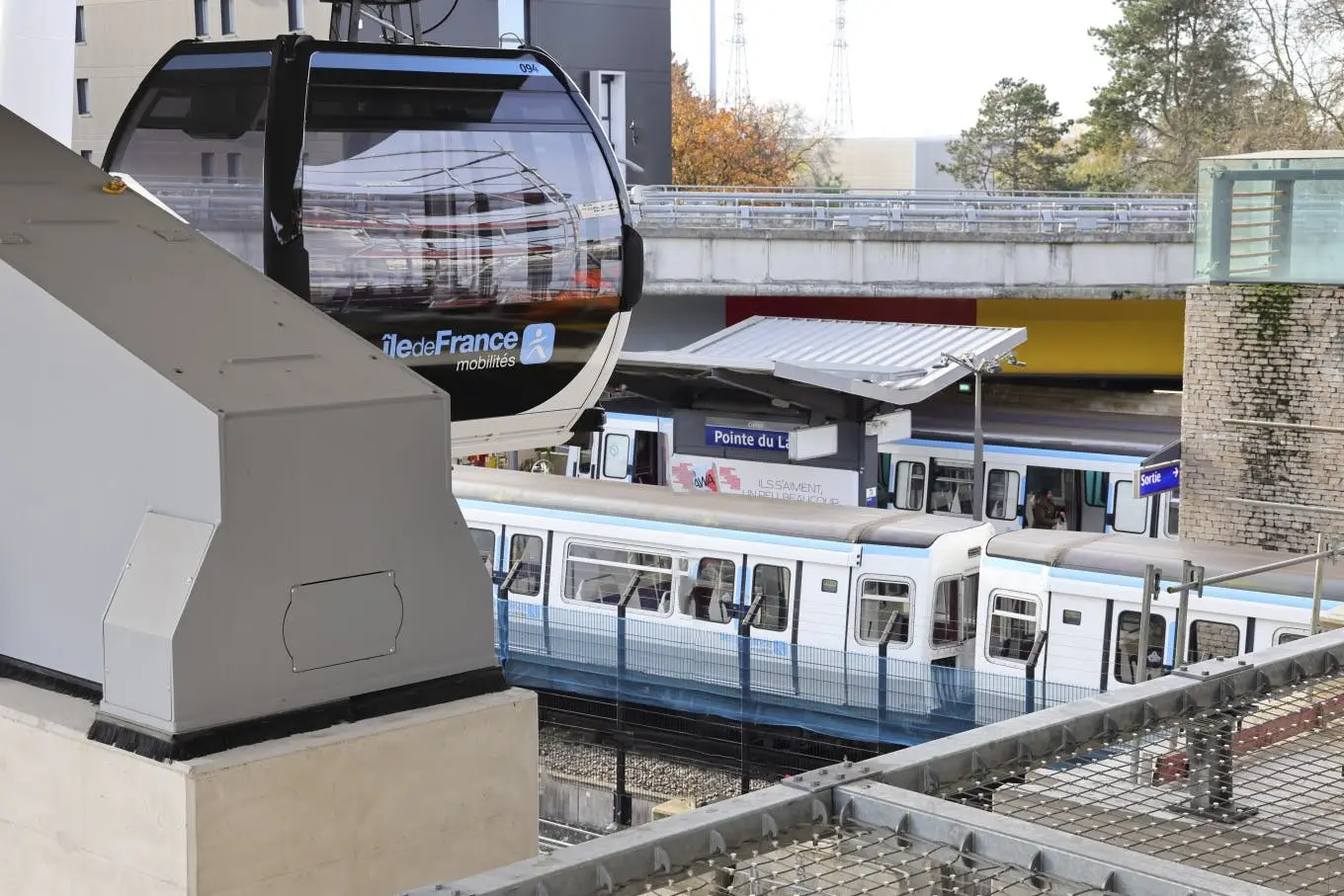
Since 13 December, the French capital has officially put into service the longest urban cable car in Europe. Known as Câble C1, the new line introduces a suspended form of public transport designed to transform mobility in the south-eastern suburbs of Paris.
The project was developed by Île-de-France Mobilités, the regional transport authority, and represents Paris’s first urban cable car system. Stretching 4.5 kilometers between Créteil and Villeneuve-Saint-Georges in the Val-de-Marne department, the line links five suburban municipalities previously underserved by traditional transport options.
For travelers, the appeal goes beyond efficiency. The cabins glide above dense neighborhoods and complex infrastructure, offering elevated views rarely seen by visitors. Rooflines, tree canopies, highways, and rail corridors unfold below, turning a routine commute into an unexpected urban experience.
The cable car was conceived as a practical solution to a difficult planning problem. The area it serves is crossed by major roads and rail lines, making metro construction impractical. By lifting passengers into the air, planners avoided costly tunneling while creating a fast, low-emission alternative to buses and cars.
The journey takes just 18 minutes from end to end, cutting travel times that can reach 40 minutes by road. The system operates with 105 cabins, each carrying up to 10 passengers, arriving every 27 seconds. Daily ridership is projected at around 11,000 passengers, underlining the line’s strategic role in regional mobility.
Environmental considerations were central to the project. The €138 million development took roughly three years to complete, following a planning process that began in 2004 and faced both technical and political challenges. Support columns, rising up to 45 meters, were designed to reduce visual impact and protect residents’ privacy.
To ensure reliability, Île-de-France Mobilités worked with Météo-France to analyze 35 years of wind data. The goal was to minimize weather-related disruptions, a common concern for cable systems in mountainous regions but less familiar in urban settings.
The project has not been without controversy. Some residents raised concerns about cabins passing over neighborhoods and questions about onboard safety. Regional authorities responded by emphasizing continuous video surveillance and high safety standards, seeking to reassure both users and those living along the route.
For visitors, the cable car is simple to use. It is fully integrated into the Paris public transport network, meaning standard bus tickets and metro passes are valid. The line connects efficiently with Metro Line 8, improving access between outer suburbs and central Paris without additional fares.
While designed primarily for residents and commuters, the cable car has clear tourism potential. It offers a fresh way to experience Paris from above, especially for repeat visitors interested in seeing beyond iconic landmarks. The route showcases everyday Parisian life, blending residential districts with large-scale infrastructure.
Looking ahead, planners have suggested the southern terminus could eventually be extended toward Orly Airport. If realized, that connection would open new possibilities for airport access and strengthen the cable car’s role in both urban mobility and travel planning.
The success of Câble C1 is being closely watched across France. Cities including Nice, Bordeaux, and Marseille are considering similar systems, following examples already in place in more than 80 cities worldwide. For Paris, the launch marks a significant step in rethinking how people move through complex urban spaces.
For travelers exploring the French capital, the cable car offers more than convenience. It provides a new perspective on the city’s evolving transport network, showing how innovation can reshape not just how people travel, but how they see the city itself. More information is available via Île-de-France Mobilités.
Photo Credit: Laurent GRANDGUILLOT / IDFM