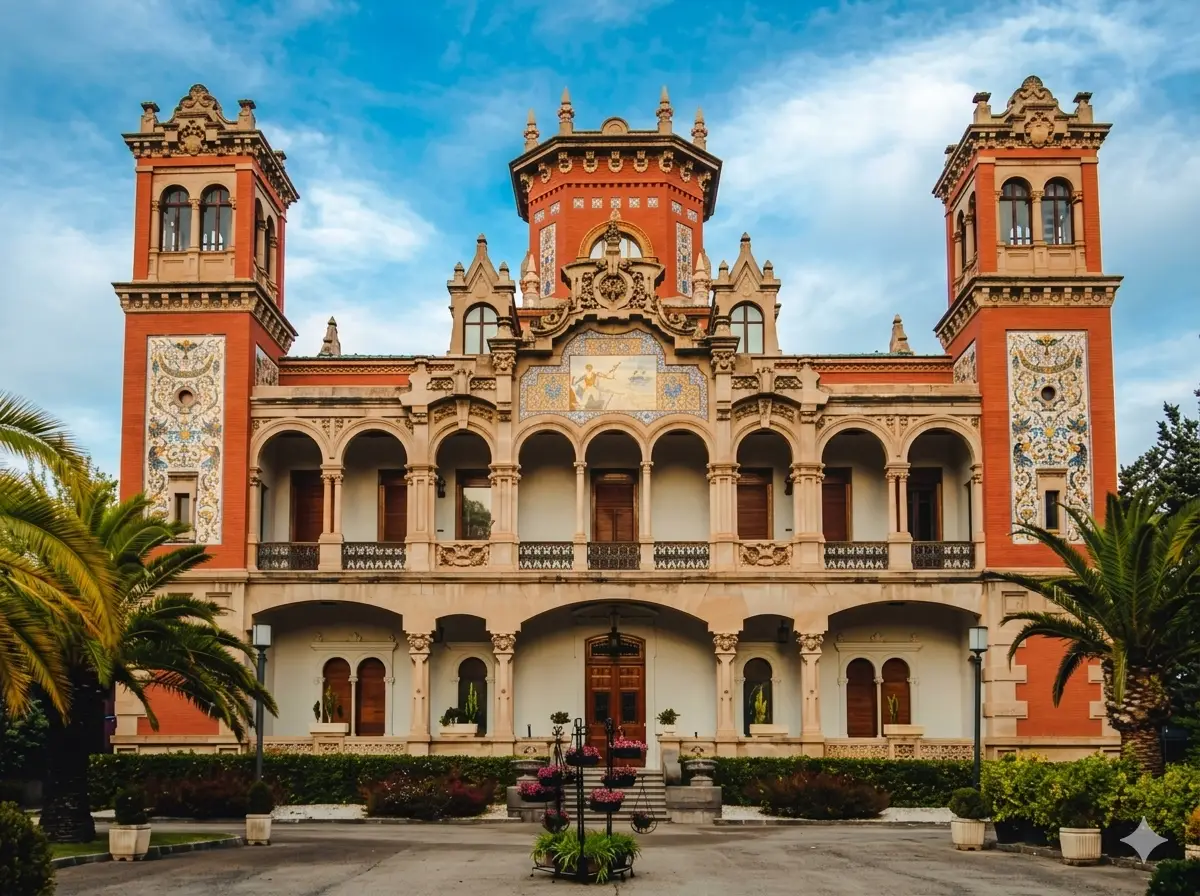
The Palacio de Larrinaga in Zaragoza is reopening to the public this month, giving visitors new access to one of the city’s most distinctive historic buildings through guided tours and a major art exhibition.
For travellers, the reopening means a rare chance to enter a palace that had long remained closed to regular public visits, adding a new cultural stop to Zaragoza’s visitor offer.
Fundación Ibercaja is relaunching the building as a visitable heritage space from 21 April, combining public access with the exhibition Romantic English painters in 19th-century Spain, which brings together nearly 50 works displayed throughout the palace.
The exhibition features paintings by 19th-century British artists including John Phillip, John Bagnold Burgess and John Dobbin, and is designed to let visitors discover the building while moving through the collection.
The reopening programme includes:
- Guided tours for individual visitors
- Guided tours for groups
- Educational activities for school groups
- Cultural programming linked to the palace’s heritage
The palace, located at 123 Miguel Servet Street in Zaragoza’s Montemolín area, is one of the city’s most striking historic properties. Often described as one of Zaragoza’s most romantic landmarks, it is known for its neo-Renaissance design, ornate facade and corner towers.
The building was commissioned in 1901 by Bilbao-born shipowner Miguel Larrinaga, who asked architect Félix Navarro to design the residence as a gift for his wife, Asunción Clavero. The project became known as Villa Asunción.
Larrinaga, who had settled in Liverpool, planned the palace as a retirement home for the couple. Built with stone, marble, brick, steel, iron and glass, the residence combines elaborate decorative features with maritime motifs that reflect his shipping background.
Although conceived as a family home, the palace was never occupied as originally intended. After Asunción Clavero’s death, the property entered a different chapter and was later used by the Marianist religious community as a school and residence.
Fundación Ibercaja bought the building in 1993 and restored it, later using it as an archive and venue for private events. Its reopening to visitors marks a broader shift towards public engagement with a site that had previously been little known from the inside.
The new exhibition explores how British painters viewed Spain in the 19th century, offering an artistic narrative that connects the palace’s romantic history with a wider European cultural perspective.
The reopening is expected to strengthen Zaragoza’s cultural tourism offer by adding a heritage site that combines architecture, personal history and fine art. With guided access now in place, visitors can experience both the palace’s interior spaces and the story behind one of the city’s most unusual buildings.