Europe’s rivers have been shaping its cities for centuries – not just as trade routes and borders, but as the actual backbones of urban life. Today, a short river tour is probably one of the most efficient ways to get your bearings in a new city, see the skyline from an angle no street offers and understand why so many of these capitals turned their faces toward the water. And the good news is you don’t actually need a week-long voyage to get that. Most of the best river tours in Europe run between one and four hours – enough to catch the key landmarks, have a drink on deck and be back in time for dinner.
Budapest is pretty much at the top of any list of the best Europe cruises, and not just because it looks good in photos. The Danube physically splits the city in two – Buda on the hilly western bank, Pest on the flat eastern shore – and the only way to fully appreciate that split is from the water. A one-to-two-hour evening cruise takes you past the Hungarian Parliament Building (completed in 1904 and still one of the largest parliament buildings in the world), the Chain Bridge (opened in 1849) and the lit-up silhouette of Buda Castle. If you’re planning a trip and want to book directly, Alle Travel’s Danube rides offer a solid selection of river excursions ranging from one-hour evening cruises to longer daytime tours with commentary – a practical starting point for first-time visitors and repeat travelers alike.
And what really sets Budapest apart from other river cruise destinations is the density of the experience. Within a single two-kilometer stretch of the Danube, you pass three UNESCO World Heritage-listed landmarks: the Parliament, the Buda Castle District and Andrássy Avenue (recognized in 2002). Very few cities in Europe can match that concentration from the water – it’s kind of extraordinary, actually.
Paris: The Seine After Dark (and Why Evening Actually Wins)
The Seine’s been central to Parisian life since the Parisii tribe settled on the Île de la Cité around 250 BC – so there’s a lot of history crammed into a pretty short stretch of water. A standard boat tour runs roughly an hour and covers the key bit between the Pont de l’Iéna near the Eiffel Tower and the Île Saint-Louis. Bateaux-Mouches, operating since 1949, run the most recognized fleet on the river, but smaller operators offer lunch and dinner cruises that stretch the experience to two or three hours.
A few things make the Paris version genuinely different from other cities. The Pont Neuf – despite its name (“New Bridge”), it’s actually the oldest standing bridge in the city, completed in 1607 – looks dramatically different from the water than from street level. And Notre-Dame de Paris, currently under restoration following the April 2019 fire, has scaffolding that gives it an unexpectedly industrial character against the medieval stonework. Evening tours benefit from the Eiffel Tower’s light show, which runs every hour on the hour after dark. That’s probably the single best reason to pick an evening slot if you can.
Amsterdam: Canals, Not a River – But Worth It Anyway
Technically, Amsterdam’s famous waterways are canals rather than a natural river – the canal ring, or grachtengordel, was built between 1613 and 1663 and added to the UNESCO World Heritage List in 2010. But the experience of a boat tour here is no less worth doing for that distinction, honestly.
Most Amsterdam canal tours last between one and two hours and pass through the Prinsengracht, Keizersgracht and Herengracht – the three main canals of the historic ring. The narrow houseboats along the banks, some of which have been occupied since the 17th century, are as much a part of the spectacle as the Golden Age merchant houses above them. Look for the narrowest house in the city at Singel 7, which measures just 1 meter at its front facade – built narrow to minimize property taxes that were assessed by frontage width. Yeah, tax avoidance has a long history.
Evening tours in Amsterdam are particularly good because the 2,500 houseboats and 1,550 bridges are lit after sunset, giving the canal ring a lantern-festival quality that photos rarely capture accurately. If you’ve only got one evening in the city, that’s when to go.
Vienna: The Other Danube City (It’s a Bit More Complicated)
Vienna’s relationship with the Danube is actually more complicated than Budapest’s. The river was repeatedly re-channeled in the late 19th century and the historic city center sits some distance from the main waterway. Most Vienna boat tours operate on the Danube Canal (Donaukanal) – a side arm running directly through the city – rather than the main Danube itself.
But the Danube Canal tour is genuinely worth doing, and not because of ancient landmarks. It’s interesting for a different reason entirely. The canal walls host some of the largest legal graffiti murals in Central Europe, a cultural layer that clashes pretty sharply with Vienna’s imperial architecture elsewhere. Shorter tours of 60 to 90 minutes are standard here and combined tickets with the Prater or the nearby Naschmarkt are available from most operators.
For the full Danube experience in Austria, some operators run day tours between Vienna and Bratislava – roughly 60 kilometers – but for a compact one-to-four hour window, the canal route is the sensible choice.
Prague: The Vltava at Golden Hour
Prague’s river is the Vltava, not the Danube, and it’s got a character of its own – narrower, faster-moving and more intimate than the broad waters of the Danube or the Seine. Charles Bridge (Karlův most), which crosses the Vltava and was completed in 1402, is the most photographed landmark in the Czech Republic. But seeing it from below – from a boat passing underneath its 16 Baroque statues – is a perspective most visitors miss entirely. It’s a pretty different view, actually.
Most Vltava boat tours run between 45 minutes and two hours and depart from the embankment near Čechův Bridge. The route typically covers the stretch from Čechův Bridge to the Vyšehrad fortress, taking in Hradčany (Prague Castle) on the left bank and the packed spires of Staré Město on the right. Sunset tours are especially popular between May and September, when the light hits the castle at a sharp angle and turns the stone a deep orange. So if you’re visiting in summer, try to time it right – it’s worth the extra planning.
Bruges: Medieval Canals in a Compact City (30 Minutes Is Enough)
Bruges is small – under 120,000 residents – but its canal network makes it one of the most visually striking cities in Northern Europe. People call it the “Venice of the North,” a label it shares with Amsterdam and a handful of other places. But in Bruges the comparison actually holds up. The canals are narrow, the medieval buildings lean out over the water and the city center’s compact enough that a 30-minute tour can cover most of it.
Boat tours here are shorter than elsewhere – typically 30 to 50 minutes – but the density of what you see is pretty high. The Rozenhoedkaai viewpoint (one of the most painted corners in Belgium), the Minnewater or “Lake of Love” and the 13th-century Beguinage (Begijnhof) – a UNESCO site since 1998 – all fall within a short distance of the main canal circuit. So don’t rule it out just because the tour is brief.
Cologne: The Rhine and the Cathedral Approach
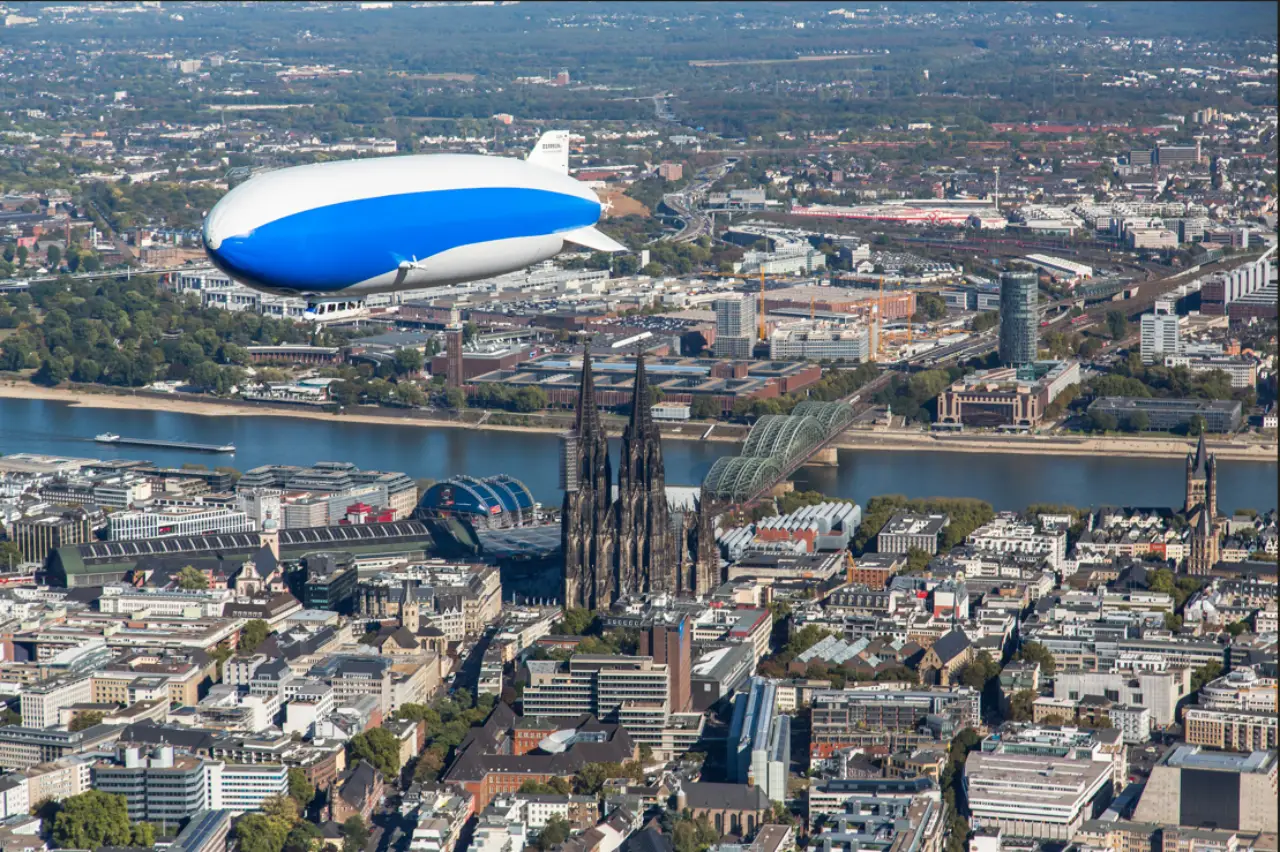
The Rhine at Cologne offers a different kind of river tour context – this is industrial scale, and it doesn’t pretend otherwise. The river here is wider and faster than most urban waterways in Europe, and the boat tours reflect that. Standard cruises from the Cologne landing stages (Rheinbrücken) cover two to three hours and offer close views of Cologne Cathedral (Kölner Dom), whose twin Gothic spires reach 157 meters and dominated the city’s skyline for centuries after completion in 1880.
Rhine cruises from Cologne also connect to the Romantic Rhine section further south – the 65-kilometer stretch between Bingen and Koblenz, which has its own UNESCO designation (since 2002) and passes over 40 castles. But for a city-based short tour, Cologne’s waterfront is a solid standalone option on its own.
How to Pick the Right River Tour (Practical Info)
A few things apply pretty consistently across all these cities.
How long to go for. One to two hours is probably ideal for a first visit – enough to see the main landmarks without getting restless. Longer evening tours (two to four hours) often include dinner or a bar and work well as a second evening activity in a city you’ve already explored a bit.
When to go. Golden hour and evening departures consistently beat midday tours in terms of light and atmosphere. In Budapest, the Parliament and Chain Bridge are floodlit nightly; in Paris, the Eiffel Tower light show starts at dusk. Plan accordingly – it’s one of those details that really does make a difference.
Commentary or no commentary. Some operators offer live commentary in multiple languages; others provide audio guides or nothing at all. For cities with dense architectural context – Budapest, Prague, Vienna – commentary actually adds real value. For Amsterdam or Bruges, where the experience is more visual, a quiet tour is often preferable.
Booking ahead. Most major operators allow online pre-booking, which is worth doing between May and September when popular evening tours sell out by early afternoon. In Budapest, platforms like Alle Travel pull together options across multiple tour operators, which makes comparison easier without having to wander between embankments trying to figure out who’s running what.
So, Which City Should You Actually Pick?
Europe’s rivers and canals aren’t background scenery – they’re where these cities started, where trade happened and where the most important buildings were placed to be seen at their best. A short boat tour, properly timed, delivers more orientation and visual impact per hour than most other city activities.
But if you can only pick one? Budapest is probably it. The combination of the Parliament, the Chain Bridge and Buda Castle all lit up at once, seen from the middle of the Danube, is just a very hard image to beat. And you can do the whole thing in under two hours – so there’s really no reason not to.
Photo Credit: Kirill Neiezhmakov / Shutterstock.com