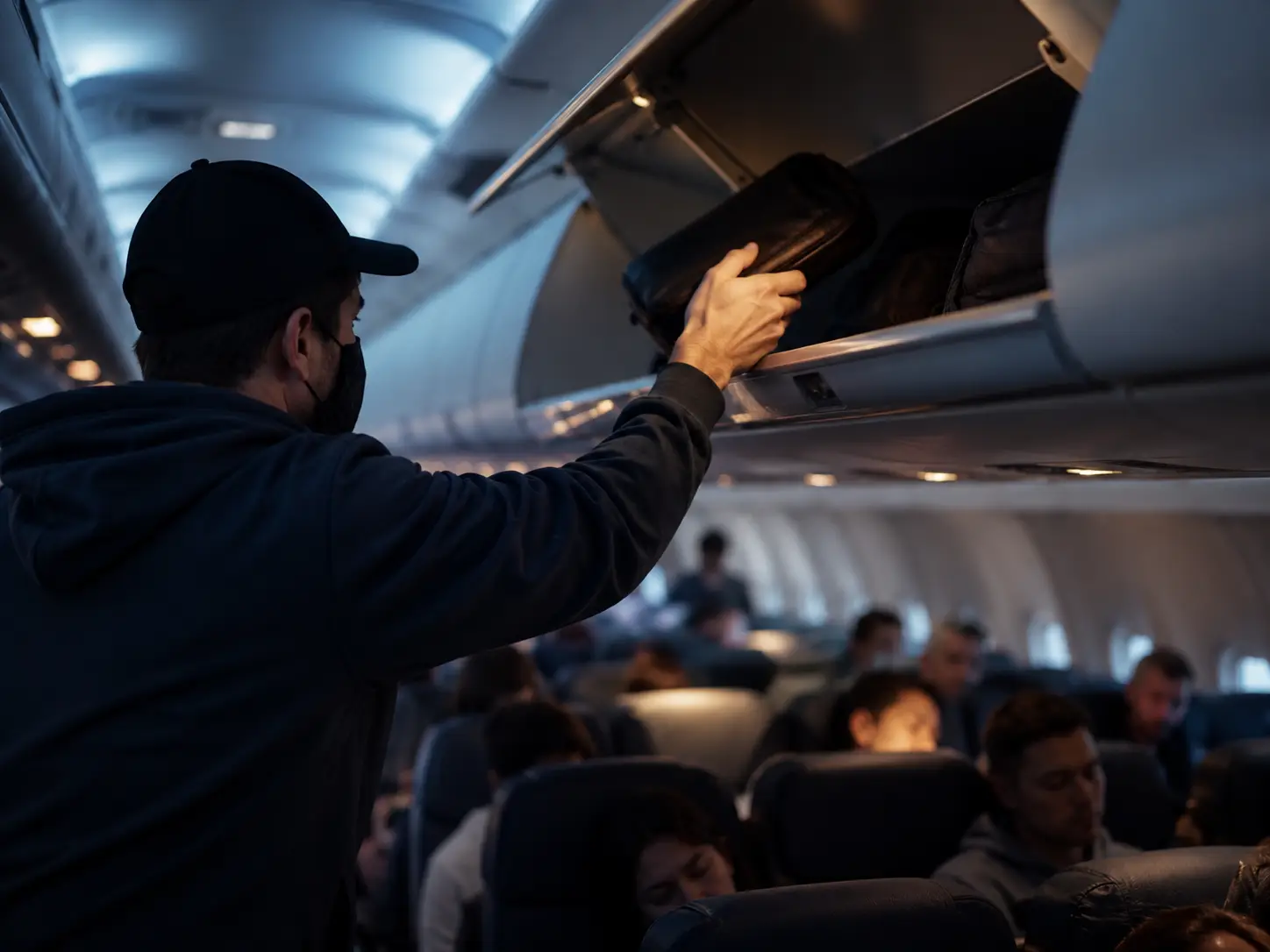
Airlines across Asia and Europe are reporting a rise in onboard thefts, with smartphones, tablets, wallets and earbuds disappearing most often on long-haul and overnight flights. The trend has become a recurring topic among international carriers, and the International Air Transport Association (IATA) says feedback from member airlines points to a noticeable increase in complaints over the past 12 to 18 months, particularly on routes serving Asia.
A post pandemic pattern
The shift has been linked to changing travel habits since the pandemic, when more passengers began flying with hand luggage only and started keeping valuables in overhead bins rather than checked bags. With cabins carrying an average of around 155 passengers, crews say it is difficult to monitor every overhead locker on a crowded overnight service, especially once the lights are dimmed and most travellers are asleep. Carriers stress that no reliable global figures exist, since many thefts are only discovered after landing and are not always reported to police or to the airline.
Hong Kong and Malaysia see sharp increases
Some of the clearest evidence comes from Hong Kong, where the territory’s Security Bureau logged 169 in-flight theft cases between January and October 2024, a 75 percent jump from the 92 cases recorded across the whole of 2023. The stolen property, including cash, jewellery, watches and credit cards, was valued at roughly HK$4.32 million. Around 70 percent of those cases involved short-haul arrivals from Southeast Asia, with Malaysia, Thailand, India and Vietnam named as common departure points, while about 20 percent came from Middle East routes through hubs such as Dubai, Doha and destinations in Turkey. Malaysia has reported a similar pattern, with police in Selangor recording 267 in-flight theft reports since 2022, including 146 in 2024 alone, many tied to flights landing at Kuala Lumpur International Airport.
Singapore tracks syndicates, Changi deploys robots
Singapore has also flagged a rise in cases, most involving small syndicates who buy last-minute tickets, avoid checked baggage and switch carriers or routes to make themselves harder to trace. Authorities at Changi Airport say they now use data analytics to flag travellers of interest on arrival, and the airport has used patrol robots since 2023, with a model capable of carrying an officer introduced more recently. In one case linked to the syndicate pattern, a man was sentenced to 20 months in prison after attempting to steal valuables worth more than S$100,000 from a business class passenger on a flight from Dubai to Singapore, with the court finding he had been funded and directed by a criminal network specifically to target premium cabins.
High profile routes under scrutiny
Individual routes have drawn particular attention. A flight from Zurich to Hong Kong was met by police after arrival following a reported theft, one of several such cases that have prompted checks on landing in recent months. Etihad Airways flights between Abu Dhabi and Hong Kong have seen a string of similar incidents, with overhead bin thefts reported on that corridor several times within a six month period. Investigators say the difficulty in these cases is timing: by the time a theft is noticed, often only after passengers have dispersed at their destination, the person responsible may already be on a connecting flight or have left the country entirely.
Europe’s border free travel adds complexity
Low-cost carriers operating within Europe face a related challenge. Because there are no routine passport checks between countries inside the Schengen area, suspects can move between several countries in a single day, making it far harder for investigators to track a pattern of offending across multiple flights and jurisdictions before it is identified.
Airlines respond with quiet measures
Some carriers in Asia have started placing plainclothes security staff on routes considered most exposed, with these employees travelling anonymously to watch for suspicious movement around overhead bins. In Japan, police working with Narita International Airport and ZIPAIR Tokyo, the low-cost arm of Japan Airlines, have run an awareness campaign using manga style flyers in multiple languages, handed out by cabin crew and ground staff to remind travellers not to leave valuables out of sight or store them in seat pockets and overhead lockers.
IATA says practical steps over a single fix
Nick Careen, IATA’s senior vice president of operations, safety and security, raised the issue publicly at the organisation’s annual general meeting in 2025 and has said the problem is not yet widespread enough to call rampant, though it is serious enough to warrant attention and the sharing of good practice between carriers. He has indicated that IATA is not planning a single unified structural response for now, with airlines instead expected to adapt practical steps to their own routes, aircraft types and passenger mix, while monitoring of the issue continues.
Advice for passengers
The advice to travellers remains consistent across carriers and aviation authorities. Keep valuables such as phones, wallets, passports and jewellery within reach rather than only in an overhead locker, use a lock or other closing system on cabin bags where possible, and stay alert during meal service and before disembarking. Passengers who notice anything missing are encouraged to alert cabin crew immediately, since reporting before leaving the aircraft makes it far easier for police to act quickly once the flight has landed.