A spike in cabin theft cases in Asia has been blamed on members of organised crime groups, who catch short-transit flights – including trips to Singapore – to steal small items from passengers, as reported by The Straits Times.
The Straits Times interviewed Assistant Commissioner M. Malathi, commander of Changi Airport Police Division, who said that in-flight theft cases are difficult to detect and investigate.
She said syndicate members, who work in pairs to steal from unsuspecting passengers, often catch a flight out of Singapore soon after landing at Changi Airport.
“They will take only some cash and maybe one or two cards. They won’t take your whole wallet, because if they do, it is easier to notice,” said AC Malathi, who added that the authorities have a short lead time before the suspects leave on an outbound flight.
“A timely report is important for our officers to quickly track and trace the suspects and intercept them before they catch their next flight,” she said, adding that passengers should always keep their valuables on them and remain vigilant.
The International Air Transport Association (IATA), which represents about 300 airlines, had had flagged concerns on 3 June after members indicated a spike in in-flight theft cases over the last 12 to 18 months.
Many affected routes were in Asia
Hong Kong has been one of the worst hit, with 169 cases of in-flight theft involving HK$4.32 million (S$700,000) in valuables recorded in the first 10 months of 2024 – a 75 per cent increase from the same period the previous year.
According to reports, Malaysia saw a significant increase in onboard theft cases, with the authorities receiving 146 reports in the first 10 months of 2024, compared with 88 in the previous year and 33 in 2022.
The authorities in Vietnam reported that criminals often purchase last-minute tickets, avoid checked baggage, and switch between domestic and international flights and different carriers to avoid detection.
Organised crime from China
At its general meeting in India, IATA said that many of the theft cases appear to be organised from China.
Between January and May, three people were charged in Singapore for theft on board an aircraft. Only one person was charged in the same period in 2024.
These Chinese nationals include a man who was sentenced to eight months’ jail for stealing US$885 from another passenger while on board an aircraft flying from Jeju, South Korea to Singapore. Another man was also sentenced to eight months’ jail for stealing cash amounting to some US$2,500 from three passengers during a flight from Ho Chi Minh City, Vietnam to Singapore. Chinese man was sentenced to 10 months’ jail for stealing about US$180 cash and a credit card from a fellow passenger while onboard a flight from Kuala Lumpur to Singapore.
The Airport Police Division said it tries to identify potential syndicate members by looking out for a common trend of behaviour, including frequent travel and transit flights, often with just a two- or three-hour transit period.
“We use data analytics in general to identify these people that could be of interest coming into Singapore, and to aid our investigation process,” said AC Malathi, who added that criminals operate across all classes of travel.
Rise of in-flight theft post pandemic
AC Malathi said in-flight theft picked up around the time air travel started to recover after the Covid-19 pandemic. “We see more of these syndicates working as air travel picks up. Singapore is not the only location. This is happening worldwide,” she said.
The theft of personal belongings on board planes is a growing problem in some parts of the world, and the International Air Transport Association (IATA), plans to hold discussions on how to deal with this in the coming weeks.
Mr Nick Careen, senior vice-president for operations, safety and security at IATA, said feedback from its members indicate that in-flight theft has become more of an issue on certain routes in the past 12 to 18 months.
Here are some tips on how you can keep your valuables safe from thieves when you are onboard.
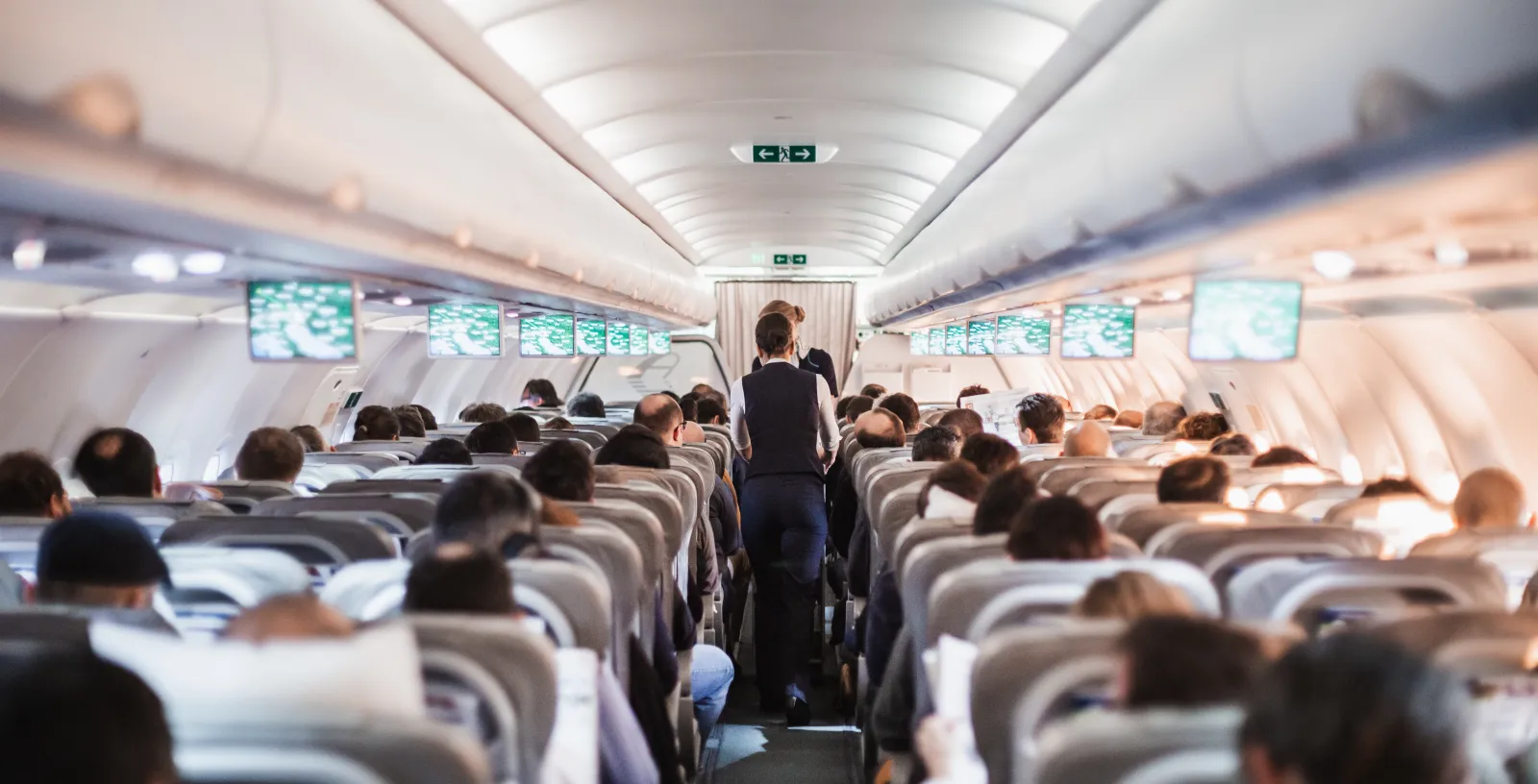
Photo credit: Matej Kastelic / Shutterstock.com