Germany offers a wide range of mountain hikes, from gentle summit walks for beginners to demanding alpine routes for experienced climbers. A selection of 10 routes highlights the country’s hiking variety across the Bavarian Alps, the Harz Mountains, the Allgäu and other regions.
The hikes range from short scenic outings of around 3.5 hours to full-day alpine challenges lasting up to 12 hours. They include accessible family routes, moderate mountain trails and serious climbs requiring strong fitness, sure footing and alpine experience.
Schnappen and Schnappenstein
Schnappen and Schnappenstein, near the Kaisergebirge, offer a relatively gentle introduction to mountain hiking. The route climbs about 800 metres and usually takes around 4.5 hours.
The walk combines forest sections, open alpine scenery and wide views across the Chiemgau region. It is suitable for beginners with basic fitness and for families looking for a rewarding but manageable mountain day.
Jochberg
Jochberg, near Walchensee in Bavaria, is one of Germany’s most popular shorter mountain hikes. The route takes about 3.5 hours and gains around 750 metres in elevation.
The summit is known for views over Lake Walchensee, Lake Kochelsee and the surrounding Bavarian Alps. Its relatively short distance makes it a strong choice for travellers new to alpine hiking.
Brocken
Brocken, at 1,141 metres, is the highest summit in northern Germany and the best-known mountain in the Harz. Hikers can reach the top via several routes, including the historic Goetheweg.
The mountain is also served by the Brockenbahn, a steam railway that makes the summit accessible to a wider range of visitors. Its fog, snow and folklore give the route a distinctive atmosphere throughout the year.
Wendelstein
Wendelstein, in the Bavarian Alps, rises to 1,838 metres and is a moderate hike for walkers with some mountain experience. The route usually takes five to six hours.
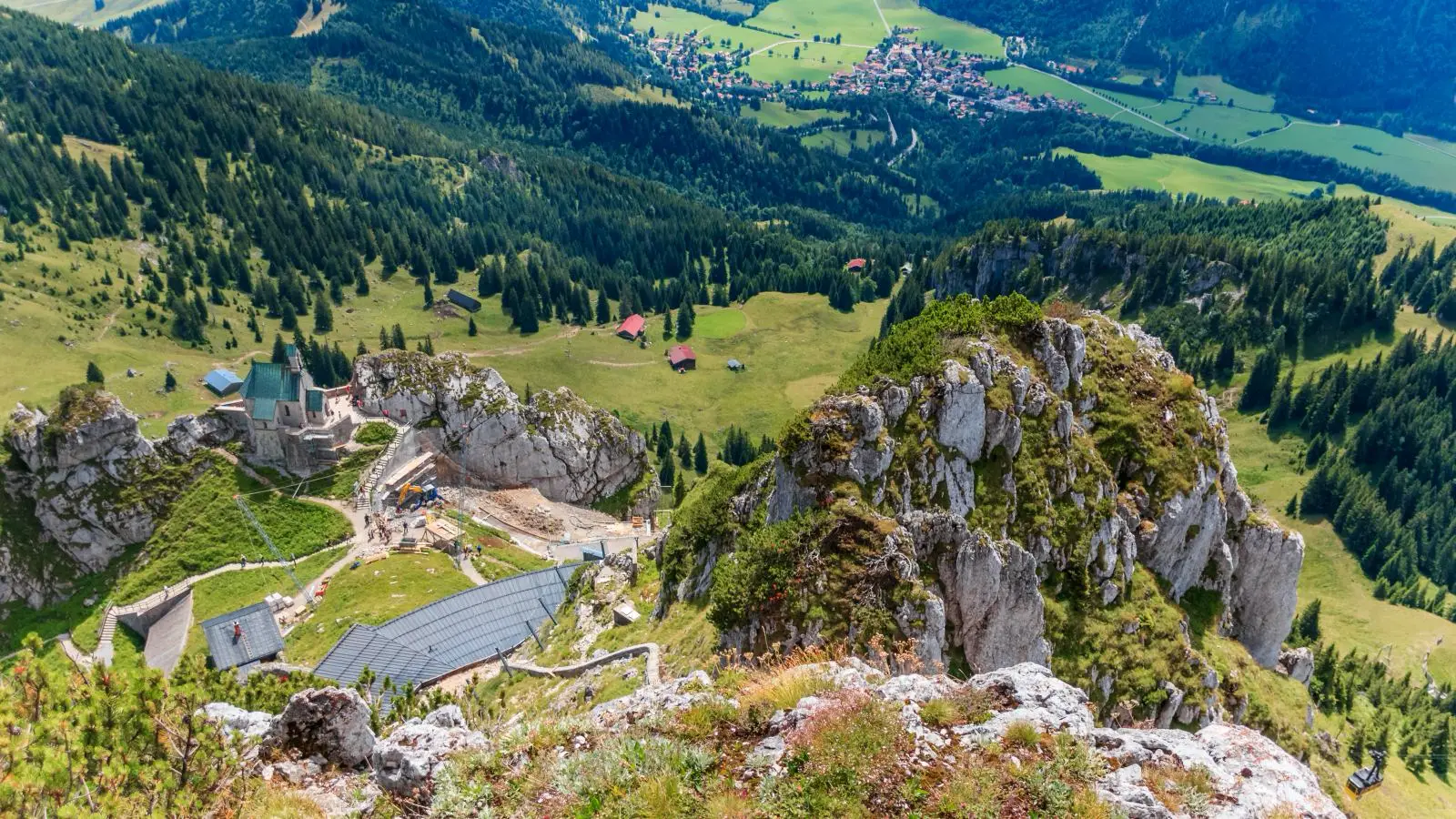
The southern approach crosses forest tracks, alpine paths and narrower trail sections near the Zeller Scharte and Reindler Scharte. The summit offers broad views across the Inn Valley and surrounding peaks.
Brunnenkopf
Brunnenkopf, in the Ammergau Alps, starts near Schloss Linderhof and climbs about 900 metres. The hike can usually be completed in three to four hours.
The route is popular with hikers who want a moderate challenge without committing to a long alpine ascent. A secured ridge path near the top adds excitement and gives wide views across the Ammergau landscape.
Rubihorn
Rubihorn, in the Allgäu Alps, is the most demanding of the moderate routes. It involves about 1,350 metres of ascent and takes around 6.5 hours.
The trail climbs through meadows, steep switchbacks and open mountain terrain before reaching a summit with views over the upper Iller Valley. It suits experienced walkers with good stamina.
Hochkalter
Hochkalter, in the Berchtesgaden Alps, rises to 2,607 metres and is aimed at fit, alpine-savvy hikers. The Ofental route involves around 1,500 metres of ascent and takes eight to nine hours.
The climb is physically demanding and requires sure footing. From the summit, hikers are rewarded with one of Bavaria’s most impressive views across the Watzmann massif and the surrounding limestone peaks.
Watzmann Mittelspitze
Watzmann Mittelspitze, at 2,713 metres, is one of Germany’s most serious mountain objectives. The route involves about 2,000 metres of climbing and can take 10 to 12 hours.
This hike is not suitable for beginners. Exposed sections, secured passages and steep terrain require alpine experience, strong fitness and a head for heights.
Großer Krottenkopf
Großer Krottenkopf, in the Lechtal Alps, stands at 2,656 metres and is considered the highest peak in the Allgäu Alps. The route requires about 1,400 metres of ascent and takes seven to eight hours.
Although the path is marked, hikers face scree, rocky ground and a demanding final section. The summit rewards the effort with far-reaching views across the Allgäu and Austrian Alps.
Zugspitze via Höllental
Zugspitze, Germany’s highest mountain at 2,962 metres, is the toughest hike on the list when approached via the Höllental. The route climbs about 2,200 metres and takes eight to 10 hours.
The ascent combines hiking, via ferrata sections and glacier crossing. It requires proper equipment, alpine knowledge, stable weather and a strong head for heights.
Together, the 10 routes show the breadth of mountain hiking in Germany. From the accessible Brocken and scenic Jochberg to the demanding Watzmann Mittelspitze and Zugspitze, the list offers options for casual walkers, experienced hikers and serious alpine travellers.
The selection also underlines an important rule of mountain travel: hikers should match each route to their fitness, experience and weather conditions. Germany’s mountain regions offer exceptional variety, but the hardest routes require preparation, equipment and respect for alpine terrain.
Top Photo Credit: nnattalli / Shutterstock.com