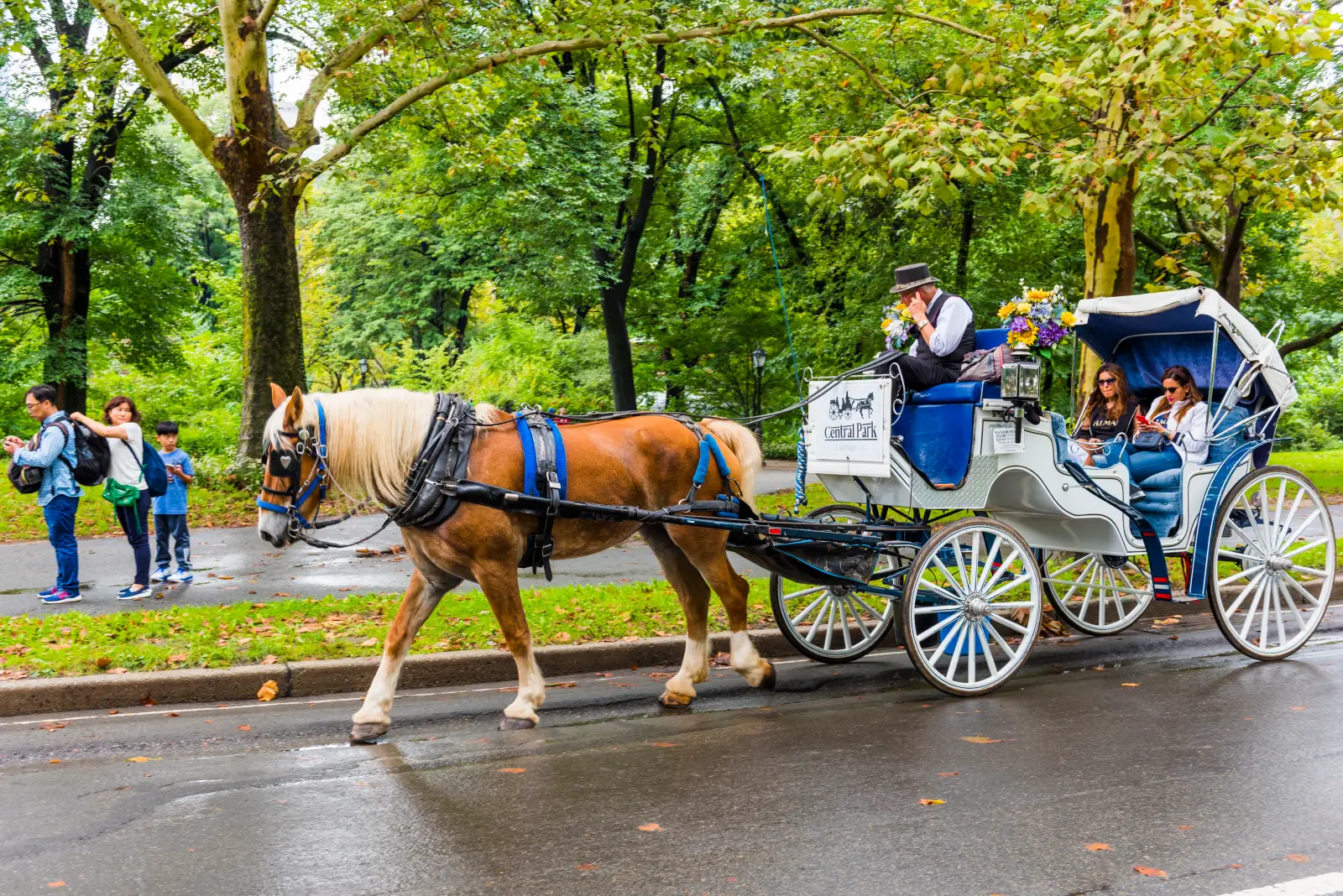
Horse-drawn carriage rides in New York City’s Central Park have been suspended following the death of an 18-year-old Indian tourist who was involved in a runaway carriage incident while visiting the city with his family.
The suspension was announced by the Transport Workers Union (TWU), which represents carriage drivers, as authorities investigate the accident and review safety procedures. The move comes amid growing pressure from advocacy groups and elected officials to end horse-drawn carriage rides in the park after a series of safety incidents over the past year.
The victim, Romanch Mahajan, was riding in a carriage with his parents and younger brother on Wednesday afternoon when the horse suddenly bolted while the driver had stepped away to take a photograph of the family.
According to the TWU and police, the horse took off for unknown reasons. The carriage then clipped the wheel of another carriage and overturned.
Police said Mahajan fell from the carriage and was later pronounced dead at hospital. His parents and younger brother suffered minor injuries.
Deepak Mahajan, the victim’s father, told The New York Times that his son jumped from the carriage after his mother, Priya Mahajan, fell out, apparently trying to help her.
The family had been visiting New York City for the first time.
Safety review under way
The TWU initially announced a temporary suspension on Thursday and later confirmed that passenger carriage rides would remain suspended until at least Tuesday while drivers undergo additional safety reviews and training.
The union said drivers will participate in group meetings to review operational rules and protocols, including procedures for securing and maintaining control of carriage horses.
Training sessions will continue in Central Park with horses and carriages, but no passenger tours will be conducted during the suspension period.
The horse involved in the incident has been retired from service. The carriage driver has also been suspended pending the outcome of the investigation.
Police said the investigation remains ongoing.
Alexander Kemp, Administrative Vice President of TWU Local 100, said: “Our hearts go out the family of Romanch Mahajan. Words can’t express the enormity of this tragedy. We are taking the first steps towards addressing safety issues.”
Kemp added that the union was committed to improving safety standards.
“This is believed to be the first passenger fatality in all that time, but we are committed to a Vision Zero approach where we do all that we can, collaborating with the city, to improve safety and prevent any accidents from occurring as we move forward,” he said.
Renewed debate over horse-drawn carriages
The fatal accident has intensified a long-running debate over the future of horse-drawn carriage rides in Central Park, one of New York’s best-known tourist attractions.
The Central Park Conservancy and several animal welfare advocates have renewed calls for a permanent ban, arguing that the risks to both passengers and horses remain too high.
According to the conservancy, eight safety incidents involving carriage horses have occurred during the past 13 months. One incident in January saw a horse run into traffic and collide with several vehicles.
A spokesperson for the Central Park Conservancy said: “The essential nature of a 2,000-pound animal simply cannot be regulated. Every day horse carriages are operating in the park is a day the safety of New Yorkers is in jeopardy. We cannot undo the tragedy of earlier this week, but ending the practice of carriages in the park will ensure no other families suffer.”
The accident also comes as New York City lawmakers prepare to consider new legislation known as Ryder’s Law. The proposal, named after a carriage horse that collapsed and died in Manhattan in 2022, would ban horse-drawn carriages in city parks from 2028.
The bill would also require humane placement of carriage horses, prohibit their sale for slaughter or transfer to other carriage businesses, and provide workforce training for drivers transitioning to new careers.
As of Friday, the legislation had secured 14 sponsors in the City Council.
While opposing a complete ban, the TWU said it supports stronger enforcement measures, including regular inspections, improved training requirements and additional infrastructure to safely tether horses within Central Park.
The latest tragedy is likely to intensify scrutiny of an industry that has operated in New York for decades and now faces renewed questions about its future.
Photo Credit: Resul Muslu / Shutterstock.com