At least 101 million people in Europe were expected to face temperatures above 35C on Thursday as an intense heatwave continued to sweep across the continent, with France among the worst affected countries.
France alone accounted for 50 million of those at risk, highlighting the scale of the extreme weather as it put pressure on daily life, travel and tourism across major cities and holiday destinations.
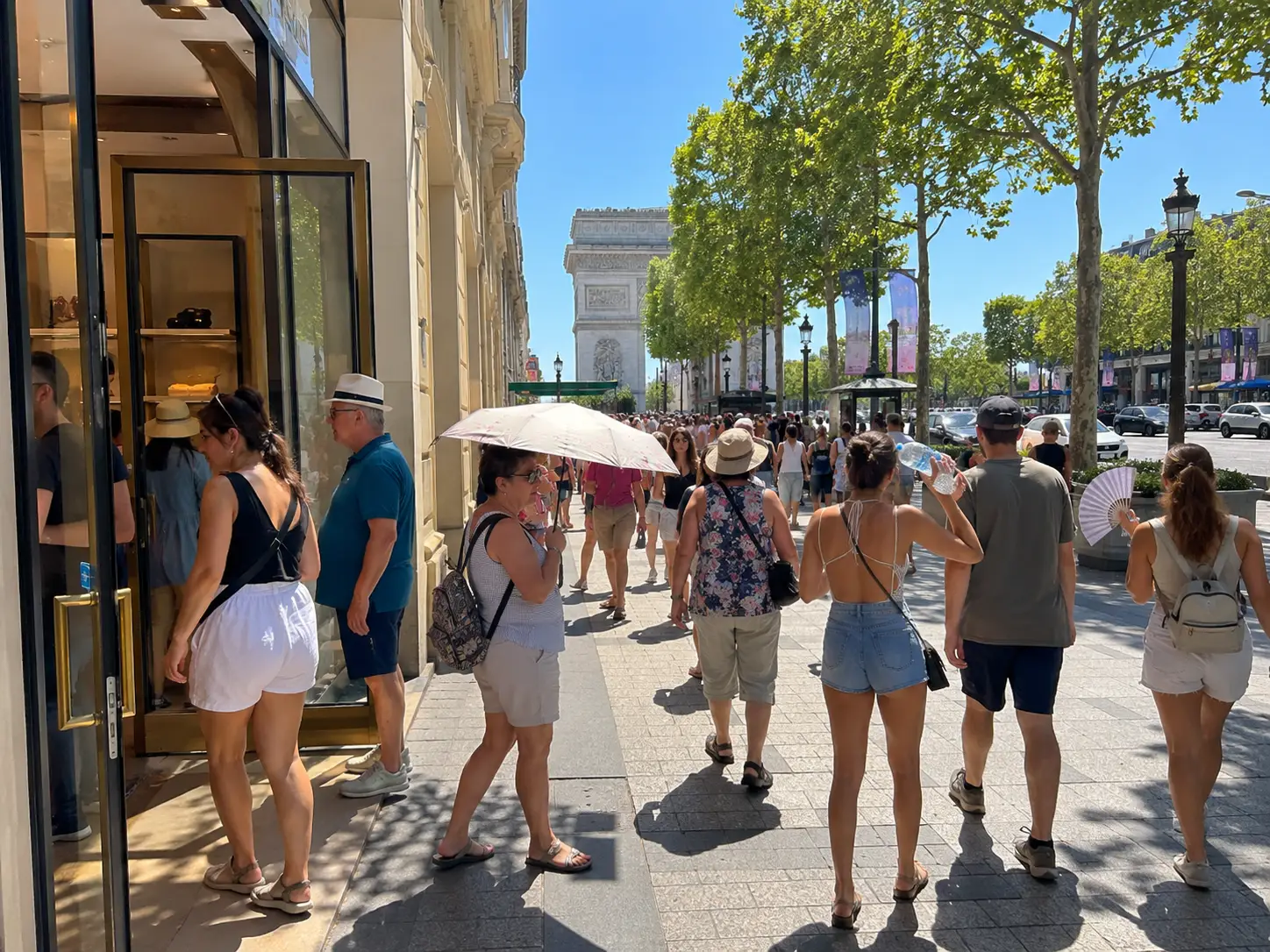
Tourists on Paris’s Champs-Elysees were ducking into air-conditioned shops to escape the heat, while workers were also adapting to the extreme temperatures, said James Andre, France 24 reporter.
The conditions formed part of a broader pattern of punishing summer weather across Europe, where prolonged hot spells have increasingly disrupted travel plans, outdoor sightseeing and the routines of people living in or visiting the region.
Heatwaves can have a direct impact on the travel sector because they affect how long people spend outdoors, when they travel and which attractions they choose to visit. In peak summer periods, visitors often seek out shaded streets, indoor museums, air-conditioned retail spaces and cooler transport hubs to reduce exposure to the sun.
In Paris, one of the world’s most visited cities, the impact was visible in the way tourists moved through the French capital’s main shopping avenue. The Champs-Elysees is usually a busy public space, but extreme heat can change the pace of travel, forcing visitors to take frequent breaks and making longer sightseeing days harder to manage.
For workers, the challenge is different but equally immediate. Heat can affect outdoor staff, transport employees, construction crews and anyone whose job requires movement across streets or between sites. Businesses often respond by adjusting schedules, increasing access to cool spaces and encouraging people to limit activity during the hottest hours.
The latest figures underline how widespread the heat is, with 101 million people across Europe expected to experience temperatures above 35C on Thursday. That included 50 million in France alone, making the country a major focus of the current heatwave.
Travel experts often warn that such weather events can change demand patterns quickly. Some travellers choose to delay walking tours, shorten city breaks or shift from outdoor attractions to indoor ones, while others may rethink routes and transport choices to avoid the most intense heat.
Air-conditioned retail and hospitality venues often become informal refuges during these periods. In tourist centres, cafes, stores and stations can see higher footfall as people look for short periods of relief before continuing their journeys.
The heatwave also adds to the wider pressures facing Europe’s tourism industry in summer, when beaches, capitals and heritage sites are already operating at full capacity. Extreme temperatures can raise health concerns for older travellers, families with children and people with pre-existing conditions, making comfort and safety more important parts of trip planning.
As the heatwave continued, visitors across the continent were being forced to adapt their behaviour in response to the weather. The latest forecast suggested that the scale of the hot spell remained vast, with millions still facing dangerous daytime conditions.