Corporate relocation demand, increased investment, advancing technology and changing traveller expectations are driving the evolution of the global serviced apartment industry, according to the newly released 2025 Global Serviced Apartment Industry Report (GSAIR).
Published by consultancy firm Ariosi via Travel Intelligence Network, the report forecasts the global service apartment market’s value will reach £183.6 billion by 2030, reflecting the sector’s growing importance in business travel, relocation and blended accommodation markets.
The report, launched in London, identifies several converging trends reshaping the serviced apartment landscape, including the rise of artificial intelligence (AI), the maturing Gen Z workforce, a tightening regulatory environment and greater investor activity. Together, these dynamics are transforming serviced apartments into a central component of the global travel and real estate ecosystem.
Corporate Relocation and Flexible Living Models Drive Demand
According to GSAIR, corporate relocation remains one of the most powerful drivers of demand in the serviced apartment sector. Enquiries from companies seeking to relocate staff to the UK rose 8% year-on-year in April 2025, reflecting the strength of global mobility and international business operations. Corporate demand is expected to remain a dominant force, supporting steady market expansion through the end of the decade.
Over the next five years, approximately 30% of Europe’s branded serviced apartment pipeline will be on UK soil, with London accounting for 15% of pipeline units.
Industry data included in the report indicates the serviced apartment market will double in value to £6.52 billion by 2033, representing a compound annual growth rate (CAGR) of 8.8%. A related segment, the global blended travel market—which combines business and leisure travel—is projected to be worth £636.47 billion by 2026, expanding at a CAGR of 12.27% from 2025 to 2032. This growth is generating new demand for flexible, short-term accommodation that integrates residential comfort with hotel-style services.
Investor confidence in the sector continues to rise. The proportion of investors targeting serviced apartments increased from 24% in 2024 to 27% in 2025, highlighting the growing appeal of flexible accommodation assets. The report notes an accelerating convergence between serviced apartments, co-living, and long-stay models, with hybrid projects and new partnerships expected to define future development pipelines in major UK and international cities.
Technology, Gen Z and AI Redefine Guest Experience
The 2025 report highlights the growing influence of younger travellers, particularly Gen Z, whose digital expectations are accelerating the adoption of new technology across the sector. The demographic’s preference for mobile-first experiences and seamless digital integration is prompting operators to invest in smart room technologies such as app-controlled heating and lighting systems, contactless check-ins, and enhanced guest communication tools.
AI is also emerging as a key differentiator for serviced apartment providers. Operators are increasingly leveraging generative AI (Gen-AI) and advanced data analytics to improve personalisation, predict guest preferences, and streamline service delivery. These developments are expected to create more efficient operations while enhancing the customer experience across corporate, leisure, and long-stay segments.
The report suggests that greater data aggregation and automation will drive innovation in guest engagement and service management. From predictive maintenance to dynamic pricing, the application of AI is reshaping both customer interaction and backend operations, allowing operators to better meet the demands of a global and increasingly mobile workforce.
Regulatory Shifts and Sustainability Shape Sector Strategy
In addition to market and technology trends, the GSAIR outlines significant regulatory and environmental developments that are influencing the serviced apartment sector’s evolution. As governments tighten sustainability legislation and introduce new risk management directives, operators are being compelled to adapt their reporting, compliance, and environmental standards.
These regulatory changes are expected to foster a more transparent and accountable business environment across hospitality and real estate. The report identifies sustainability not only as a compliance obligation but also as a competitive differentiator for operators and investors seeking to appeal to environmentally conscious travellers and corporate clients. The rise of ESG (environmental, social and governance) criteria in investment decisions further underscores the sector’s shift towards responsible growth.
Geopolitical factors are also influencing global relocation and travel flows. Increasing attention on traveller safety, duty of care, and operational resilience has prompted operators to strengthen their risk management strategies. As new legislative directives take effect in 2026 and beyond, the report anticipates heightened collaboration between serviced apartment operators, corporate travel managers, and government bodies to ensure compliance and continuity of service.
Industry Leaders Weigh In on Future Growth
To mark the launch of the 2025 GSAIR, Ariosi hosted an event at Citadines in London’s Holborn, bringing together senior figures from across the serviced apartment and corporate accommodation sectors. The presentation and panel discussion featured experts including Tom Otley, Director at Oury Clark Sustainability; Trine Oestergaard Stafford, Managing Director of House of Fisher; Ben Davis, Real Estate Director at Saxbury; and Steve Lowy, CEO of AES & The Residence Apartments.
Speaking on the report’s findings, Alistair Murray, Chief Operating Officer at Ariosi, said 2026 will mark a turning point for the serviced apartment and corporate travel industries. “2026 represents a critical inflection point for corporate travel managers, relocation specialists and the serviced apartment sector. Traditional accommodation as well as wider corporate travel and relocation strategies must evolve at pace to meet the demands of a transformed workforce and increased regulatory environment globally,” said Murray.
He added that operators must adapt quickly to external pressures and technological shifts to remain competitive. “Several factors are bearing influence, from changing client expectations, employment models, the emerging sectors fuelling growth in demand, legislation, the accelerating evolution of AI and shifting investment patterns. All of which are set to impact the sector’s structure, proposition and client demand patterns,” he said.
“Flexibility will be the guiding principle heading into 2026 to accommodate ongoing wider geopolitical and geoeconomic changes and influences. Whilst there is significant opportunity for growth, buoyed by an increased appetite for the sector from investors and corporate relocation demand, operators also need to sustain their own investment across technology, reporting and data to ensure they are ready to capture and fulfil that demand in the months to come,” Murray added.
Investment Momentum and Global Outlook
As demand for extended-stay and alternative accommodation continues to rise, investors are expected to pursue new development opportunities in both mature and emerging markets. The report forecasts sustained momentum in Europe, North America, and parts of Asia-Pacific, supported by corporate relocation programs, blended travel, and post-pandemic workforce mobility. The convergence between serviced apartments, branded residences, and co-living spaces is expected to define new asset classes within hospitality real estate.
With global operators diversifying their portfolios to include flexible living options, partnerships between property owners, management firms, and technology providers are expected to strengthen. The increasing adoption of digital infrastructure and AI-driven platforms will enable scalable growth, enhanced guest satisfaction, and operational efficiencies.
Overall, the 2025 Global Serviced Apartment Industry Report positions the sector at the centre of major structural shifts in business travel, technology, and investment. The report concludes that operators who balance innovation with adaptability, and who invest in digital transformation and sustainability, will be best placed to capitalise on a market expected to exceed £183 billion by 2030.
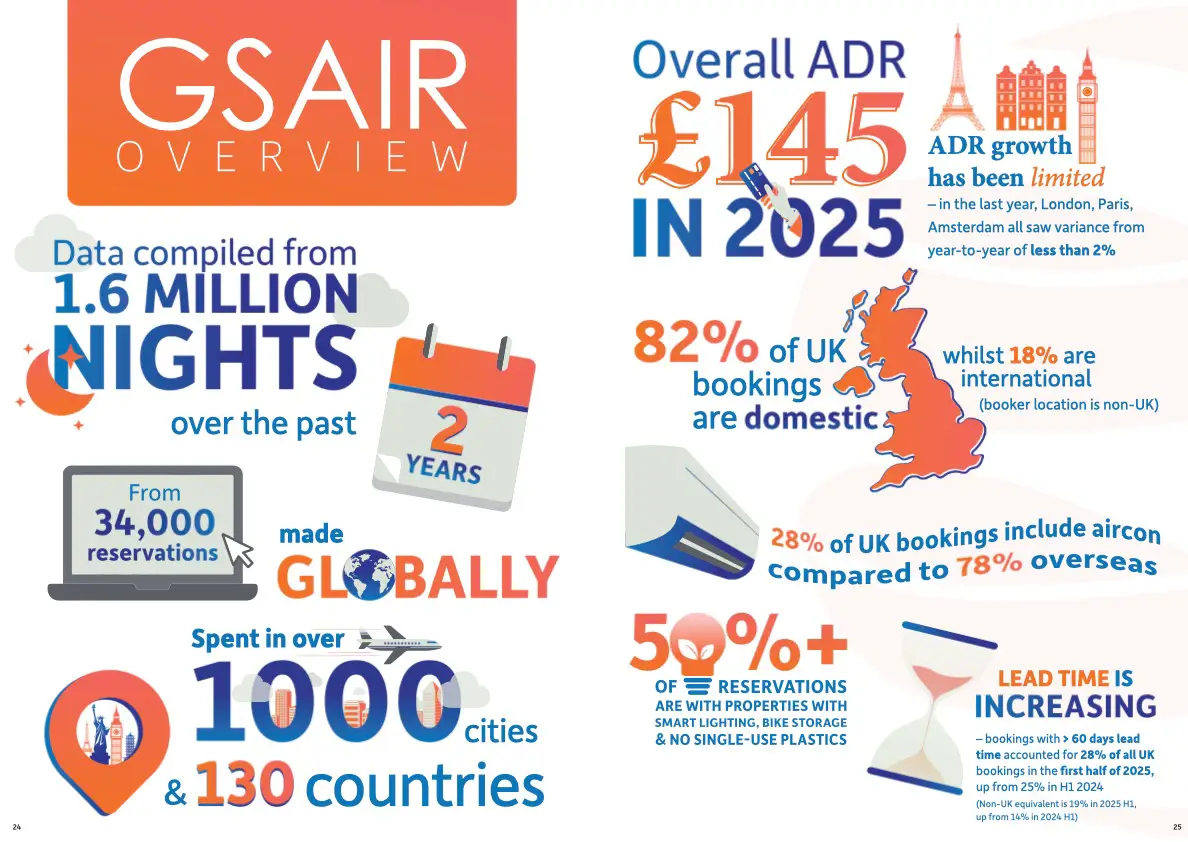
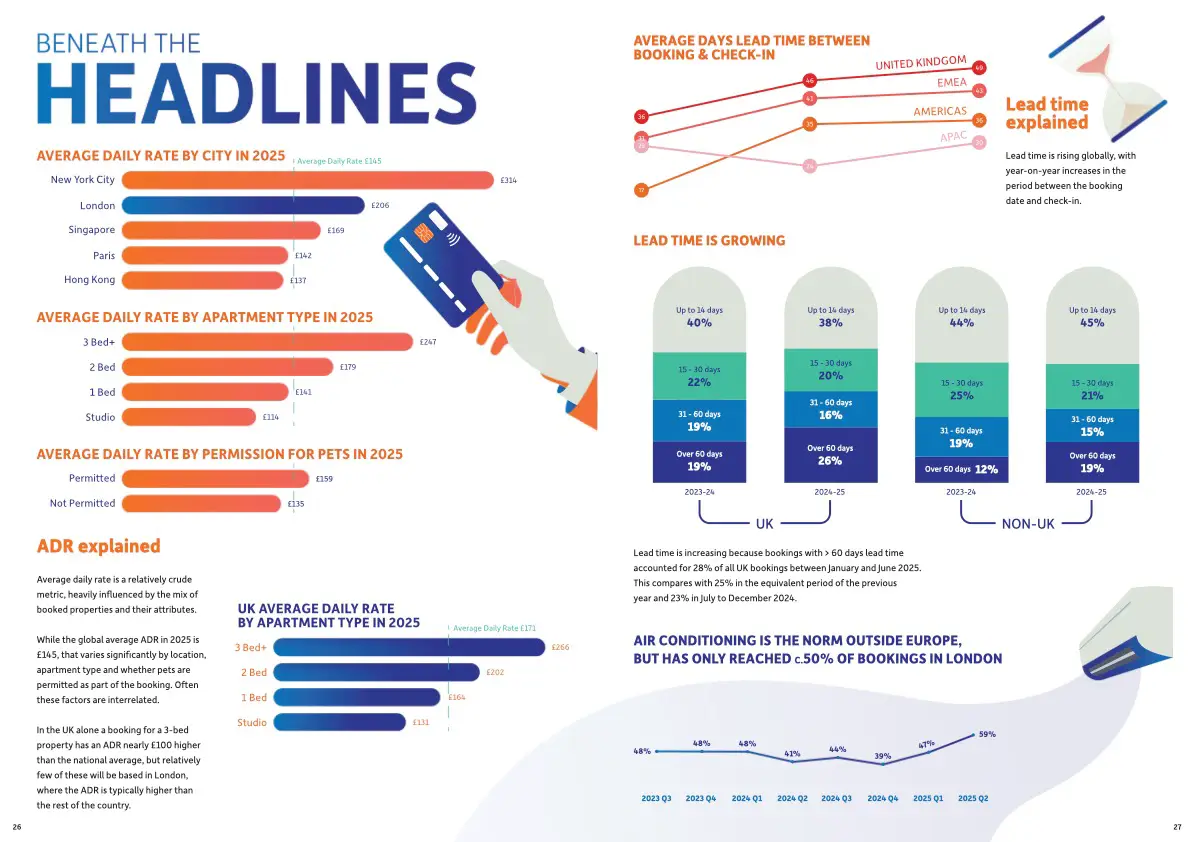
Here is the 2025 Global Serviced Apartment Industry Report.