They were once the domain of backpackers and student travelers, but France’s hostels are undergoing a transformation that’s reshaping how people travel. In the past four years, these new-generation hostels—where design, flexibility, and community replace the dormitory cliché—have doubled in number and are fast becoming a mainstay of urban hospitality.
According to the latest RYDGE Hospitality 2025 report, France now counts around 65 hybrid hostels offering nearly 16,000 beds nationwide, up from fewer than 30 establishments in 2020. The sector, which blends the convivial atmosphere of youth hostels with the comfort and design of mid-range hotels, continues to expand rapidly, backed by strong investor confidence and shifting traveler expectations.
The rise of the “Hybrid’ho(s)tel”
RYDGE Conseil, formerly KPMG Hospitality, now categorizes these properties under the label “Hybrid’ho(s)tels.” The term captures a growing class of accommodations that combine private and shared rooms, open social areas, and on-site bars or restaurants—all designed for a broad audience that includes digital nomads, families, and leisure travelers.
“We’re witnessing a growing consolidation and structuring of the hybrid-hostel market, with developers increasingly integrating the model into their growth strategies,” said Romain Lecomte of RYDGE Conseil. The firm’s 48th annual study notes that the format has evolved far beyond its roots in budget lodging, becoming one of the most dynamic corners of the French hospitality sector.
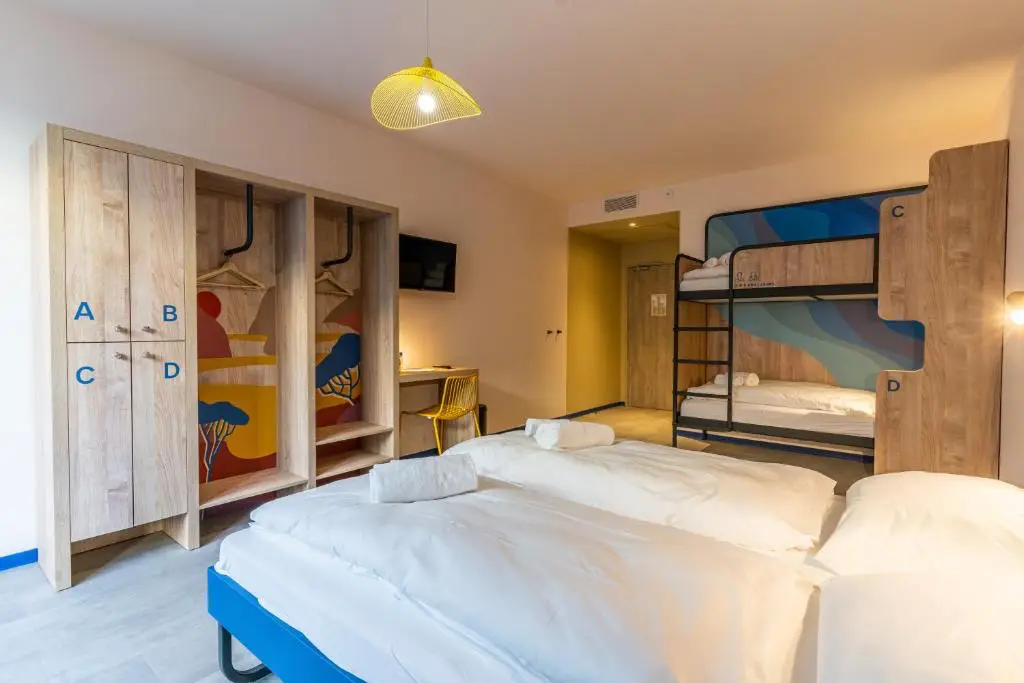
Across France, the hybrid model is being driven by established operators and newcomers alike. Eklo, backed by Bpifrance and Aquiti Gestion, raised €35 million in 2023 to expand its eco-friendly hostel portfolio, opening sites in Roissy, Lyon, Montpellier, and Paris, with projects under way in Nantes, Marseille, and Porte de Saint-Ouen. Jost—a brand under the MELIA Hotels-backed Vicartem group—has opened locations in Montpellier, Le Havre, and Lille, totaling 797 beds, and is preparing another launch in Marseille in 2026. The People, developed by Grape Hospitality and owned by Eurazeo, continues its steady rollout with openings in Caen, Lyon, and Lille, while independent brands like Central are expanding in La Rochelle, Lille, and Bordeaux.
Investment momentum and market performance
The RYDGE report highlights the strong financial interest surrounding the sector. In 2025, Queensgate Investments sold the Generator Hostels brand to Brookfield Asset Management for €776 million, underscoring the rising valuation of hybrid-hostel assets across Europe. For investors, the appeal lies in their resilience: these properties blend the revenue consistency of hotels with the social energy and lower operational costs of hostels.
Occupancy rates remain robust, averaging 79% in Paris and 68% across provincial cities, only a few points below 2023 levels. Average rates per bed have climbed to €44 in the capital, up €7 from the previous year, while secondary cities maintain steady pricing in the €35–€40 range. The revenue mix reflects the sector’s diversification, with 74% of income generated by rooms, 25% by food and beverage, and the remainder from ancillary services such as coworking or events.
Operators with active F&B spaces perform particularly well, achieving gross operating profit margins of up to 40%, rivalling traditional mid-scale hotels. The social areas, once an afterthought in youth accommodation, are now key profit drivers. Cafés, rooftop bars, and shared kitchens encourage longer stays and attract locals, blurring the line between hotel and neighborhood hub.
Design, flexibility, and family appeal
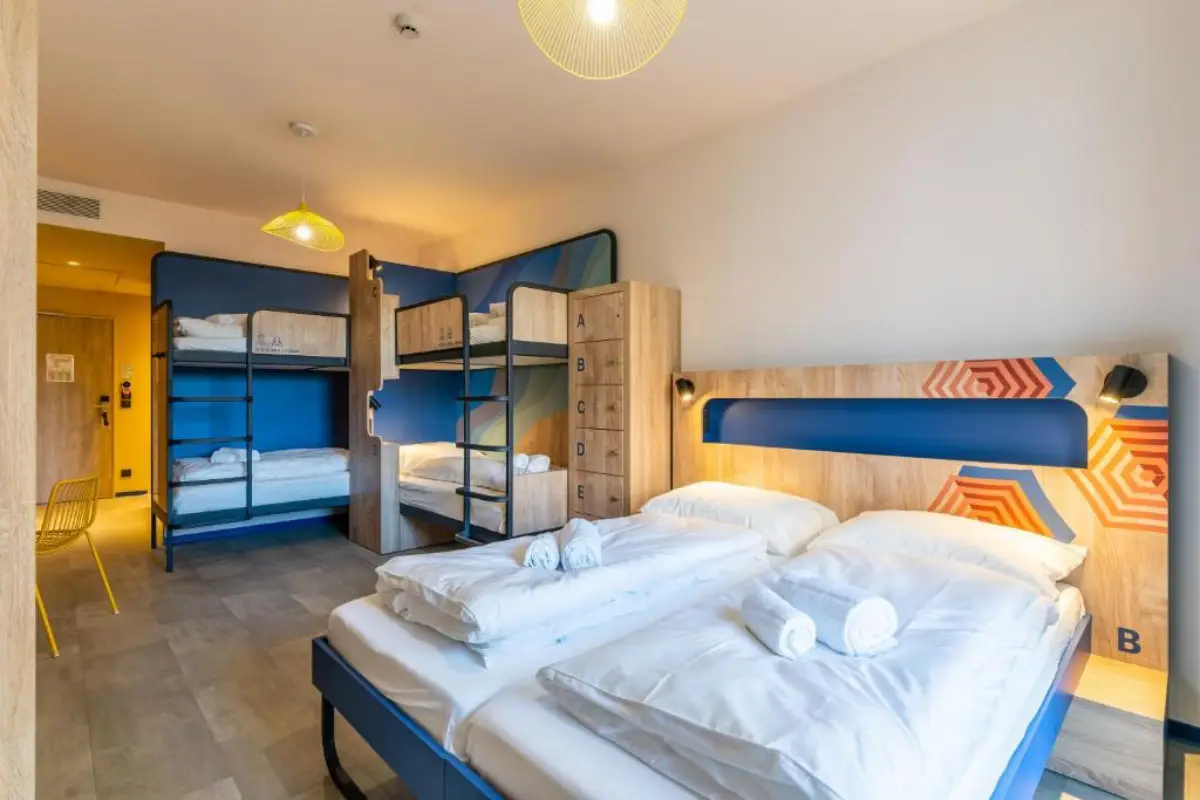
Today’s French hybrid hostels look little like their predecessors. Interiors mix industrial aesthetics with warm communal touches—wooden bunk pods, bold colors, local art, and open lounges that invite conversation. Rooms range from compact dorms to private suites and family units, offering travelers a choice between affordability and privacy.
The RYDGE report notes that roughly a quarter of rooms in the segment are now designed for families or small groups. Brands such as Eklo and Jost have integrated multi-bed family rooms and adaptable dorms, catering to parents seeking both value and comfort. This versatility has widened the customer base beyond solo travelers, attracting remote workers, groups, and eco-conscious tourists looking for sociable yet sustainable stays.
Behind the shift lies a broader change in traveler expectations. Guests increasingly value authentic, flexible experiences over standardized hotel stays, a trend accelerated by post-pandemic travel patterns and the rise of digital nomadism. Hybrid hostels, with their mix of community and convenience, have become the natural fit for this mindset.
Urban growth and the future of budget travel
France’s major cities continue to anchor this growth. Paris remains the strongest performer, but expansion into secondary cities—Lyon, Marseille, Lille, and Montpellier—reflects how developers are targeting areas with strong university populations, creative industries, and growing tourism appeal. The planned addition of more than 2,400 beds by 2028 signals sustained momentum despite broader economic headwinds.
In many ways, the new hostels are doing what traditional chain hotels once did in the 1980s: democratizing travel, but this time through design, technology, and social engagement rather than uniformity. They have also become platforms for sustainability and local integration, with most operators focusing on energy efficiency, recycled materials, and community partnerships.
From boutique operators to large investment groups, the hybrid-hostel sector now stands as one of the fastest-growing niches in European hospitality. As RYDGE’s analysis suggests, the “new hostel” is no longer a fringe experiment—it’s a blueprint for the future of affordable, experience-driven travel in France.