Irish outbound travel continues to expand rapidly, with 2024 data showing a sustained recovery from pandemic levels and projections for 2025 indicating further growth. What distinguishes Irish tourists from other European travellers is their exceptionally high rate of smartphone adoption and digital service expectations. According to recent hospitality industry reports, Irish guests consistently rank among the top users of mobile hotel applications, digital check-in services, and in-room technology across European destinations.
This digital-first mindset hasn’t gone unnoticed by European hoteliers. From boutique properties in Lisbon to major chain hotels in Berlin, the hospitality industry is accelerating its mobile integration specifically to meet the expectations of this tech-savvy demographic. The trend reflects a broader shift in how hotels approach guest services, but Irish visitors are often the catalyst for these innovations.
Online Check-In: Reducing Reception Queues
European hotels have embraced fully digital check-in systems with remarkable speed over the past two years. In Spain, Portugal, Germany, and the Baltic states, properties ranging from international chains to independent boutique establishments now offer QR code-based entry systems, digital room keys, and remote identity verification.
The driving force behind this adoption is practical: Irish guests frequently travel on short weekend breaks, arriving on early-morning flights with limited time to spare. Traditional reception queues represent wasted holiday hours. Hotels in Barcelona and Porto report that over 70% of Irish guests now opt for mobile check-in when available, compared to roughly 45% of other European visitors.
Major chains like NH Hotels and Meliá have invested heavily in proprietary apps that allow guests to select rooms, communicate preferences, and receive digital keys before arrival. Independent hotels, meanwhile, have partnered with third-party platforms such as OpenKey and Assa Abloy to offer similar functionality without developing bespoke systems.
The technology extends beyond convenience. Remote verification reduces staffing pressure during peak hours, whilst digital key systems provide enhanced security tracking and eliminate the environmental waste associated with plastic key cards.
E-Concierge: From Paper Guides to Mobile Platforms
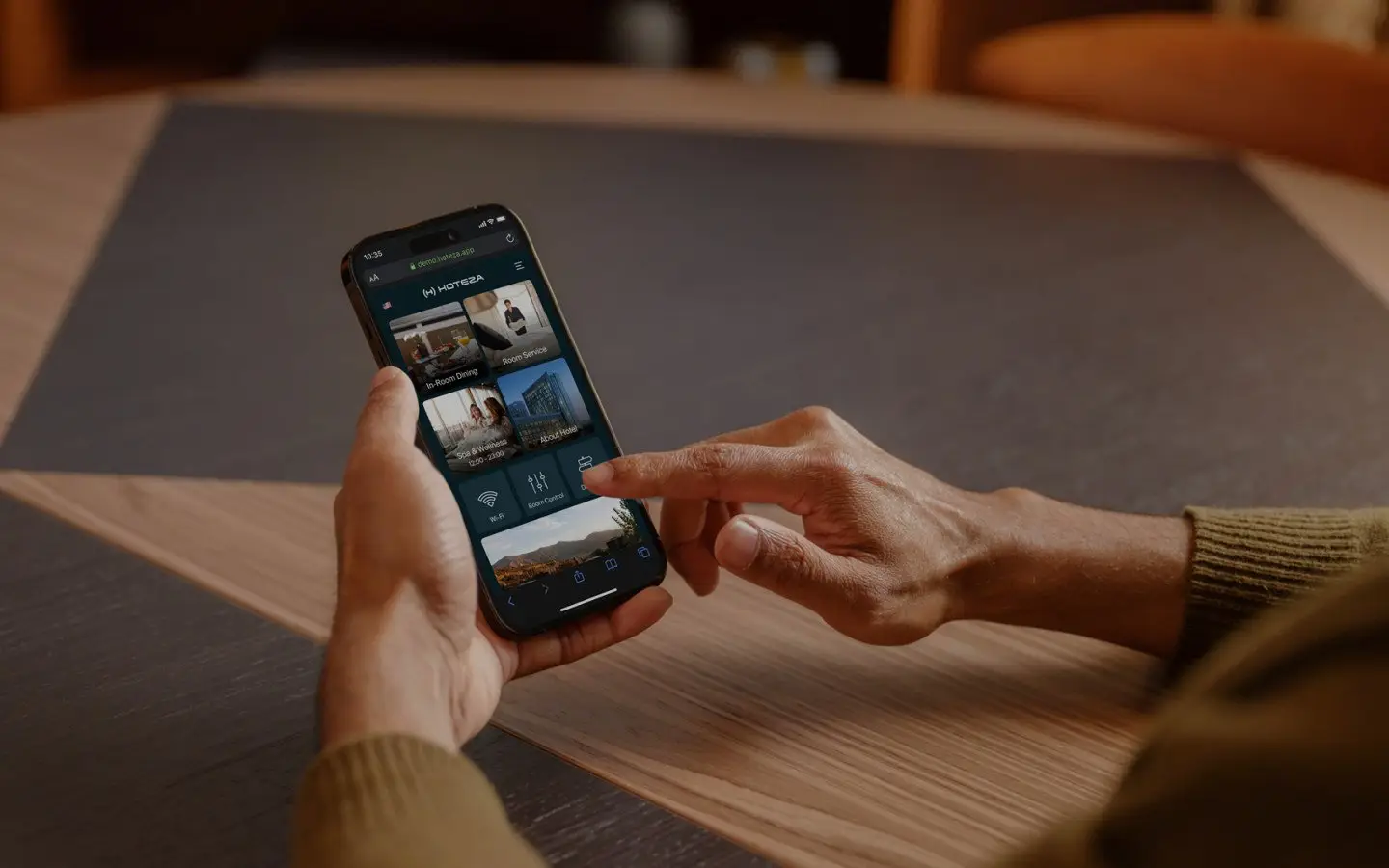
The traditional leather-bound guest directory is rapidly disappearing from European hotel rooms, replaced by integrated mobile concierge platforms. These applications provide city maps, restaurant recommendations, taxi booking, and real-time event information—all accessible through a guest’s smartphone.
Amsterdam’s canal-side hotels have pioneered integration with local services, embedding direct booking links for bicycle rentals, museum tickets, and canal tours within their apps. Similarly, Prague’s hospitality sector has partnered with cultural institutions to offer exclusive digital passes that guests can purchase and store on their phones.
Irish travellers, who often plan activities spontaneously rather than booking rigid itineraries in advance, find these platforms particularly valuable. Hotel data suggests that Irish guests engage with e-concierge features 40% more frequently than the average European visitor, with particular interest in last-minute restaurant reservations and transport options.
The shift has also created opportunities for hotels to monetise recommendations through affiliate partnerships whilst genuinely improving guest experience—a win-win scenario that aligns commercial interests with service quality.
Payment Services: Expanding Digital Transaction Options
The Irish market’s early adoption of contactless payment technology has created specific expectations for transaction flexibility when travelling abroad. European hotels have responded by broadening their accepted payment methods far beyond traditional credit cards.
Apple Pay, Google Pay, and Revolut now feature prominently at check-out counters across Lisbon, Amsterdam, and Prague. Many properties have also implemented pay-by-link systems that allow guests to settle bills via SMS or email, eliminating the need to visit reception entirely.
This evolution reflects a transfer of everyday Irish banking habits into travel scenarios. With tap-to-pay becoming ubiquitous in Irish retail environments over the past five years, travellers naturally expect the same convenience abroad. Hotels that fail to offer these options risk appearing outdated, particularly to younger Irish visitors who may travel without physical cards altogether.
Budget and mid-range properties have been especially quick to adapt, recognising that seamless payment processing enhances the overall perception of modernity and efficiency. The technology also reduces cash handling costs and accelerates financial reconciliation processes.
Entertainment Technology in Guest Rooms
European hotels are investing heavily in in-room entertainment infrastructure, moving beyond basic cable television to offer streaming-ready environments. Chromecast compatibility, Netflix-enabled smart TVs, and custom content platforms are becoming standard features rather than premium amenities.
This shift resonates particularly with Irish guests, who demonstrate high levels of streaming service subscriptions and content consumption during travel. Industry surveys indicate that Irish visitors stream an average of 2.3 hours of content per night whilst staying in hotels—significantly above the European average of 1.6 hours.
Beyond video streaming, hotels are implementing comprehensive digital ecosystems that include electronic newspaper access, mobile room service ordering, and automated climate control through smartphone interfaces. These features collectively create an environment where guests can manage virtually every aspect of their stay without leaving their rooms or interacting with staff.
The commercial logic is straightforward: satisfied guests leave better reviews, book longer stays, and return more frequently. The initial technology investment pays dividends through improved occupancy rates and reduced operational costs.
The Broader Digital Entertainment Ecosystem
As hotels develop increasingly sophisticated mobile-first service environments, they’re inadvertently encouraging guests to transfer more of their smartphone habits into the travel context. The same device used for check-in, restaurant booking, and room controls becomes a central entertainment hub during downtime.
Irish travellers, already comfortable with extensive mobile engagement, often fill travel intervals with casual gaming, news browsing, and various forms of digital entertainment. This behavioural pattern extends across multiple platforms, from social media to streaming services to interactive content.
Within this expanding digital ecosystem, some travellers also engage with online entertainment platforms that cater specifically to adult leisure preferences. The Irish market, in particular, has seen growth in regulated digital leisure services, with platforms like best Irish lottery casinos offering mobile-optimised experiences that integrate into the broader travel entertainment landscape. These services, when properly regulated and age-verified, represent one segment of the diverse digital entertainment options that tech-savvy travellers now expect to access seamlessly during their trips.
The key insight for hospitality professionals is understanding that digital service adoption in one area (hotel operations) naturally encourages digital consumption across all categories. Guests who check in via app are statistically more likely to engage with all forms of mobile content throughout their stay.
Mobile Services as the New European Hospitality Standard
European hotels have fundamentally transformed their service models in response to Irish travellers’ digital expectations, but the benefits extend far beyond this single demographic. The mobile-first infrastructure now being deployed serves guests from all markets whilst positioning properties competitively for future technological developments.
The influence of mobile habits reaches beyond traditional travel services into parallel digital entertainment sectors, creating an integrated ecosystem where boundaries between operational tools, content consumption, and leisure activities increasingly blur. This convergence is likely to accelerate through 2025 and 2026 as hotels continue automating processes, personalising experiences through data analytics, and expanding their digital service partnerships.
For the hospitality industry, the lesson is clear: mobile integration isn’t a luxury amenity but a fundamental expectation. Properties that fail to meet digital-first standards risk losing not just Irish bookings, but an entire generation of tech-savvy European travellers who now consider smartphone functionality as essential as comfortable beds and reliable Wi-Fi.
The Irish market’s role in driving this transformation may prove to be one of the most significant influences on European hospitality development in the 2020s—a quiet revolution led by travellers who simply expected their hotels to work as smoothly as the apps on their phones.