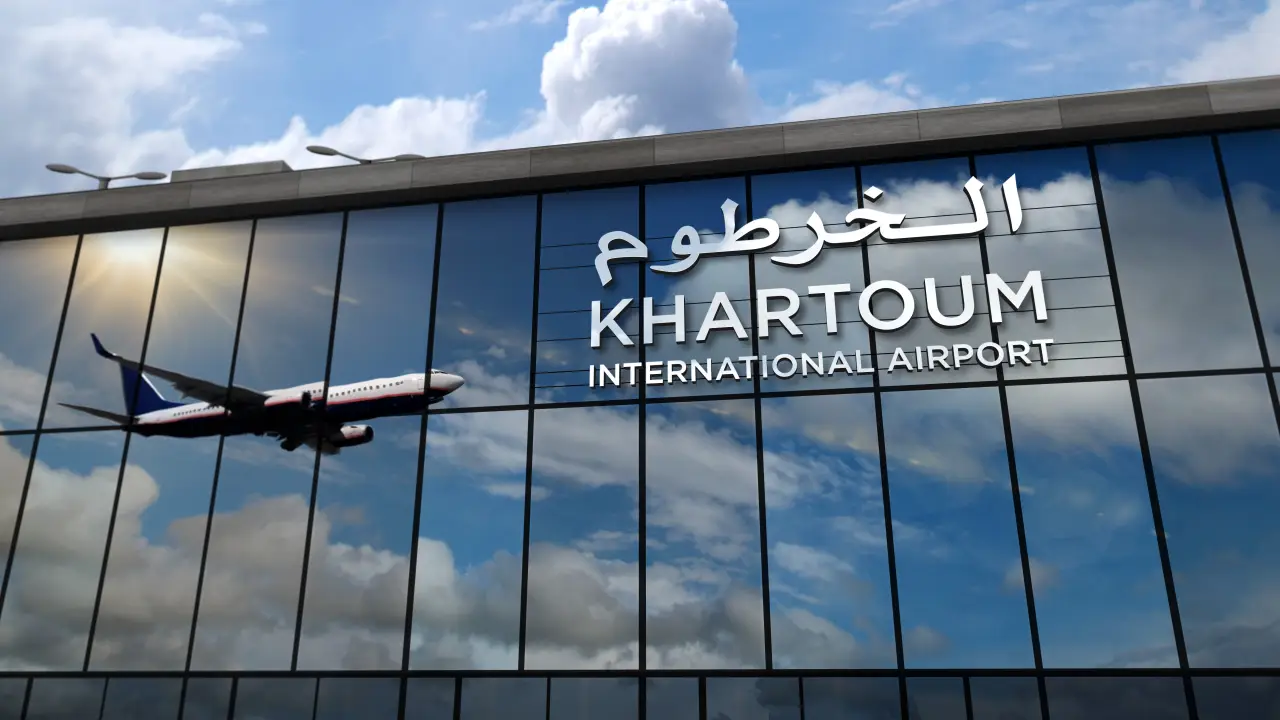
After nearly three years of silence, Khartoum International Airport has reopened for civilian operations, marking a symbolic step toward recovery in a nation deeply affected by conflict. The airport welcomed its first passenger flight in 921 days, ending a long hiatus that began when violence erupted in Sudan’s capital in April 2023.
According to a statement released on the airport’s official page, “A Badr Airlines aircraft has just landed at Khartoum International Airport.” The announcement confirmed that air traffic from the capital has officially resumed, calling the event “an important step in the recovery of Sudan’s aviation sector and the gradual revival of air transport.”
A Symbol of Recovery
The flight, operated by Badr Airlines, departed from Port Sudan carrying passengers before landing briefly in Khartoum and returning to the eastern city shortly afterward. While limited in scope, the short round-trip marked the first civil aviation activity at the airport since it suffered heavy damage during the early stages of the conflict.
Before the war, Khartoum International Airport served as one of East Africa’s major transit hubs, connecting the country to cities across the Middle East, North Africa, and Europe. Its closure in 2023 not only halted international and domestic air travel but also symbolized the collapse of much of Sudan’s infrastructure amid the fighting between the Sudanese Armed Forces and the Rapid Support Forces (RSF).
Airport officials described the reopening as both logistical and emotional progress for the country. Though commercial flights have yet to resume on a full schedule, the symbolic landing is seen as a precursor to restoring passenger and cargo operations as security conditions improve.
Conflict and Displacement
Sudan has been gripped by conflict since April 15, 2023, when tensions between the army and the RSF erupted into nationwide violence. The clashes devastated major cities, including Khartoum, and caused widespread displacement. According to international aid agencies, more than 14 million people have been forced to flee their homes, creating one of the world’s largest humanitarian crises.
In recent months, Sudanese government forces have reasserted control over the capital and surrounding regions, while the RSF has retreated to parts of the country’s west. Despite sporadic drone attacks and continued instability, officials say efforts to restore basic services—including air travel—are a priority in rebuilding the economy and reconnecting the country internally and internationally.
For residents of Khartoum and the broader aviation sector, the return of a civilian aircraft is a glimmer of hope. The sight of a commercial plane landing at the war-damaged airport after nearly three years offered a powerful reminder of what normal life once looked like—and what many hope it could become again.
Further announcements about flight schedules and airport rehabilitation plans are expected in the coming weeks. For now, Sudan’s aviation officials describe the landing as a moment of “renewed optimism” in the country’s long road back to stability.
Photo Credit: Skorzewiak / Shutterstock.com