Breeze Airways has received flag-carrier certification from the Federal Aviation Administration (FAA), becoming the first new U.S. airline in more than a decade to obtain the designation. The airline confirmed it will begin operating international routes between several U.S. cities and destinations in Mexico, Jamaica and the Dominican Republic from January through March 2026.
The certification allows Breeze to expand service beyond domestic markets, marking a significant milestone for the Utah-based carrier founded in 2021. The new flights will connect Norfolk, Charleston, New Orleans, Providence, Raleigh-Durham and Tampa to Cancun, Montego Bay and Punta Cana, with seasonal service scheduled on Airbus A220-300 aircraft. The company will also establish its 12th crew base at Raleigh-Durham International Airport in early 2026, creating more than 200 pilot and flight-attendant jobs.
FAA Approval and Route Expansion
According to the airline’s announcement, Breeze will launch seven new routes in the first quarter of 2026. Service from Norfolk to Cancun begins on January 10, followed by Charleston to Cancun on January 17, New Orleans to Cancun on February 7, and Providence to Cancun on February 14. Tampa to Montego Bay service starts February 11. Raleigh-Durham to Punta Cana begins March 4, and Raleigh-Durham to Montego Bay follows on March 5.
The routes will operate seasonally and will be the first international flights offered by Breeze since its inception. Introductory fares will start at $99 on select flights, according to the company. The airline stated the service is designed to meet growing demand for leisure travel to Caribbean destinations while expanding its footprint beyond the United States domestic market.
Business Insider reported that the carrier’s expansion aligns with increased competition among low-cost airlines. The company’s international debut comes as other budget carriers face financial pressure, including bankruptcy proceedings affecting Spirit Airlines.
Caribbean Market Entry
Breeze’s new routes target three of the most popular destinations for U.S. leisure travelers. Cancun is among the busiest international gateways for American passengers, while Montego Bay and Punta Cana remain strong performers for both all-inclusive resorts and seasonal tourism demand. The additions will diversify Breeze’s network, which has so far focused on connecting secondary U.S. cities with limited nonstop service.
Charleston’s new Cancun route marks the first international service announced for the South Carolina city by Breeze. Local media, including Live 5 News, confirmed that Charleston International Airport will gain direct international connectivity when flights begin on January 17. The Norfolk service will also add international connectivity from the Virginia airport beginning January 10, as reported by Yahoo News.
Raleigh-Durham International Airport will gain two new Caribbean routes. The launch of these flights coincides with the opening of Breeze’s new crew base at the airport, which is expected to create more than 200 jobs for pilots and flight attendants.
Aircraft and Service Plans
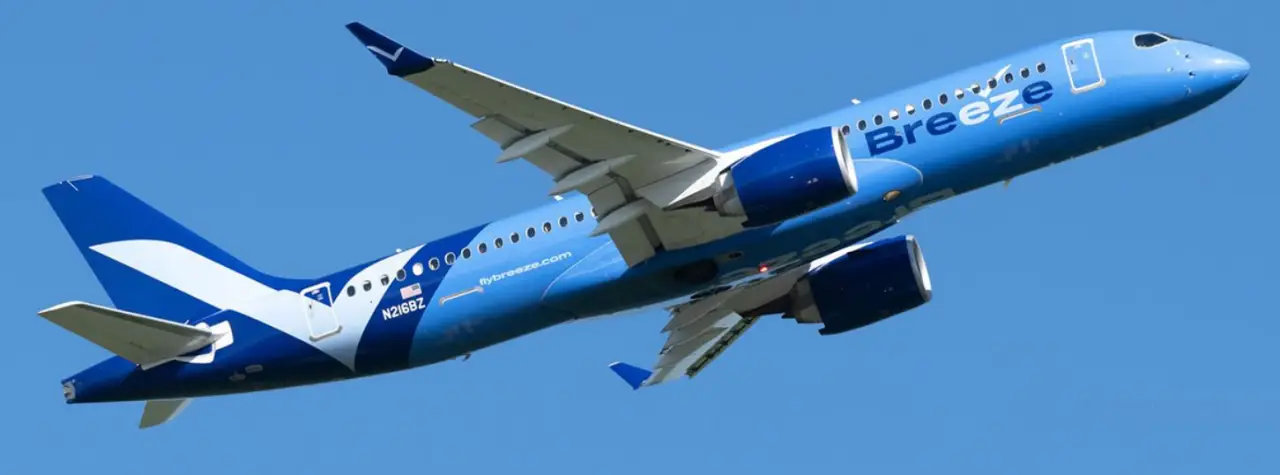
The new international flights will be operated using Breeze’s Airbus A220-300 fleet. The aircraft type has been central to the airline’s growth strategy, offering improved fuel efficiency and operational flexibility on medium-haul routes. AeroRoutes reported that Breeze intends to use the jets across its new Caribbean services.
Breeze said the flights will initially be seasonal, operating through peak winter and spring travel demand periods. The company has not yet announced whether the services will extend into summer or operate year-round. Analysts note that seasonal schedules allow low-cost carriers to manage resources effectively while testing market performance.
The airline’s pricing strategy includes introductory one-way fares starting at $99 on certain routes, according to Business Insider. The fares aim to attract price-sensitive leisure travelers while increasing competition with established carriers on Caribbean leisure routes. Breeze has positioned itself as a hybrid low-cost airline offering both basic and premium seating options, including “Nicest” business-style seating on the A220 aircraft.
Breeze Airways was launched by JetBlue founder David Neeleman in 2021 with a business model focused on connecting underserved U.S. airports with nonstop service. The airline has expanded rapidly across domestic markets and has now positioned itself to enter international markets with FAA approval. The flag-carrier certification is a legal requirement for U.S. airlines to operate international scheduled passenger flights.
The certification comes more than a decade after the last new U.S. airline achieved flag-carrier status. The approval allows Breeze to compete with larger U.S. carriers and low-cost rivals in international leisure markets, particularly as demand for Caribbean travel continues to grow. According to AeroTime, the decision provides regulatory recognition that enables Breeze to market and operate flights outside the United States.
The expansion into international routes underscores the airline’s broader growth strategy, which includes new bases and the deployment of modern aircraft on longer routes. By selecting Cancun, Montego Bay and Punta Cana as its first destinations outside the U.S., Breeze is entering established tourism markets with steady passenger demand. These destinations also provide shorter-haul opportunities ideal for the A220’s range capabilities.
The airline’s move to open a crew base at Raleigh-Durham International Airport further strengthens its presence in the southeastern U.S. The new base is expected to support daily operations to the Caribbean while creating hundreds of aviation jobs in the region. The announcement aligns with the airport’s strategy to expand international connectivity and enhance its role as a growing hub for the Research Triangle region.
Breeze Airways’ international debut is scheduled to begin in January 2026, with staggered route launches through March. The airline’s ability to secure FAA flag-carrier certification, expand operations to new markets, and offer competitive fares positions it as a growing player in both the domestic and international low-cost travel sectors.