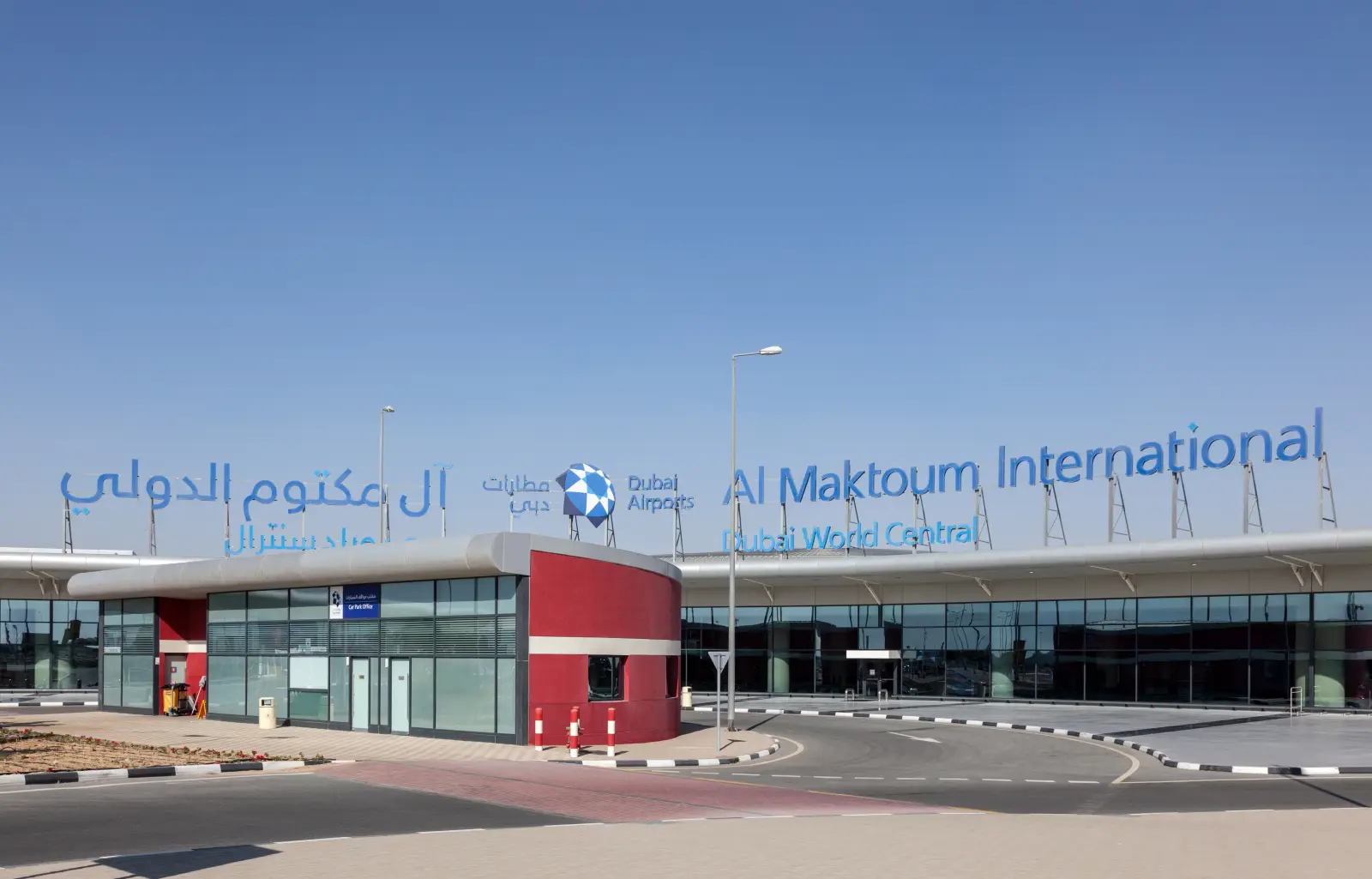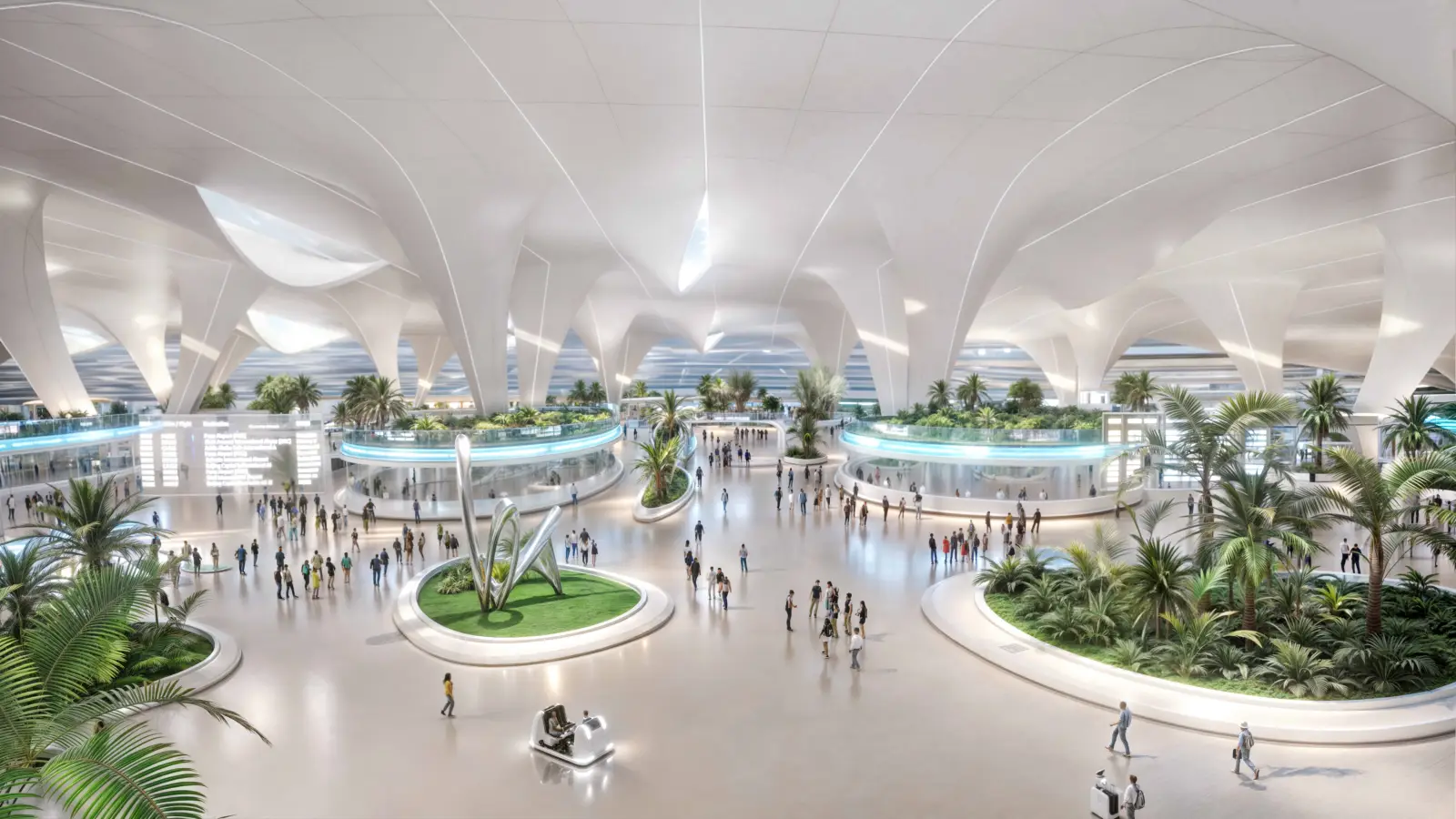
Dubai is pressing ahead with its ambition to build the world’s largest airport complex, with Al Maktoum International Airport set to become a global aviation colossus capable of handling 260 million passengers annually. The Dh128 billion (approximately $35 billion) megaproject, part of the Dubai World Central development in Dubai South, is now moving from planning into active construction, with major contractor bids submitted and key packages being awarded.
The expansion was formally approved by Sheikh Mohammed bin Rashid Al Maktoum, Vice President, Prime Minister and Ruler of Dubai, and is being delivered by the Dubai Aviation Engineering Projects Agency (DAEP). A consortium of Coop Himmelb(l)au and Dar Al-Handasah was appointed as masterplanning and design consultants in September 2024, while China Harbour Engineering Co., Ltd. has been selected to lead the infrastructure work on the first expansion phase. A Dh1 billion contract for the second runway was awarded to Saudi Binladin Group, and enabling works for the terminal are being led by Tristar Engineering and Construction.
The key features of the completed airport complex will include:
- 260 million passengers annual capacity, making it the largest airport in the world by throughput
- Five parallel runways to support continuous, high-volume flight operations
- 400 aircraft gates across five terminal buildings
- West Terminal spanning 800,000 square metres across seven levels, with a 45-million-passenger annual capacity
- 14-station automated people-mover (APM) rail network connecting concourses within the complex
- Baggage systems capable of processing tens of thousands of bags per hour
- 12 million tonnes of cargo capacity per year
- A total site area of approximately 70 square kilometres, roughly five times the size of Dubai International Airport (DXB)
- AI-enhanced passenger experience systems and green energy integration throughout the complex
- A potential connection to Etihad Rail, the UAE’s national railway, according to Paul Griffiths, CEO of Dubai Airports
The first phase of the project targets completion by 2032, at which point the airport will be able to handle approximately 150 million passengers per year. That phase includes a central passenger terminal and four concourses. Emirates, the flag carrier currently based at Dubai International Airport, has confirmed plans to transition all its operations to Al Maktoum International. In 2024, Emirates Chairman and Chief Executive Sheikh Ahmed bin Saeed Al Maktoum stated the airline intended to make the move “in one go” rather than in stages. Supporting that shift, Emirates broke ground in May 2026 on a new $5.1 billion engineering and maintenance complex at Dubai South, with the first phase of that facility due for completion in 2029.
The broader project is designed not simply as an airport but as an aerotropolis, a fully integrated urban zone built around the aviation hub. Plans include residential districts, logistics zones, commercial developments, and hospitality infrastructure to accommodate a population expected to reach one million people. Real estate markets in Dubai South are already responding, with transaction volumes in the area surpassing Dh15 billion in the first five months of 2025 alone, and rental values rising by approximately 20 percent year-on-year.
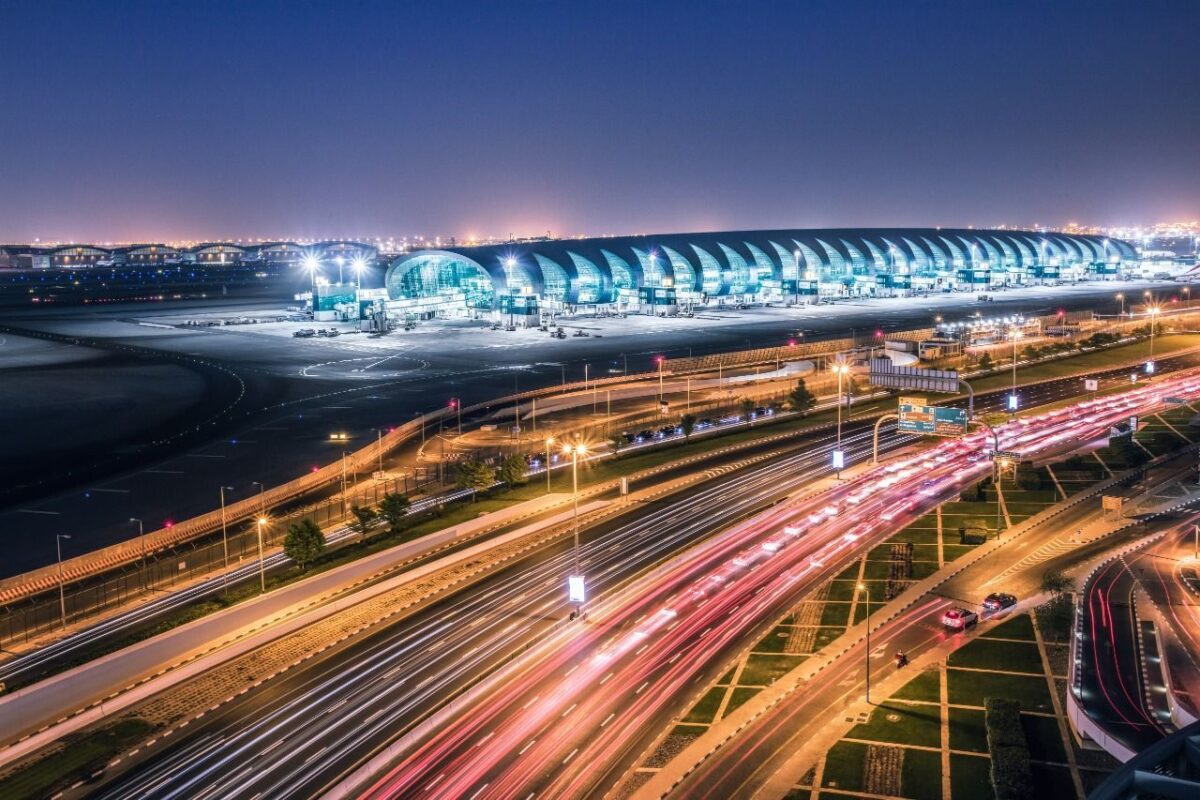
The move to Al Maktoum International will mark the eventual closure of Dubai International Airport, currently the world’s busiest hub for international passenger traffic. DXB handled a record 95.2 million passengers in 2025, a 3 percent increase year-on-year, but its city-centre location limits any further physical expansion. The full transition to the new airport is planned for 2035.
The project places Dubai in direct competition with neighbouring Saudi Arabia, which is developing King Salman International Airport in Riyadh with similarly ambitious capacity targets. Both projects reflect a broader Gulf-wide strategy to diversify economies through logistics, aviation and tourism, reducing dependence on oil revenues. For Dubai, aviation has long been a foundational pillar of that strategy, and Al Maktoum International Airport is designed to anchor it for the next several decades.