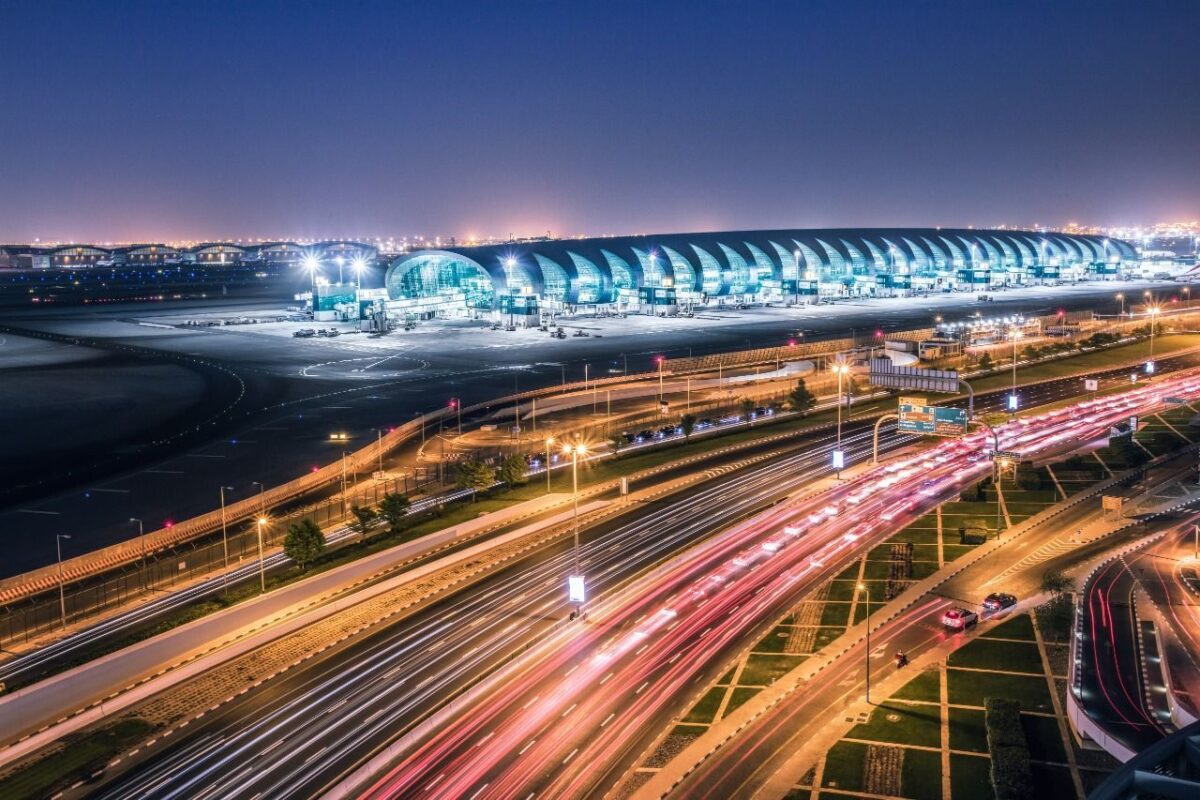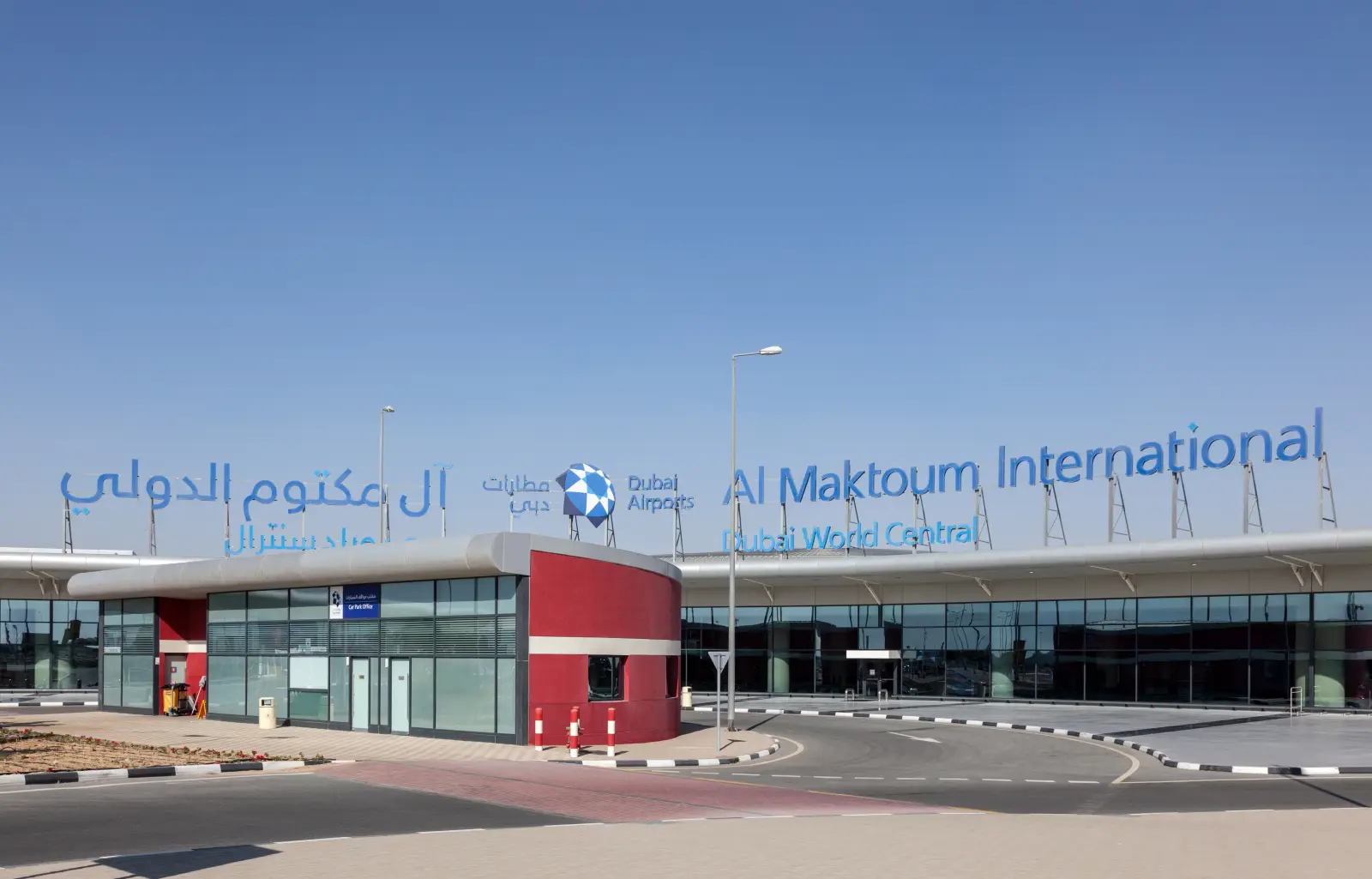
Dubai International Airport (DXB), the world’s busiest international airport, is set to close permanently in 2035 as the United Arab Emirates transfers all civil flight operations to Al Maktoum International Airport (DWC) at Dubai World Central.
The closure marks a major turning point in global aviation. Dubai International Airport has operated since 1960 and handled approximately 95.2 million passengers in 2025, making it the undisputed leader in international air traffic. However, its location amid highways and dense residential development has made further physical expansion impossible, pushing authorities to accelerate the transition to a purpose-built successor.
Dubai Airports chief executive Paul Griffiths confirmed at the Arabian Travel Market 2025 that there would be little sense in operating two airports simultaneously given the scale difference. He said DXB was approaching the end of its operational life and could not be expanded beyond its structural ceiling of around 114 million passengers per year. The transition to Al Maktoum International is expected to begin in 2032, when that ceiling is reached.
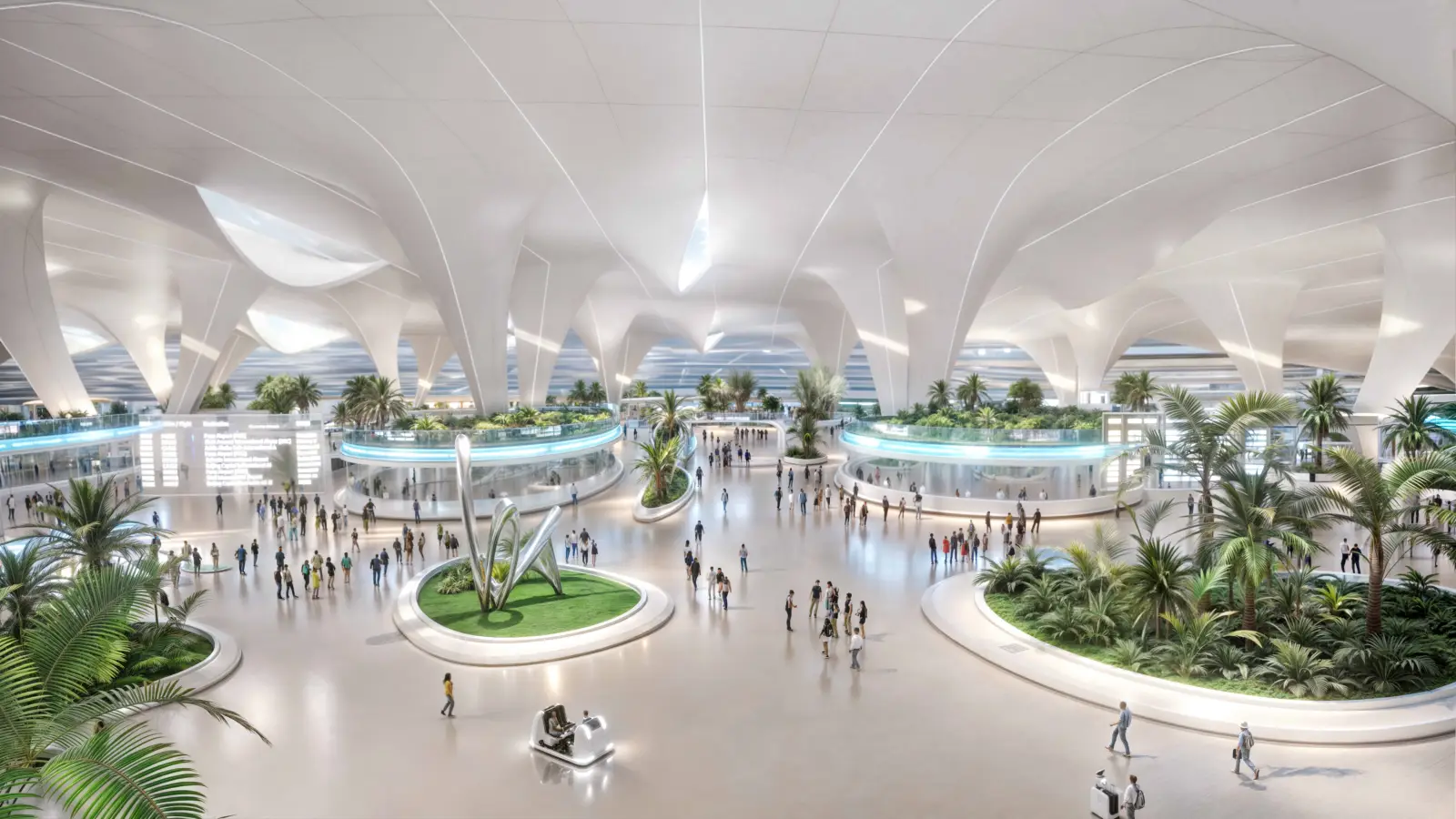
The new airport is being developed under a budget of approximately AED 128 billion, equivalent to around $35 to $38 billion. The project was approved in April 2024 by Sheikh Mohammed bin Rashid Al Maktoum, the ruler of Dubai and Vice President and Prime Minister of the UAE. Upon completion, Al Maktoum International will be five times the size of DXB and capable of serving up to 260 million passengers annually through 400 aircraft gates and five parallel runways.
Construction is proceeding in phases. Phase one focuses on the West Terminal Building and Concourse 1, which will feature 100 contact gates and four underground stations. This phase is targeted for completion around 2032 and will handle up to 150 million passengers annually. The final phase will add Concourse 3, Concourse 4, and the East Terminal, completing the airport’s full capacity. A 14-station underground automated people mover system will connect all airside buildings in a continuous loop, with journeys between terminals expected to take 15 to 20 minutes given the site’s enormous scale.
The new airport will also pioneer smart travel technologies. Griffiths has outlined plans to eliminate traditional check-in entirely, replacing it with biometric scanning and frictionless passenger flow systems. Luggage check-in is being designed to operate directly from Etihad Rail stations, allowing passengers to drop bags before boarding the train to the airport. The rail network, whose passenger service is slated to launch in 2026, will connect the airport to Abu Dhabi, Dubai, Sharjah, Ras Al Khaimah, Fujairah, Al Ain, and further destinations in Saudi Arabia and Oman via the Hafeet Rail project.
Plans also include a vertiport within the airport precinct to accommodate electric vertical take-off and landing aircraft, commonly known as air taxis, providing a traffic-free premium transport option to key points across Dubai.
The airlines most directly affected by the transition are Emirates, which carried more than 53 million passengers in the 2025 to 2026 financial year, and flydubai. Both carriers are headquartered in Dubai and operate the bulk of their networks through DXB. Other significant operators at DXB including Air India, British Airways, Pakistan International Airlines, and Saudia will also be required to relocate their Dubai operations. Authorities say the expanded capacity at Al Maktoum International will give Emirates and flydubai additional runway slots, terminal space, and operational flexibility unavailable at the current airport.
The architectural design of the new terminal was produced by Coop Himmelblau, and the project is being developed by Dubai Aviation Engineering Projects. The total site will cover approximately 2.3 million square metres across its concourse buildings alone, in addition to an integrated airport city featuring residential communities, retail, leisure, healthcare, and commercial zones within Dubai South.
Sheikh Ahmed bin Saeed Al Maktoum, president of the Dubai Civil Aviation Authority and chairman of the Emirates Group, has stated that Phase 1 of the project will be ready within ten years and will handle 150 million passengers annually. Full operations are expected to be consolidated at Al Maktoum International by 2057, bringing more than seven decades of service at DXB to a definitive close.
Photo Credit: Philip Lange / Shutterstock.com