Malaysia immigration system failure has caused widespread delays and confusion at major border checkpoints, stranding thousands of foreign travellers since Friday afternoon. What authorities have called the country’s worst-ever autogate breakdown has affected more than 200 automated immigration gates nationwide.
While Malaysian passport holders continue to use the autogates without issue, foreign travellers have faced long queues, manual processing, and extended wait times at key entry points, including Kuala Lumpur International Airport (KLIA), Johor’s Bangunan Sultan Iskandar (BSI) Customs, Immigration and Quarantine complex, and Sultan Abu Bakar CIQ (KSAB).
Nationwide Disruption at Immigration Hubs
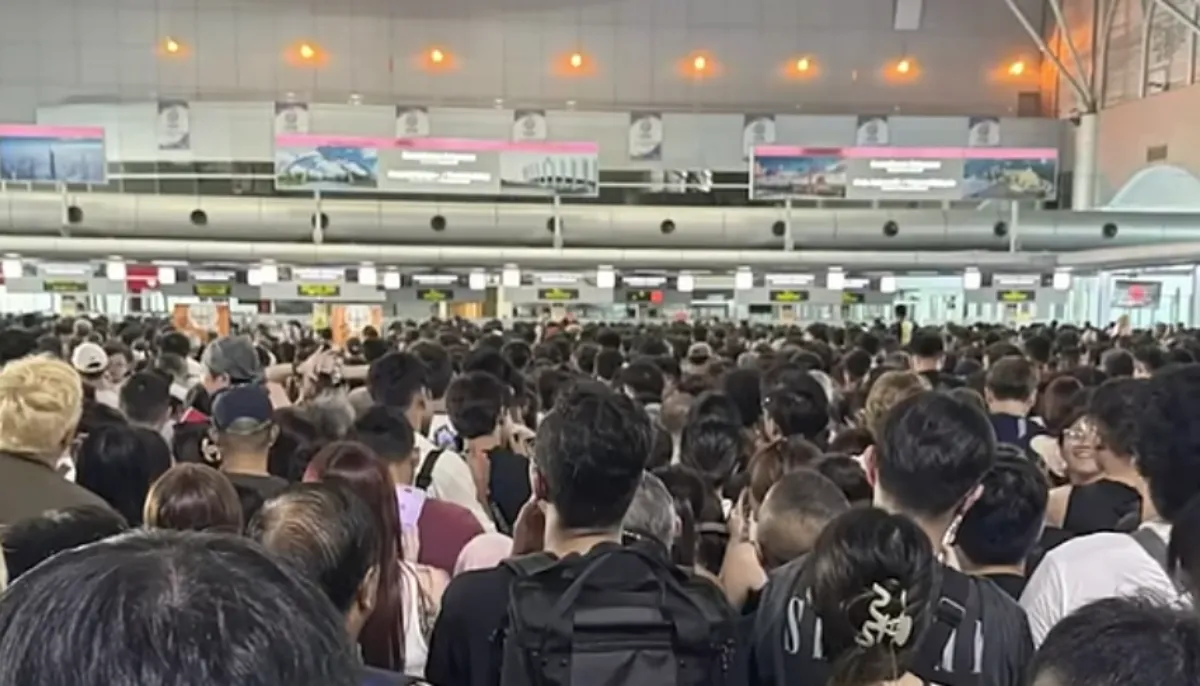
The Star reported that the failure, which began at noon on Friday (July 18), has impacted tens of thousands of foreign passport holders. Major international gateways like KLIA Terminals 1 and 2, along with southern land borders near Singapore, have experienced unprecedented congestion due to the system outage.
Photos and videos shared online reveal massive queues snaking through immigration halls and bus terminals. Sarena Yong, a Facebook user, noted that the autogate system for foreign passports had been down since Friday night at Johor’s BSI checkpoint, a critical entry route for Singapore-based travellers.
Government Response and Contingency Actions
In response to the escalating situation, Malaysia’s Border Control and Protection Agency activated all manual counters and deployed additional personnel to manage the surge in visitors. Immigration officers were instructed to open all lanes and prioritize manual passport processing to maintain flow.
According to the New Straits Times, preliminary investigations revealed that the glitch stemmed from a data integration failure that slowed down the MyIMMS (Malaysian Immigration Management System) cross-verification process. The government has not ruled out sabotage or cyber-attacks and confirmed ongoing investigations into any possible foul play.
“Weekends are a busy period and immigration officers have been told to open all lanes to clear the passports manually,” a security official told The Star.
High Volume and Strain on Infrastructure
Border agencies confirmed that both BSI’s passenger halls and the Sultan Abu Bakar complex were affected by the service interruption. A statement from BSI’s official Facebook page acknowledged the disruption, stating, “We regret any inconvenience and your patience and cooperation is much appreciated.”
Since June 1, 2023, travellers from 63 countries — including Singapore, Japan, and Australia — have been eligible to use Malaysia’s autogates for faster immigration clearance. However, the ongoing failure highlights the system’s vulnerability during peak travel periods.
Malaysia’s Autogate Infrastructure Overview
| Category | Details |
|---|---|
| Number of Autogates | 1,568 nationwide |
| Affected Locations | KLIA Terminal 1 & 2, BSI CIQ, KSAB CIQ |
| Eligible Foreign Visitors | 63 countries (e.g., Singapore, Japan, Australia) |
| Cause of Failure | Data integration error in MyIMMS system |
| Backup Measures | Manual counters, additional staff, contra lanes |
Impact on Travellers and Future Risk Management
The incident marks the second major autogate-related breakdown in recent months. In December 2024, hundreds of passengers were similarly stranded after a network core switch failed at BSI, disabling both autogates and QR code scanning systems.
With Malaysia becoming an increasingly important transit and travel destination in Southeast Asia, border system resilience is now a top priority. Authorities are expected to conduct a full audit of the immigration system to identify weak points and prevent future collapses during high-traffic periods.
Meanwhile, travellers are advised to prepare for extended delays and arrive at checkpoints early, especially over weekends when cross-border movement spikes. Social media users continue to share updates and crowd conditions, turning platforms like Facebook and Instagram into real-time monitoring tools.
As of Saturday, the immigration department has yet to confirm when the autogate system will be fully restored. Ongoing repairs and diagnostics are reportedly in progress, and further announcements are expected through official government channels.
Travellers can follow Malaysia’s immigration authority on Facebook or check airport websites for the latest operational updates.