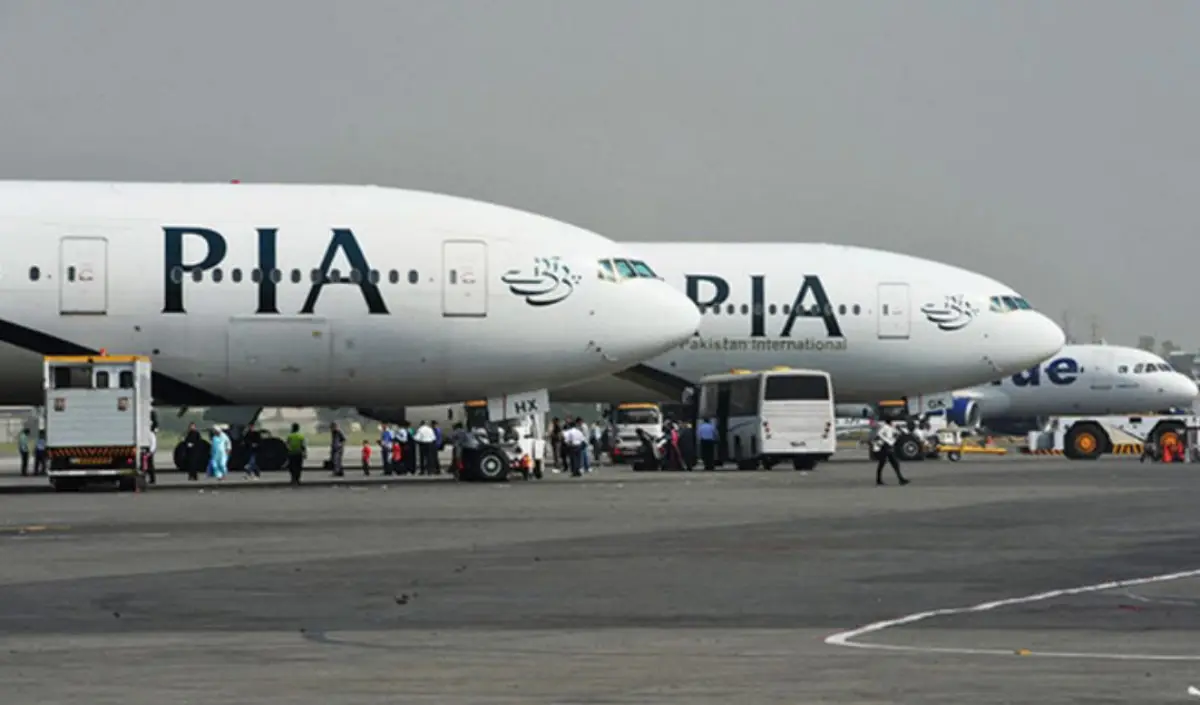
News agencies have reported on May 7 that Pakistan has temporarily closed its airspace for 48 hours, suspending all domestic and international flights across all the country’s airports, including Lahore, Karachi, Faisalabad, Sialkot, and Quetta.
India attacked Pakistan and Pakistani Kashmir, and Pakistan said it had shot down five Indian fighter jets in the worst fighting in more than two decades between the two nuclear-armed enemies, as tensions flare over the decades-old Kashmir conflict and a recent Islamist militant attack.
The travel disruptions come two weeks after militants killed 26 civilians, mostly Indian tourists, in the mountainous town of Pahalgam in Indian-administered Kashmir. India was quick to blame Pakistan and Pakistan denied involvement, and tensions have mounted since with a series of escalatory tit-for-tat moves between the two neighbours.
The British Foreign Office has also updated its travel advice for both India and Pakistan, urging UK nationals to exercise heightened caution, avoid border regions, and monitor official guidance closely. Travelers are advised to check the latest updates before planning or continuing trips in the region.
Pakistan shuts down airspace
According to aviation sources, Islamabad International Airport has been shut down for all flight operations, and all inbound and outbound flights are being diverted to Karachi Airport.
Authorities have advised passengers not to come to the airport and to return home. The Civil Aviation Authority stated that normal flight operations will resume once the situation stabilises. While the exact reasons for the airspace closure have not been officially disclosed, officials suggest it is taken as a precautionary measure to ensure public safety.
Airlines re-route, cancel flights
India and Pakistan have closed their airspaces to each other’s aircraft, but the increased tensions are now impacting other international airlines and will likely cost them as they burn extra fuel taking longer routes.
The disruptions could compound expenses for airlines, who have already had to be cautious about other key flashpoints in recent years, including the Middle East and areas close to the Ukraine-Russia front lines.
Several Asian airlines said they were re-routing or cancelling flights to and from Europe because of fighting between India and Pakistan as reported by Reuters. By Wednesday May 7 morning local time, airlines had cancelled 52 flights to or from Pakistan, according to FlightRadar24.
Domestic flights in both countries were also disrupted. India shut several airports and as a result, flights belonging to Air India, IndiGo, SpiceJet and Akasa Air were cancelled.
The changing airline schedules are set to further complicate operations in the Middle East and South Asia regions for carriers, who are already grappling with a fallout from conflicts in the two regions.
Singapore Airlines said it had stopped flying over Pakistani airspace since May 6.
Taiwan’s EVA Air will adjust its flights to and from Europe to avoid airspace affected by the fighting between India and Pakistan for safety reasons.
Korea Air had begun rerouting its Seoul Incheon–Dubai flights on Wednesday May 7, opting for a southern route that passes over Myanmar, Bangladesh, and India, instead of the previous path through Pakistani airspace.
Thai Airways said that flights to destinations in Europe and South Asia would be rerouted starting early on Wednesday morning May 7, while Vietnam Airlines said tensions between India and Pakistan had affected its flight plans.
Taiwan’s China Airlines said that flights to and from destinations including London, Frankfurt and Rome had been disrupted, with some cancelled and others having to make technical stops in Bangkok and Prague to refuel and change crew, before taking longer flight paths.
Malaysia Airlines said that all flights to and from Amritsar have been temporarily suspended until May 9. This follows the closure of Amritsar Airport from May 7 to 9.
European airlines avoid Pakistan airspace
Flight-tracking data showed some flights of British Airways, Swiss International Air Lines as well as Dubai’s Emirates traveling over the Arabian Sea and then turning north toward Delhi in order to avoid Pakistani airspace, CNA.com reported based on a report from Reuters.
Air France and Lufthansa were among global carriers avoiding Pakistani airspace, airlines said and flight-tracking websites showed on Monday (May 5).
Air France said it has decided to suspend overflight of Pakistan until further notice, citing the “recent evolution of tensions” between India and Pakistan. The carrier said it was altering its flight schedule and flight plans with destinations such as Delhi, Bangkok and Ho Chi Minh, entailing longer flight times.
KLM said it was not flying over Pakistan until further notice. Swiss said the airline will rebook passengers who miss connecting flights free of charge.
Airlines have also been reacting to developments in the Middle East, with European and US carriers cancelling flights for several days after a missile fired by Yemen’s Houthi rebels on Sunday landed near Israel’s Ben Gurion Airport.
Pakistan to see drop in earnings from overflight fees
Besides the longer distances and higher fuel costs for airlines, Pakistan may see a drop in its earnings from overflight fees, which can run into hundreds of dollars a flight, depending on aircraft weight and distance covered.
Overflight fees from Indian carriers — part of the third-largest and fastest-growing aviation market in the world — were a crucial income stream for Pakistan.
This is similar to what happened in 2019 when Pakistan closed its airspace after India retaliated to the Pulwama terror attack. An analysis by Hindustan Times reported nearly $100 million in losses during that period. Around 400 flights were diverted daily, leading to estimated daily losses of US$232,000 from overflight charges alone, and a combined US$760,000 per day when including terminal navigation, parking, and PIA’s international route disruptions.