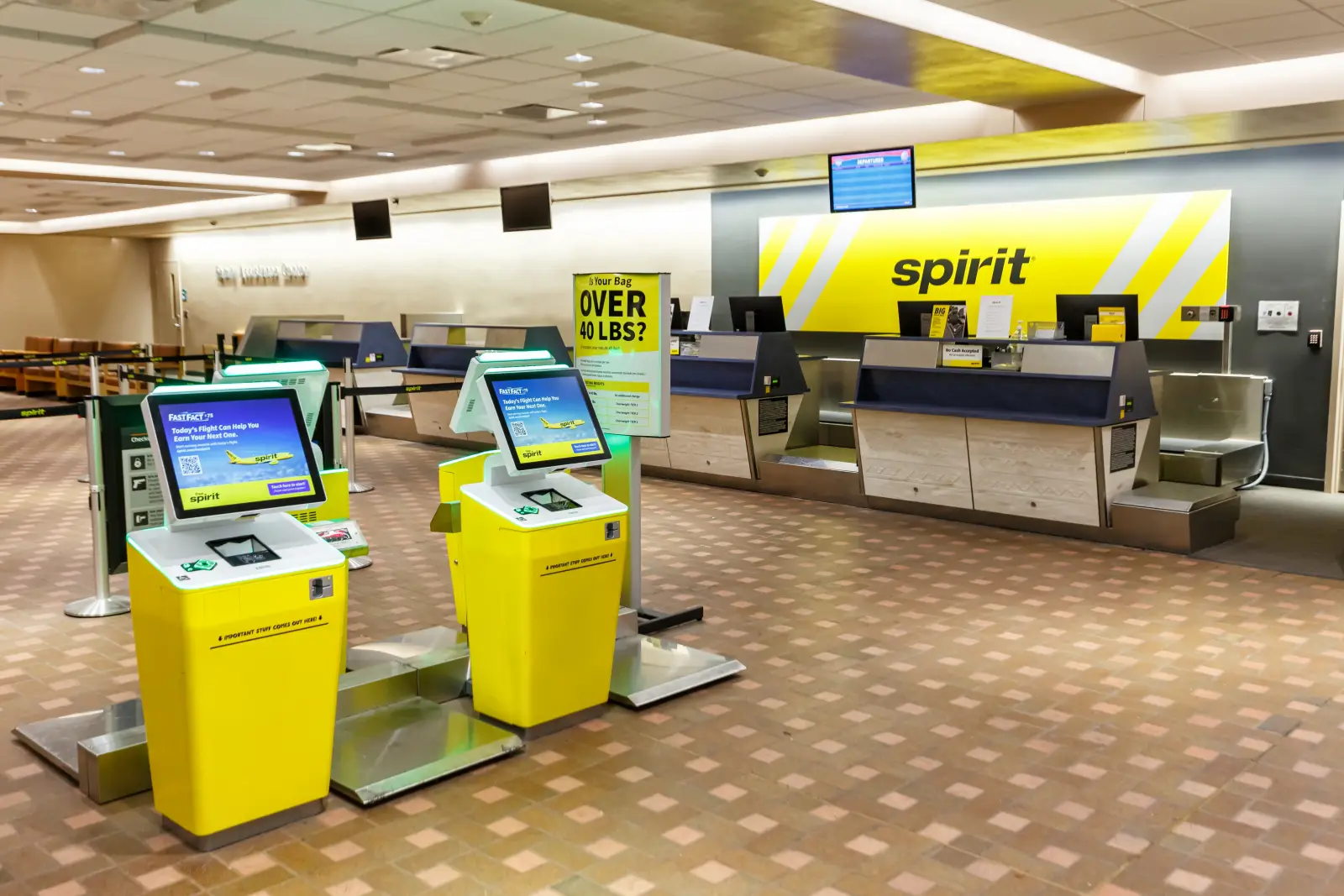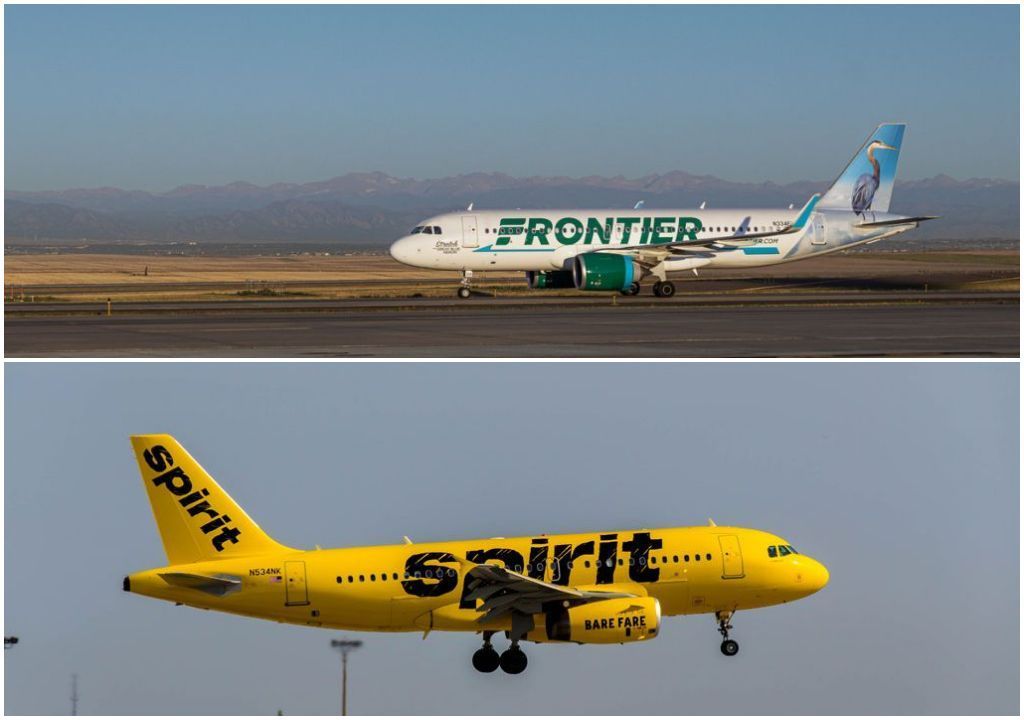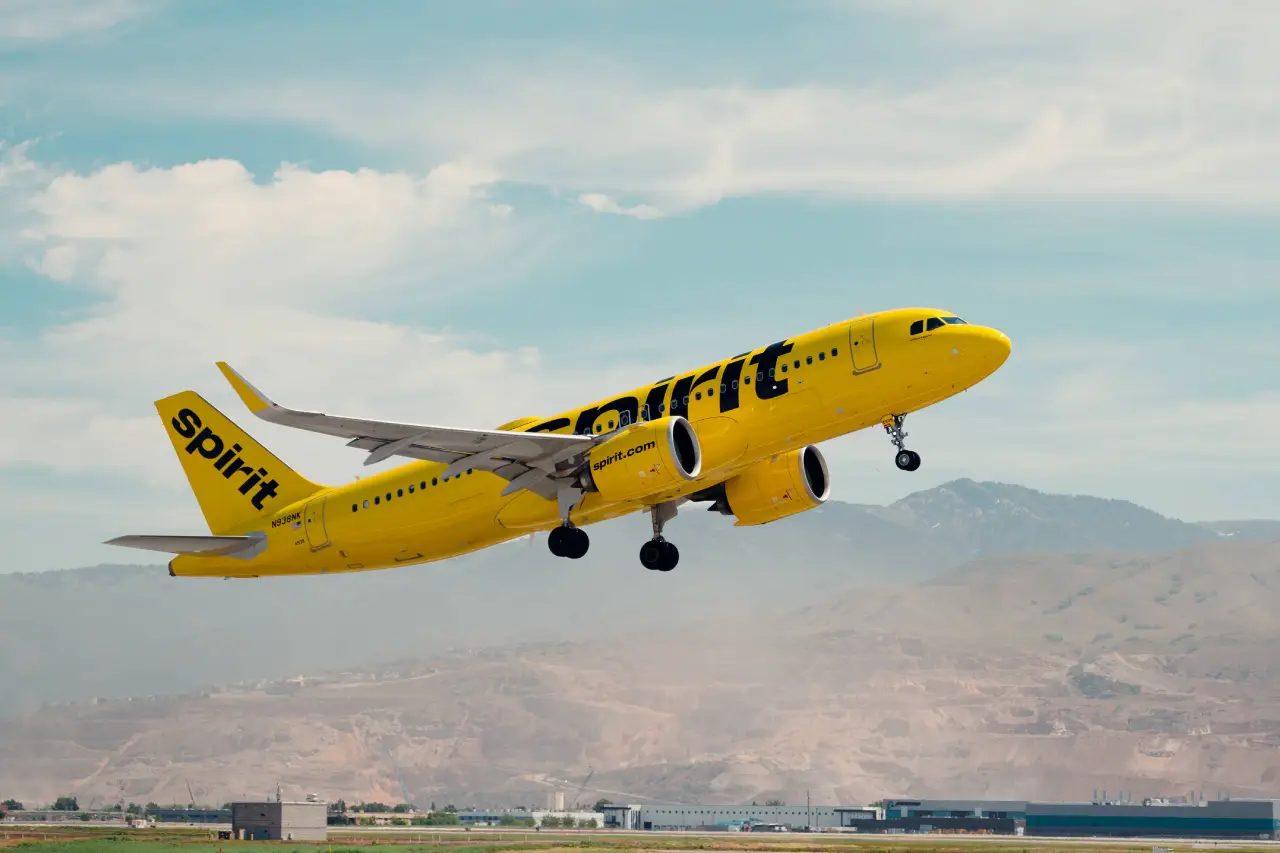
Spirit Airlines will suspend 40 routes and exit two U.S. airports as part of a November network overhaul aimed at reducing costs during its second bankruptcy restructuring in 2025.
The carrier will reduce its overall capacity by 25% and begin furloughing about 1,800 flight attendants, according to company disclosures.
The cuts affect Hartford’s Bradley International Airport beginning Oct. 31 and Minneapolis–St. Paul International Airport starting Dec. 1. The announcement follows earlier route cancellations in 11 U.S. cities effective Oct. 2 and marks the most significant reduction in the airline’s network this year as it struggles to stabilize operations.
Reuters reported that Spirit will halt 40 routes from its November schedule, eliminating service to and from a mix of domestic destinations. This represents a quarter of its planned flight activity for the month. The decision comes amid financial pressure after a second bankruptcy filing in 2025 and continued weak demand in some markets.
Airline industry outlets said the carrier will completely withdraw from Hartford, Connecticut, and Minneapolis, Minnesota, in addition to trimming frequencies elsewhere. The full list of suspended routes has not been released, but previously announced cancellations covered Albuquerque, Birmingham, Boise, Chattanooga, Columbia, Oakland, Portland, Sacramento, Salt Lake City, San Diego, and San Jose.
In total, the network cuts and airport exits represent one of the largest retrenchments for a U.S. low-cost airline in recent years. Analysts noted that Spirit’s downsizing removes options for travelers in midsize cities and reduces competitive pressure on larger carriers in those markets.
Operational and Workforce Impact
Business Insider reported that Spirit is also undertaking a significant workforce reduction. The company has furloughed about 1,800 flight attendants and has asked some pilots to accept pay cuts. The staff reductions are part of broader cost-saving measures as the airline restructures its debt obligations.
The route suspensions and staffing changes are scheduled to coincide with the November capacity reduction. Management has told investors that it expects the cuts to provide operational flexibility and focus resources on more profitable routes. However, the airline faces ongoing challenges with fuel costs, debt servicing, and competition from ultra-low-cost rivals.
The route adjustments follow a series of similar moves earlier this year, when Spirit scaled back operations in secondary markets. Combined, these reductions highlight the airline’s strategy of consolidating operations around core hubs while reducing exposure to weaker-performing cities.
Leadership Changes
In addition to the operational cuts, Spirit has appointed Andrea Lusso, formerly of Amazon, as vice president of network planning. Reuters reported that Lusso’s appointment signals an effort to reconfigure the carrier’s route strategy with new leadership and analytical expertise.
Spirit said Lusso will be responsible for evaluating market performance and restructuring the schedule to align with the company’s turnaround goals. His role is expected to be central in deciding where Spirit maintains service and how it allocates aircraft across its network.
Financial Strain and Industry Context
Spirit’s decision to cut flights comes as the airline continues to face mounting financial strain. The company filed for bankruptcy for the second time in 2025 after losses accelerated in the first half of the year. Rising operating costs and slower-than-expected revenue recovery contributed to the filing.
Industry observers noted that Spirit has already taken multiple steps to reduce expenses, including renegotiating supplier contracts and deferring aircraft deliveries. The route suspensions mark the most visible move yet, directly affecting travelers across the United States. Spirit has emphasized that the restructuring aims to return the airline to profitability and sustain its position in the market.
The broader U.S. airline industry is undergoing adjustments as carriers contend with fluctuating travel demand, higher costs, and labor pressures. Spirit’s situation underscores the difficulties faced by low-cost airlines that rely heavily on high utilization and ancillary revenue to remain profitable.
Analysts said the scale of Spirit’s retrenchment could open opportunities for competitors to fill gaps in affected markets. Larger carriers may expand service on abandoned routes, while other ultra-low-cost airlines could selectively add capacity where Spirit withdraws.
Next Steps
Spirit has not provided details on when or if suspended routes might return. The company has indicated that its network will continue to evolve through 2025 as part of its restructuring process. The reduction in staff and flight activity is expected to remain in place for the foreseeable future.
Travelers booked on affected routes are being notified of cancellations and offered rebooking options or refunds. The airline has pledged to work with impacted passengers to minimize disruptions, although industry reports suggest that cancellations will be widespread across its system in the final quarter of 2025.
Spirit’s turnaround effort remains ongoing, with executives pointing to route optimization and leadership changes as key steps. The outcome of the restructuring will determine whether the airline can maintain its role as a major low-cost carrier in the U.S. market.