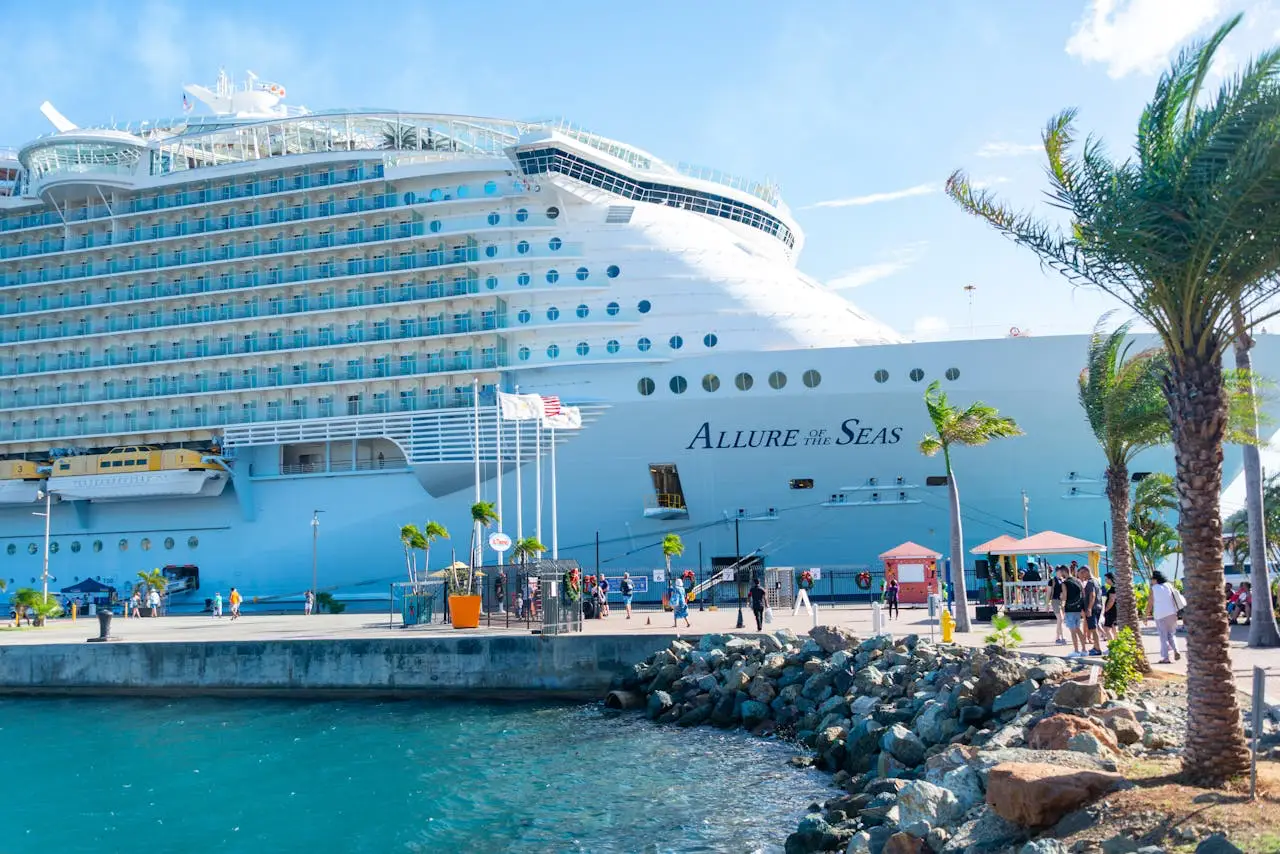
Cruising in 2026 is shaped by a heavy newbuild cycle, growing demand for adventure-focused itineraries, and technology that quietly redefines onboard operations. Industry orderbooks show roughly 14 new ships entering service, adding about 33,000 berths and representing over $10 billion in new investment. Ships are now designed for seasonal redeployment, itinerary flexibility, and higher onboard revenue per passenger.
What’s coming off the shipyard in 2026
2026 is a significant year for new ship launches, with lines deploying vessels designed to maximize seasonal pricing, provide headline attractions, and function as mini-resorts at sea. These new builds are not just bigger, they are strategically positioned and feature innovative onboard concepts.
Royal Caribbean brings icon-class to Europe
Royal Caribbean’s Legend of the Seas will debut in July 2026 in the Mediterranean before moving to Fort Lauderdale for Caribbean cruises. At around 250,000 tons with 5,600 passengers, it continues the Icon-class strategy of deploying mega-ships where seasonal pricing is strongest, using Europe as a summer proving ground instead of confining them to the Caribbean.
MSC and Norwegian expand their fleet experience
MSC will launch MSC World Asia in December 2026, an LNG-powered ship with the “district” design concept, operating seven-night Mediterranean loops from Barcelona and Marseille. Norwegian Cruise Line enters the 2026 cycle with Norwegian Luna, debuting in March with 3,550 passengers on seven-night Caribbean itineraries. Both lines focus on making the ship itself a headline attraction and deploying vessels where demand and revenue potential are highest.
Cruising beyond the usual routes
Cruise itineraries are diversifying as passengers seek rarer destinations, special events, and expedition-style experiences. The focus is no longer just the Caribbean and Mediterranean, but high-latitude regions and one-off events that drive demand.
Arctic and Antarctic expeditions
Expedition cruising continues to grow, especially in the Arctic, with itineraries covering Greenland, Svalbard, and the Northwest Passage. These voyages command higher per-day pricing and rely on landings, wildlife excursions, and Zodiac operations. Antarctica remains tightly controlled. IAATO reports that over 100,000 passengers per year now visit, but only ships under 500 passengers can make landings, making capacity growth limited by permits and environmental management, not hull count.
Special-event and short cruises
Special-event sailings are on the rise. Multiple ships in 2026 are positioned to view the total solar eclipse near Greenland, Iceland, and Spain, highlighting itineraries built around unmissable moments. Asia is also becoming strategically important, with hubs like Singapore hosting short cruises aimed at first-time or regional passengers.
The cashless cruise experience
Digital payment systems are now the backbone of the onboard experience. Cruise lines are using wearables and apps to streamline spending, boarding, and reservations, while also increasing onboard revenue.
Wearables and mobile apps
Most major lines operate fully cashless ecosystems. Princess Cruises’ Medallion and Virgin Voyages’ app-based model handle boarding, cabin access, reservations, and payments through a single digital identity.
Driving onboard revenue
Reduced friction drives higher onboard spend, particularly for specialty dining, experiences, and retail. For guests, this means faster boarding, seamless payments, and little need for physical cash.
VR and immersive tech
Cruise lines are increasingly using VR and mixed reality as part of entertainment and experiential offerings, moving beyond gimmicky demos. In 2026, these technologies appear in family zones, simulators, and shore excursion previews, where they enhance engagement without disrupting regular ship operations. VR is being used to preview excursions, simulate sports experiences, or provide themed storytelling, helping guests make choices and boosting onboard revenue.
The key to success is scalability and convenience: sessions are short, easy to sanitize, and high-throughput, so guests can enjoy immersive content without long waits. Lines are also experimenting with mixed reality for educational programming, interactive shows, and kids’ activities, integrating the technology naturally into the ship’s entertainment flow rather than treating it as a novelty.
Blockchain behind the scenes
Blockchain is quietly shaping onboard systems, particularly loyalty and settlement workflows. Most cruise lines use permissioned ledgers to simplify revenue reconciliation between casinos, spas, excursions, and retail, and to improve audit trails when offers, comps, and commissions stack up.
In parallel, some consumer-facing projects are experimenting with blockchain in a much more visible way, such as decentralized blockchain-based platform models that use on-chain systems for transparency, settlement, and user-owned balances rather than traditional centralized account structures. This shows where cruise could eventually go once regulation, UX, and risk tolerance catch up.
For 2026, most blockchain deployments remain back-office or closed-loop, such as tokenized loyalty points or wallet-style onboard accounts. Guests rarely see it directly, but they benefit from faster refunds, cleaner folios, and fewer reconciliation issues.
Sustainability is becoming visible
Sustainability is now central to operations and can directly affect port access and regulatory compliance. Cruise lines are investing in biofuels, fuel cells, and methanol-ready ships, while operational tech like shore power, advanced wastewater treatment, hull coatings, and air lubrication systems reduces emissions and fuel consumption, helping ships meet stricter 2026 standards globally.
Passengers increasingly notice these initiatives as part of the experience. Visible energy-efficient design in cabins and public areas, reduced single-use plastics, and smarter food-waste management all show that sustainability is not just regulatory, it is tangible, cost-effective, and part of the modern guest journey.
Environmental compliance and destination management are as critical as onboard hardware. The industry looks flashy on the surface, but underneath, it is increasingly optimized for profitability, experience, and sustainability, setting a foundation for the next decade of cruising.