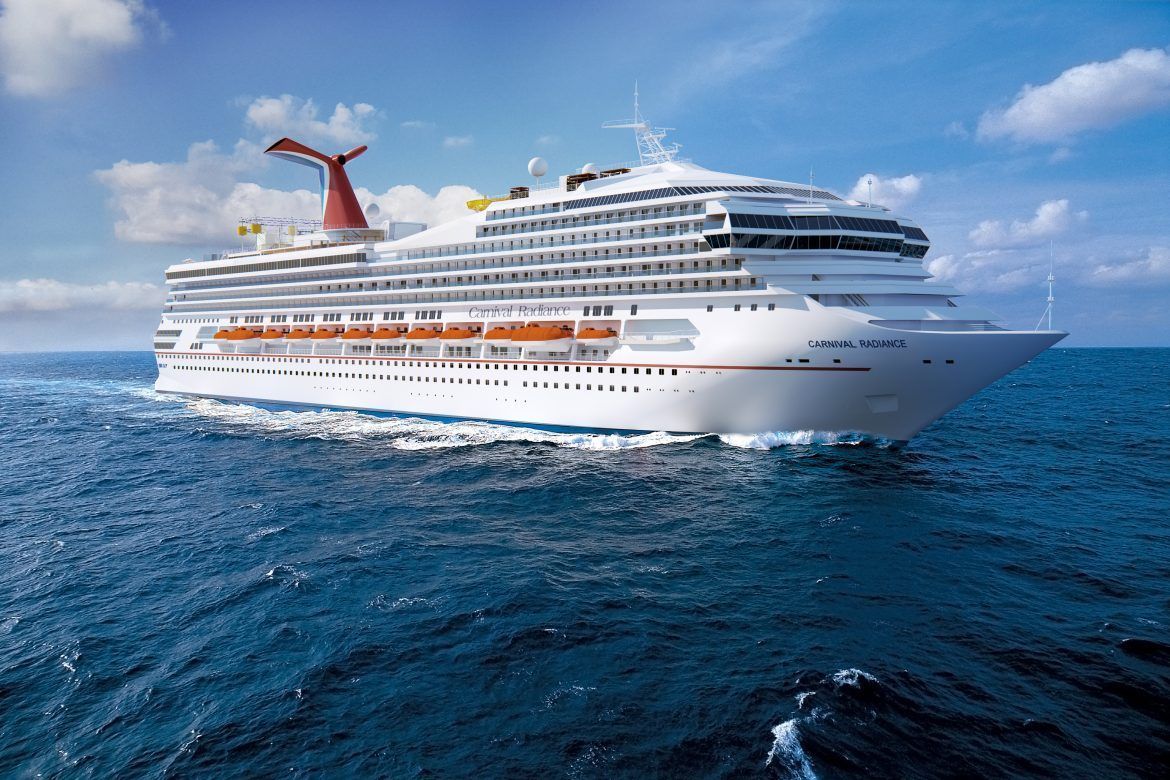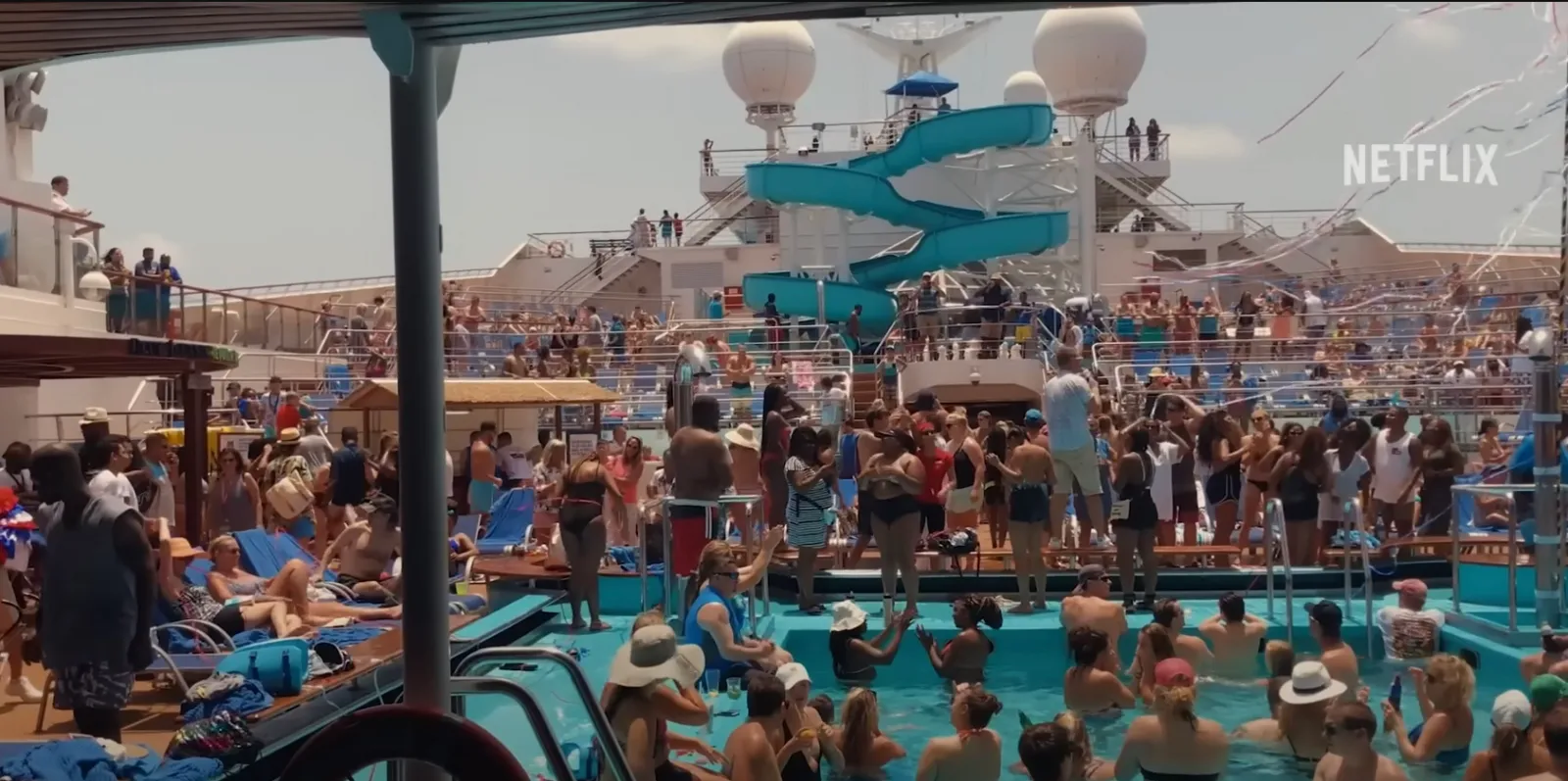
Netflix’s newest documentary, Trainwreck: Poop Cruise, dives headfirst into one of the most infamous maritime disasters in cruise history: the Carnival Triumph fiasco of 2013. What began as a routine pleasure cruise from Galveston, Texas, quickly unraveled into a five-day ordeal that left more than 4,000 passengers and crew stranded at sea without power, sanitation, or functioning infrastructure. The situation turned so dire that the ship became known worldwide as “the poop cruise.”
The documentary, directed by James Ross, debuts on June 24 and revisits the harrowing days aboard the Carnival Triumph through archival footage and first-hand testimony from passengers. It reveals the psychological and physical toll that the incident inflicted on those trapped aboard a vessel floating in the Gulf of Mexico with overflowing toilets, failing air conditioning, and food shortages.
From Vacation to Nightmare
On the second day of the voyage, a fire in the engine room caused a total power failure, knocking out critical systems, including propulsion, electricity, and sanitation. The Carnival Triumph was left adrift in the Gulf, slowly being towed back to land while living conditions deteriorated by the hour.
With no working restrooms, passengers resorted to using plastic bags, red biohazard bags, and buckets. Mattresses were dragged into hallways to escape stifling cabins. Food ran low. The air turned toxic with the smell of sewage. Hallways flooded with human waste as the ship’s systems buckled under pressure.
Netflix captures this descent into chaos through chilling personal accounts. Passengers describe slippery corridors slick with a mixture of feces, urine, and stagnant water. The footage, some recorded by guests with mobile phones, paints a raw, disturbing picture of desperation at sea.
Voices from the Ship
Several survivors featured in the documentary provide gut-wrenching details. Michelle Key, then 48, recalls, “I walked through water, feces, and urine. It was greasy, disgusting, and we slipped in it.” Her vivid testimony echoes the trauma shared by many.
Jean Cripps, a 74-year-old grandmother with Parkinson’s, offers a moving account of mental scars that still haunt her. “The smell still torments me,” she says through tears. Cripps, who traveled with her disabled husband and grandchildren, explains that the horror wasn’t just physical—it was emotional and psychological.
Fleda Key, 68, described the conditions bluntly: “There was urine and feces to the rim of every toilet. I was scared, very scared.” And Kimberly Townsend, 54, perhaps summed up the collective experience best: “This wasn’t a vacation anymore. It was survival.”
Aftermath and Accountability
The Carnival Triumph eventually docked in Mobile, Alabama, but the damage was done. What should have been a four-day tropical escape turned into a floating disaster, splashed across global headlines. The cruise line was heavily criticized for neglecting known mechanical issues, and court proceedings revealed prior warnings about engine trouble.
Carnival Cruise Line CEO Gerry Cahill publicly acknowledged the company’s failure, stating, “The situation on board was difficult and we are very sorry for what happened. We clearly failed in this case.” Lawsuits followed, including a group claim by 30 passengers demanding accountability for both physical and emotional distress.
Investigations exposed lapses in maintenance protocols and raised broader concerns about cruise safety standards. The incident forced both the public and regulators to re-examine how cruise lines handle emergencies and passenger care.
Why It Still Matters
Trainwreck: Poop Cruise is more than just a disaster documentary. It’s a reflection on how fragile vacation security can be and how quickly a luxury experience can collapse under poor planning and corporate negligence. It also explores the power of media, as images of squalor and misery went viral and turned the Carnival Triumph into a cautionary tale.
For the cruise industry, it was a wake-up call. For passengers, it became a lifetime trauma. And for Netflix, it’s an opportunity to unpack a moment when hospitality failed and survival took its place.
The Legacy of the Poop Cruise
More than a decade later, the term “poop cruise” still evokes memories of one of the most embarrassing and dehumanizing failures in travel history. The phrase has become shorthand for corporate oversight gone horribly wrong, and Trainwreck: Poop Cruise doesn’t shy away from examining the emotional wreckage left behind.
Through a blend of interviews, legal documentation, and real-time recordings, the documentary turns the spotlight not just on what happened, but why it happened—and why it must never happen again. The film is a must-watch for anyone who travels, works in tourism, or simply wants to understand what unfolds when infrastructure, planning, and basic dignity fail at sea.