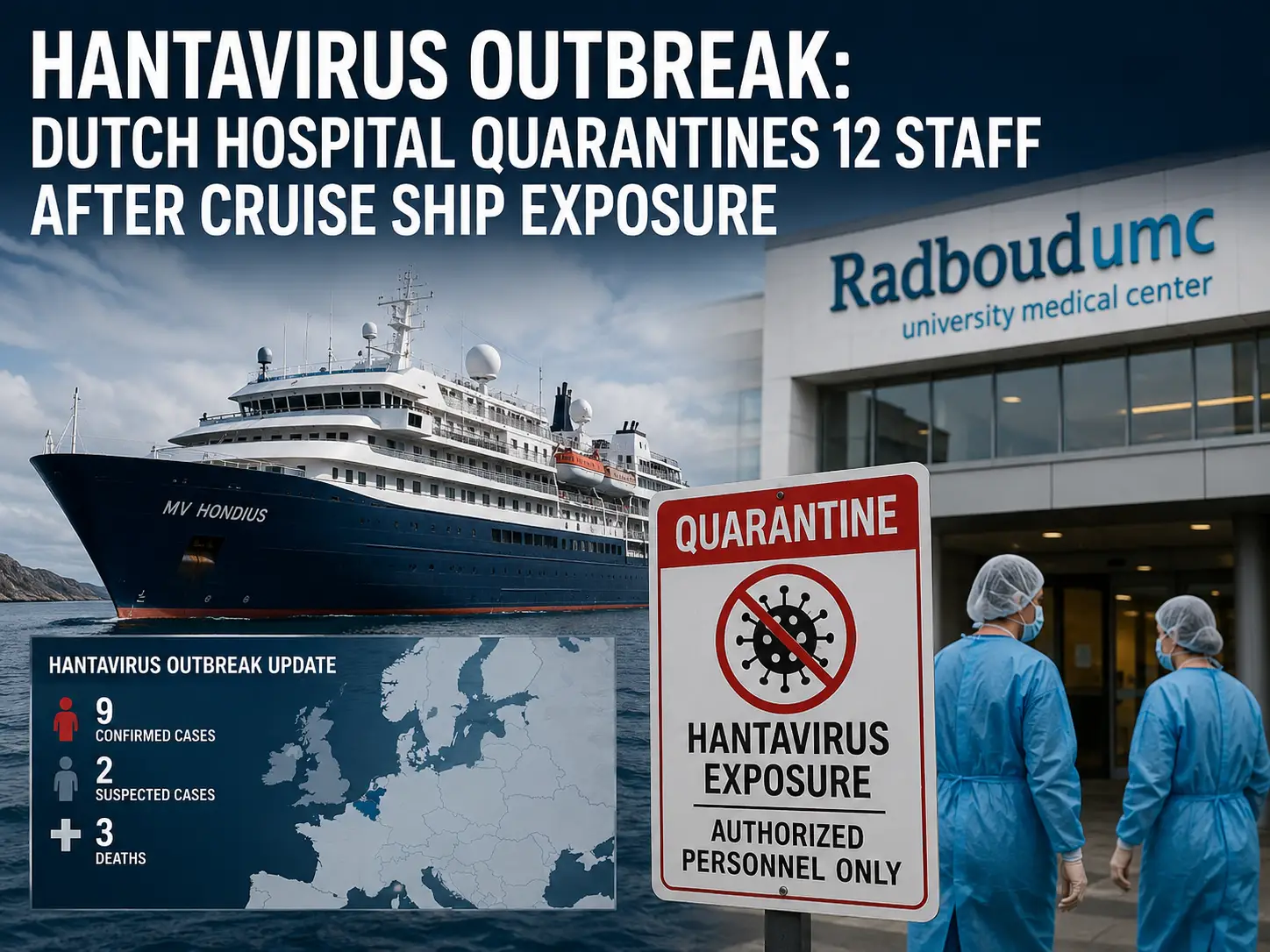
A Dutch hospital has quarantined 12 staff members for six weeks after blood and urine from a hantavirus patient were handled without the strictest protective procedures. Radboudumc in Nijmegen, a leading Dutch university medical center and teaching hospital affiliated with Radboud University, said the risk to staff was very low and patient care continued without interruption.
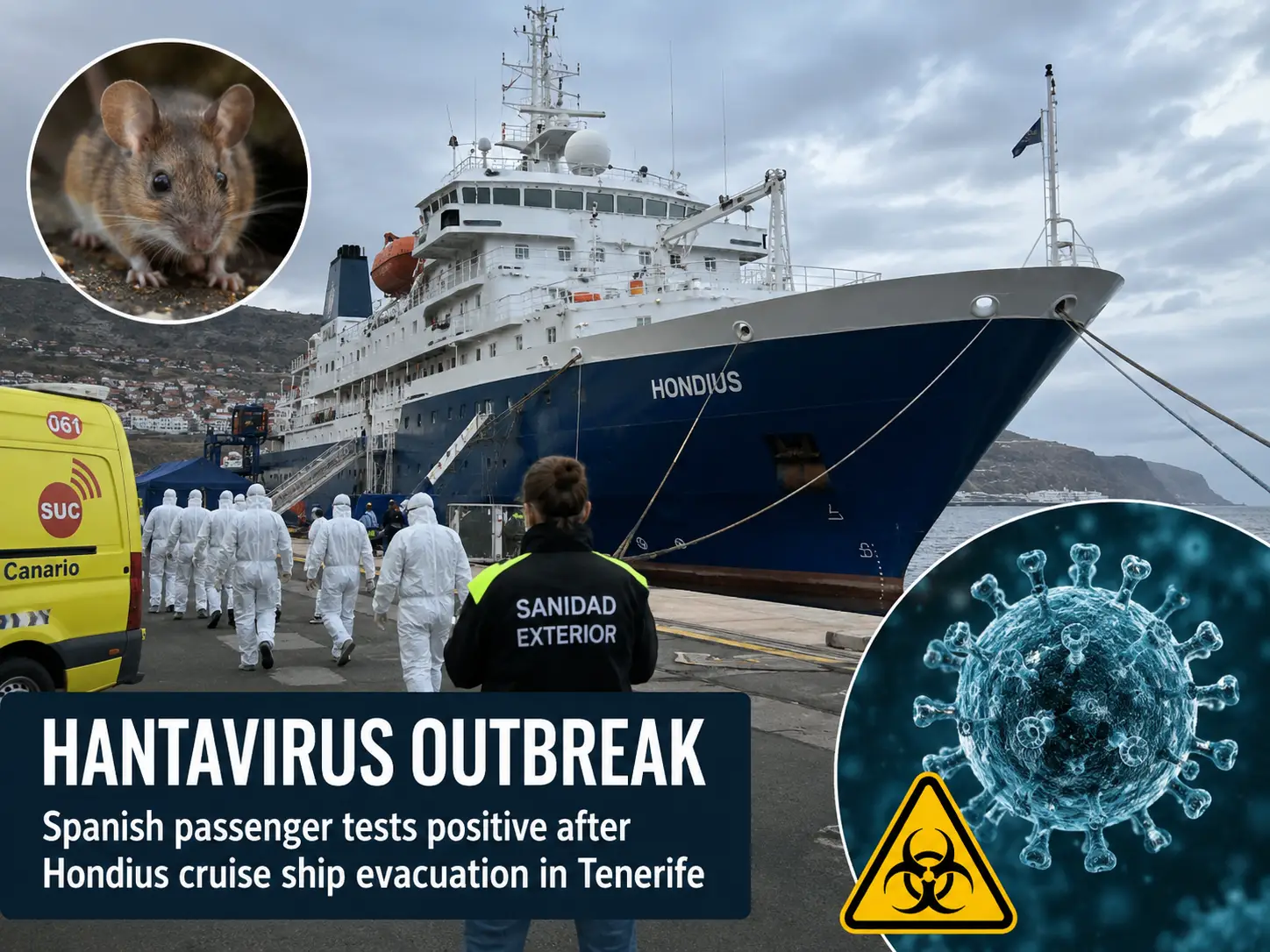
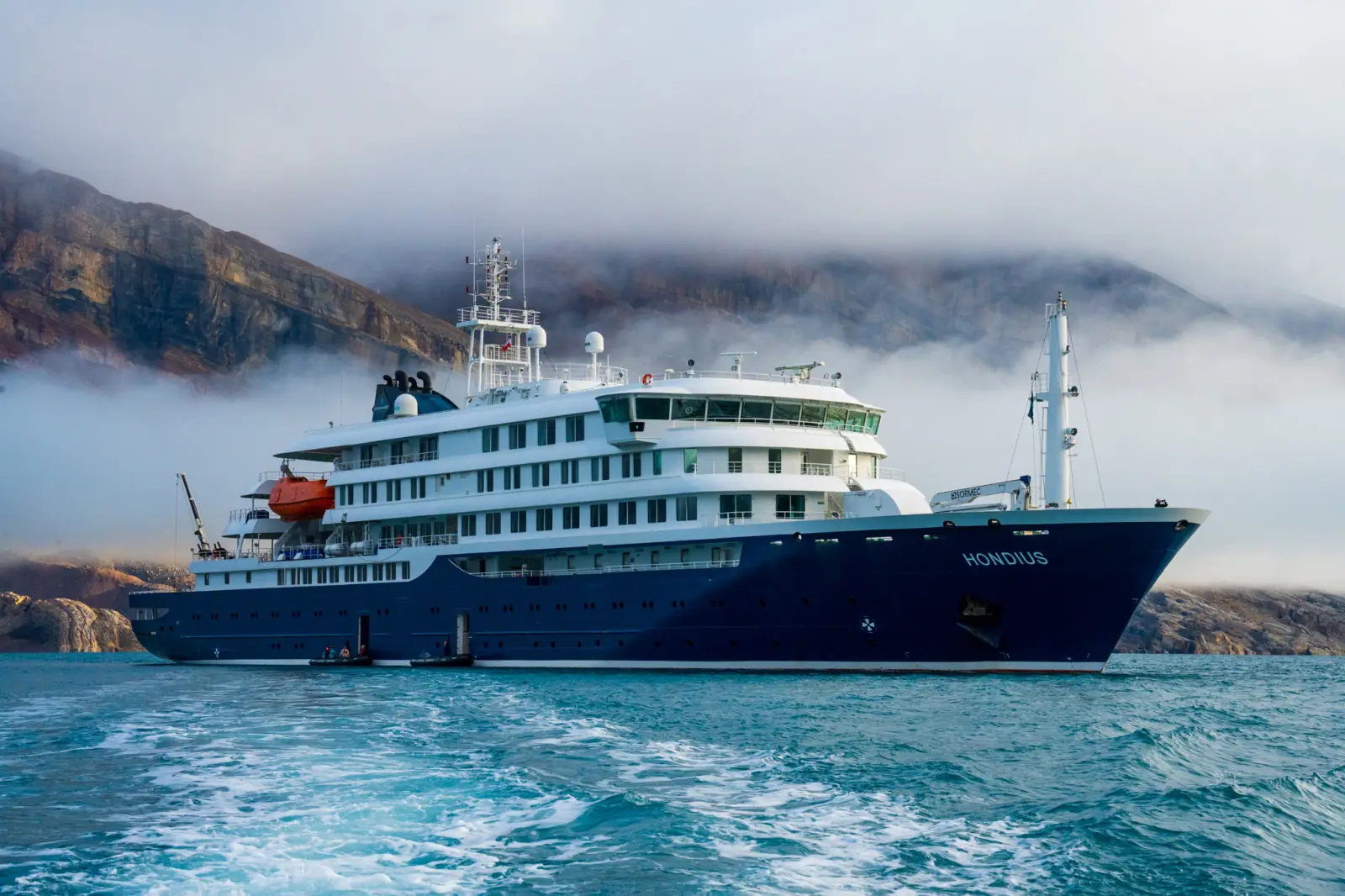
The quarantine came as health officials across Europe and beyond worked to contain a hantavirus outbreak linked to the luxury cruise ship MV Hondius. The World Health Organization said confirmed cases had risen to 9, while three people have died since the outbreak began.
Officials said the episode showed how quickly hospitals and other institutions must apply tighter controls when dealing with the virus, which is usually spread by wild rodents and only rarely passes from person to person. WHO chief Tedros Adhanom Ghebreyesus said more cases may still emerge because of the virus’s long incubation period.
The Radboudumc patient was admitted on May 7 after travelling on the cruise ship. Dutch Health Minister Sophie Hermans told parliament that staff had followed strict procedures, but not the very strictest procedures required for this particular virus.
She said the chance of infection among the 12 quarantined staff was small, but added that the hospital had decided to act cautiously because it was dealing with a serious virus. Hermans said the situation was different from Covid-19, and that officials were confident they could keep the virus under control.
The hospital did not say whether any of the quarantined staff had developed symptoms. It said the quarantine was preventive and that it had taken the step after learning that the patient had not been handled under the highest level of protective measures.
The Hondius cruise ship has been at the centre of the outbreak after a series of infections among passengers and crew. After the last passengers disembarked in Spain’s Canary Islands, the ship departed for the Netherlands late on Monday with 25 crew, a doctor and a nurse on board.
Ship owner Oceanwide Expeditions said it was expected to arrive in the Netherlands by May 17. The company has not said whether the vessel will undergo additional health checks on arrival.
The WHO said it now recognises 2 suspected cases in addition to the 9 confirmed ones. One suspected patient died before being tested, while another case was reported on Tristan da Cunha, a remote island in the South Atlantic where no tests were available.
All suspected cases are believed to have been infected on the cruise, or before boarding it, the agency said. Tedros said those cases had been isolated and placed under strict medical supervision, reducing the risk of further spread.
He warned that because passengers had significant contact with each other before the hantavirus was detected, the situation remained under close watch. “At the moment, there is no sign that we are seeing the start of a larger outbreak, but of course the situation could change and given the long incubation period of the virus, it’s possible we might see more cases in the coming weeks,” he said.
Public health experts say the coming weeks will be crucial. Arnaud Fontanet, head of Epidemiology of Emerging Diseases at France’s Pasteur Institute, said the search for new cases could continue for months because the incubation period can last up to six weeks.
Italy’s top infectious diseases hospital has also said it will examine biological samples from a man who had contact with a Dutch woman who died from hantavirus. Authorities across Europe are now tracing passengers and contacts to check whether more infections have occurred.
The outbreak has drawn attention to the difficulty of managing rare but serious diseases on international travel routes, especially when passengers move quickly across borders. Health agencies say the response now depends on rapid contact tracing, careful isolation and consistent protective protocols.