The 2025 edition of Leveraging Intellectual Capital by Gaining Edge, a global tourism and business events industry consulting firm, has reaffirmed that intellectual capital remains a stable yet strategically dynamic asset, central to destination competitiveness and global engagement.
Top city rankings
The 2025 ranking also reveals a geographical distribution, with strong representation from Europe, Asia-Pacific and the Americas. This reflects the maturity of established knowledge centres but also the rise of new players and a gradual redistribution of influence within regions.
Overall, the results confirm that destinations with a critical mass of active local leaders – those engaged internationally across associations and disciplines – are better positioned to leverage their intellectual capital, driving competitiveness, innovation, and visibility in the global meetings landscape.

London, once again, tops the global ranking, with local leaders serving on 1,979 association boards. Paris follows with 1,660 board memberships, then Tokyo (1,420), Beijing (1,240), and Madrid (1,095).
Together, these top five cities account for more than 7,000 active board positions, underscoring their long-standing status as leading knowledge hubs with well-established academic and professional ecosystems within their respective regions.
Compared with previous editions, New York has dropped out of the top five, while Beijing has advanced by one position and Madrid has entered the Top 5 group for the first time, reflecting subtle shifts in global intellectual capital engagement.
Global Landscape and Trends
While Europe and North America continue to lead, the global distribution of intellectual capital is becoming increasingly multipolar, driven by Asia-Pacific and reinforced by emerging centers in other regions.
Across regions, the research identifies several trends. Southern Europe shows strong momentum, led by Madrid, Rome, Barcelona, and Milan, together with Lisbon, Istanbul, and Athens, reflecting renewed competitiveness driven by greater affordability and wider international appeal. Scandinavian cities such as Oslo, Copenhagen, Stockholm, and Helsinki show continued growth, driven by investment in research, innovation, and digital transformation.
In the Asia-Pacific, cities including Bangkok, Kuala Lumpur, and Singapore record strong performances, reinforcing the region’s rise as a global meetings powerhouse.
However, several major U.S. destinations, including New York, Chicago and Los Angeles, experienced declines, reflecting a more inward domestic focus.
Further down the ranking, notable movements have emerged. Warsaw, Shanghai, Istanbul, Ottawa, Cape Town, and Budapest entered the Top 50, reflecting a broader geographical diversification of global intellectual capital.
San Francisco, Geneva, Brisbane, Vancouver, Lima, and Philadelphia have dropped out – partly a consequence of post-pandemic restructuring and shifting leadership representation within international associations. These changes indicate an ongoing rebalancing of intellectual engagement across regions.
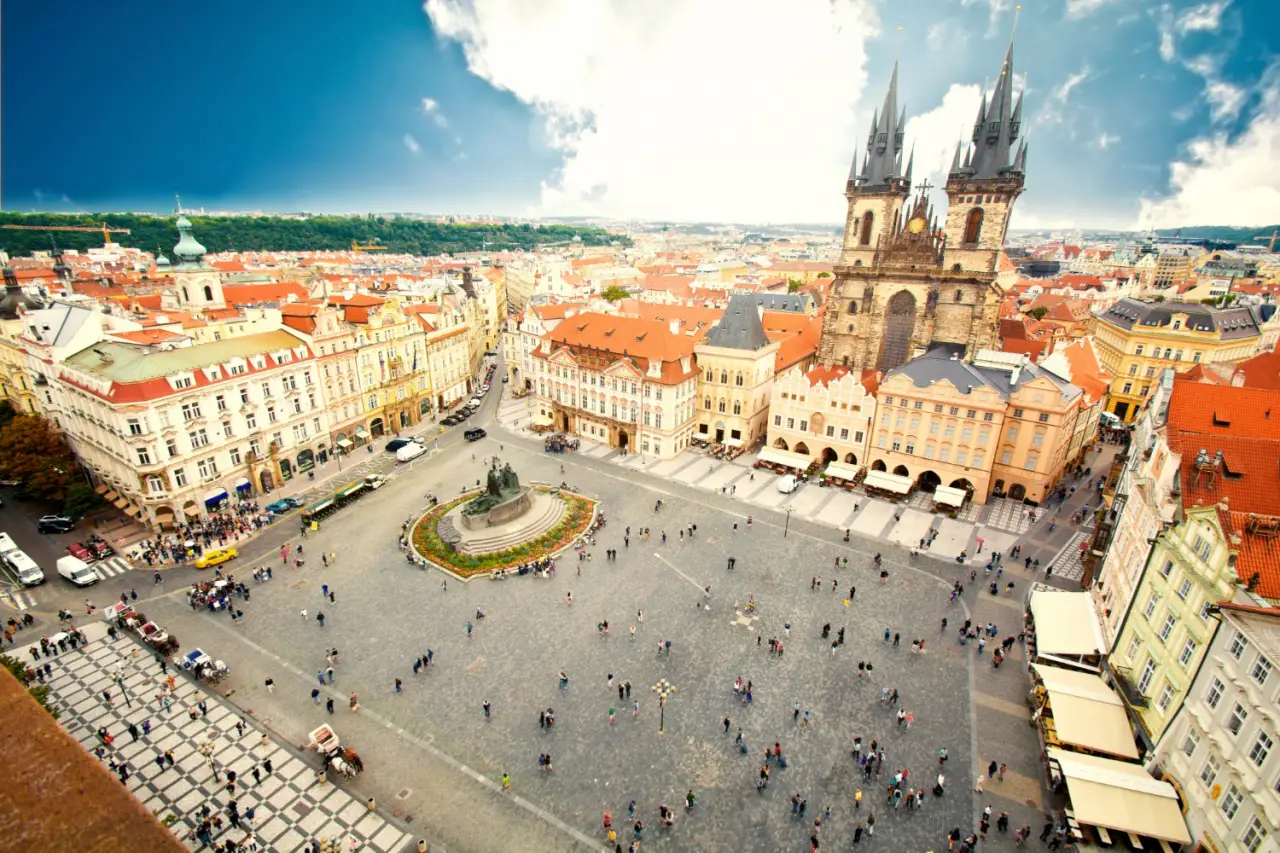
Prague is global leader in converting intellectual capital into tangible MICE outcomes
The Harnessing Ratio provides a critical measure of how effectively destinations convert intellectual capital into tangible meeting outcomes.
The 2025 analysis confirms Prague as the global leader, achieving a remarkable 80% ratio for large congresses and nearly 70% across all meetings, demonstrating exceptional coordination between its academic community and the meetings industry.
Lisbon, Bangkok, Istanbul, and Barcelona also record outstanding performances, while Montreal and Cape Town showcase an impressive balance between knowledge engagement and event success.
At the national level, the United Arab Emirates, along with Portugal, Thailand, and the Czech Republic, emerge as top performers, each around 60% – with the UAE surpassing 90%, reflecting its ability to leverage both regional and expatriate expertise.
Southern Europe continues to surge, with Greece, Spain, and Italy benefiting from the region’s affordability as Western Europe faces rising costs.
Photo Credit: BBA Photography / Shutterstock.com