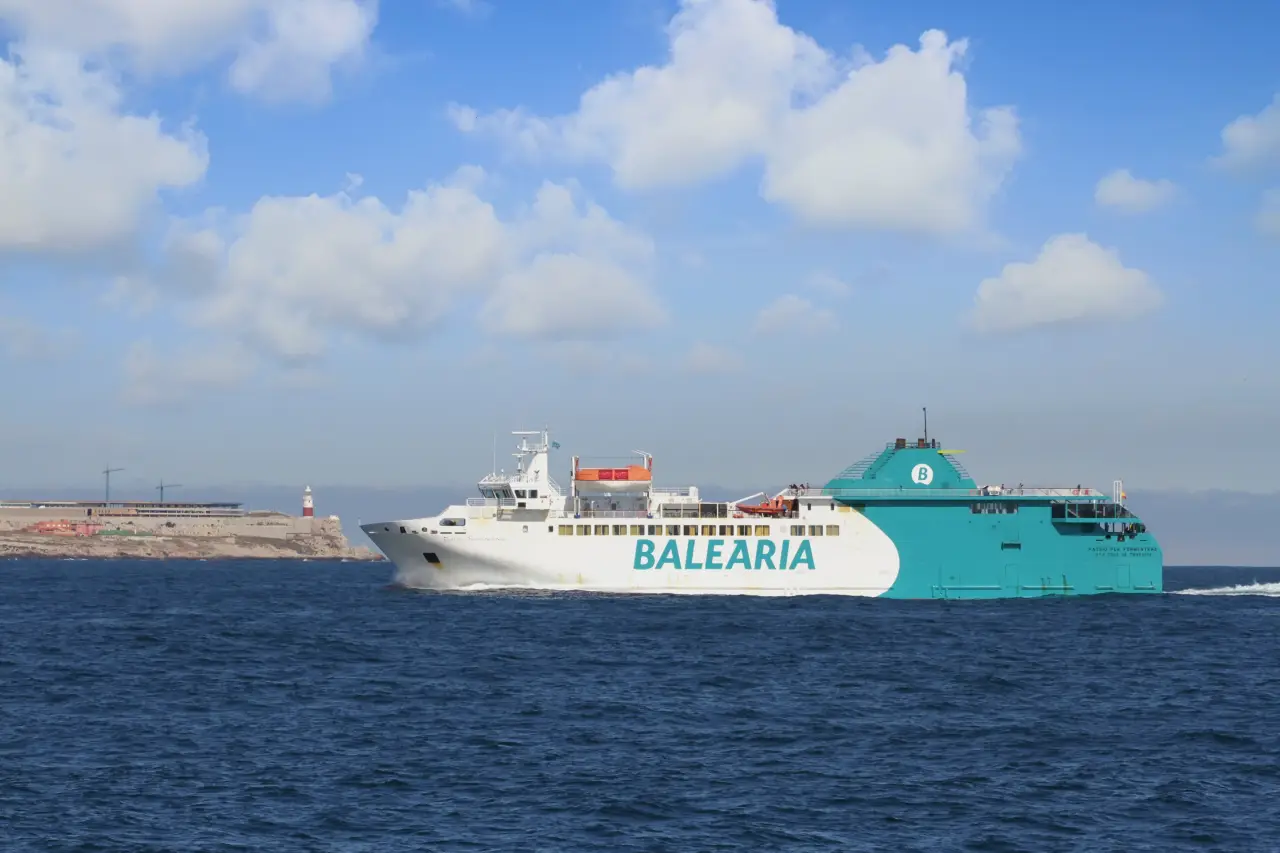
Baleària has proposed a single unified vehicle quota for all cars arriving by sea to Formentera during the island’s summer traffic regulation period, saying the current system disadvantages maritime transport and contributes to congestion at peak travel times.
The plan was presented during discussions with local authorities responsible for seasonal access controls, as demand builds ahead of the busiest months.
The ferry operator is calling for one overall cap covering private vehicles, rental cars, and ferry-transported traffic rather than separate limits by category. Baleària says a unified quota would ensure equal treatment across access methods and improve traffic management during peak tourist season.
Seasonal restrictions under review as summer demand rises
Formentera applies traffic limits each summer to control the number of vehicles entering the island, aiming to reduce congestion, protect the environment, and safeguard residents’ quality of life. The restrictions are enforced during periods of the highest visitor arrivals, when the island’s narrow road network comes under sustained pressure.
Under the current framework, differentiated quotas apply depending on how vehicles reach the island, with separate allowances for rental cars and other transport channels, including ferry services. Baleària argues this structure creates imbalances that penalise maritime transport while allowing other vehicle flows to grow beyond sustainable levels.
The company is pushing for a single overall ceiling that applies to all non-resident vehicles, regardless of their point of entry. It states that a unified approach would simplify enforcement, eliminate unequal treatment among transport providers, and provide clearer planning conditions for ferry operations.
As part of the proposal, Baleària has also suggested targeted exemptions to preserve essential mobility and encourage cleaner transport. These would cover residents, seasonal workers, hybrid and electric vehicles, and vehicles staying on the island for more than 7 days.
Balancing tourism growth with limited infrastructure
Formentera is one of the smallest islands in the Balearic archipelago and relies heavily on ferry connections, particularly from Ibiza, for passenger and vehicle access. During the summer months, visitor numbers increase sharply, often exceeding the island’s permanent population several times over.
The seasonal influx places significant strain on local infrastructure, with traffic congestion becoming a recurring challenge near beaches, accommodation areas and port zones. Authorities introduced vehicle caps in recent years after congestion and environmental impacts became increasingly visible during peak travel periods.
The policy is designed to limit road saturation while allowing tourism to continue, reflecting a broader shift across Mediterranean destinations toward traffic controls rather than outright visitor restrictions. Island governments across Spain, Italy and Greece are exploring similar tools to manage overtourism pressures.
Baleària maintains that ferry traffic already provides a controlled and traceable entry point for vehicles, making it well suited to inclusion within a single regulated quota. The company argues that treating ferry arrivals separately distorts traffic planning and weakens the overall effectiveness of the cap.
Local authorities, including the Consell de Formentera, have not yet confirmed whether the unified quota proposal will be incorporated into the final regulatory framework for the upcoming summer season. Any revision would need to balance environmental goals, resident needs and the economic importance of peak tourism.
Transport operators, rental firms and local businesses are awaiting clarity as summer approaches, with vehicle access rules expected to play a central role in shaping travel flows to the island in 2026.
Photo Credit: Photomarine / Shutterstock.com