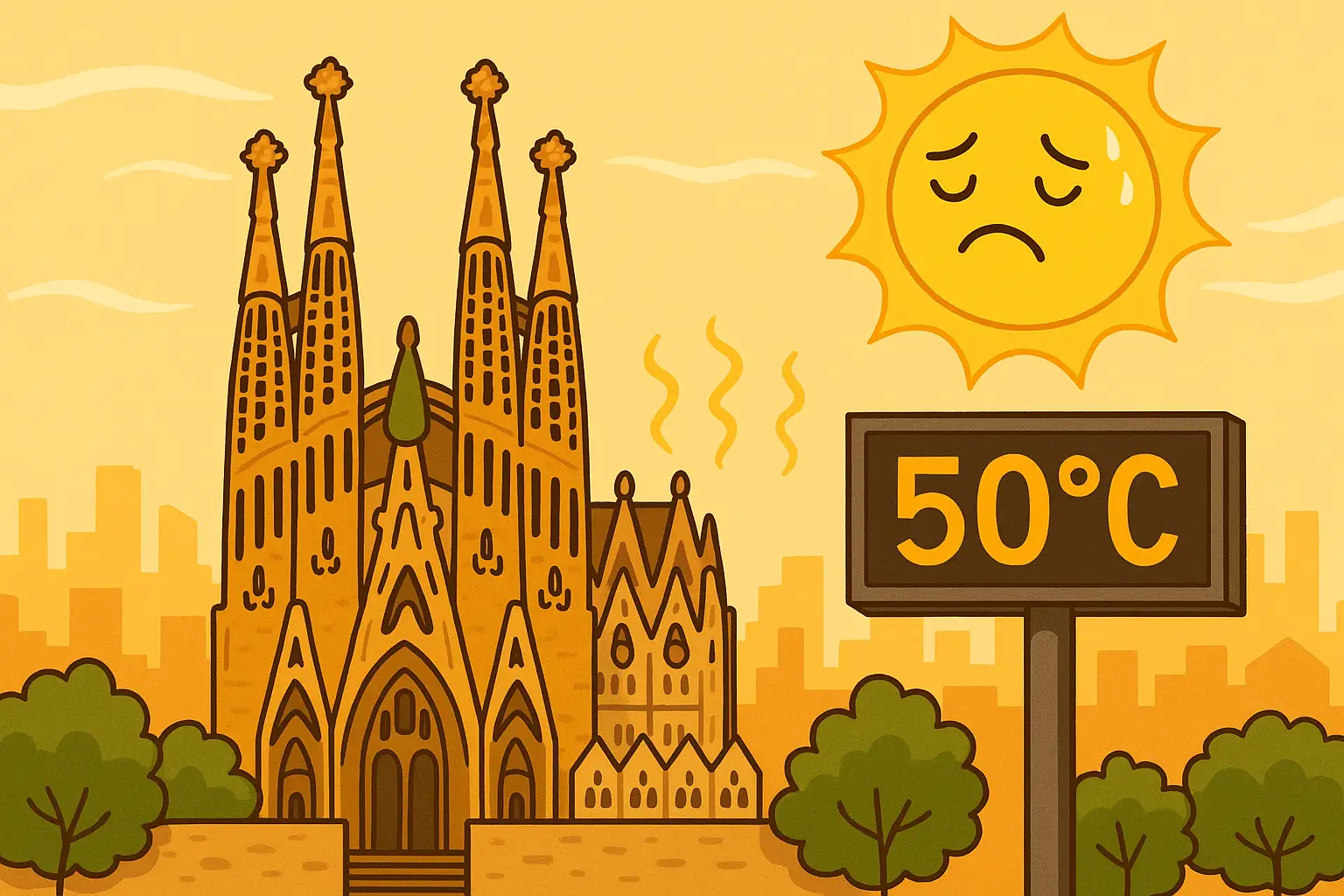
Spain faces an extreme summer after recording its fifth-wettest spring since 1961. Meteorological experts from Spain’s State Meteorological Agency (AEMET) are warning of a prolonged period of above-average temperatures. There is a nearly 70% probability that the upcoming summer will be hotter than usual, and between a 50% and 70% chance it will be among the top 20 hottest summers in recent memory.
The heatwave conditions could begin as early as June, with predictions of “very, very warm” weather episodes affecting large parts of the country. According to Ruben del Campo, spokesperson for AEMET, this early summer heat may become intense enough to set new records for the time of year, potentially qualifying as an official heatwave. “We are certainly going to have intense heat,” he warned, adding that such early surges in temperature are becoming more frequent.
Spring Showers and Climate Warnings
While summer looms hot and dry, the spring of 2024 brought an unusual deluge of rain. Across Spain, an average of 279 litres per square metre fell—151% above the seasonal norm. This made it not only the fifth-wettest spring since records began in 1961, but also the third-wettest spring of the 21st century, trailing only 2013 and 2018.
The Balearic and Canary Islands experienced particularly heavy rainfall. In fact, the Canaries recorded their rainiest spring of the century. These weather swings are prompting increased calls for water conservation, even in wet years. “We must never lower our guard in Spain over the use of water,” said del Campo.
NASA Satellite Data Raises Global Concerns
Spain’s shifting climate is part of a broader pattern. According to a recent analysis of NASA satellite data, the last five years have seen a dramatic increase in the intensity, duration, and frequency of extreme weather events globally. The findings, reported by The Guardian, were derived from data collected by NASA’s GRACE satellite, which monitors environmental changes such as groundwater levels and climate stress indicators.
The data suggests that extreme weather events in 2024 alone were nearly double the average recorded between 2003 and 2020. This includes droughts, torrential rain, and severe storms—all of which appear to be intensifying more rapidly than previously projected global temperature increases.
Spain’s 2024: A Year of Extremes
In the Valencia region alone, 224 people were reported dead due to floods and heavy rain linked to the DANA phenomenon, a type of cold-drop weather system responsible for some of Spain’s most violent storms. These deadly events made 2024 one of the most devastating years for climate-related disasters in Spain’s recent history.
NASA scientists involved in the GRACE project, including Dr. Bailing Li and Dr. Matthew Rodell of the Goddard Space Flight Center, expressed caution in interpreting the results. While they emphasized the need for longer data sets before confirming definitive trends, they admitted the recent shift is deeply alarming. “It’s difficult to pinpoint exactly what is happening here,” said Dr. Li, “but global warming appears to be the most likely driver.”
Dr. Rodell echoed this concern, saying, “It certainly is frightening,” as the satellite reveals a rapid escalation in the planet’s environmental volatility.
Heat, Rain, and the Unknown Ahead
As Spain prepares for a summer that could break heat records, the implications for agriculture, tourism, and energy consumption are serious. The lack of a clear trend for rainfall this summer—coupled with historically dry conditions—leaves little margin for error. Thunderstorms may occur, but they are likely to be sporadic and intense rather than seasonally sustained.
In the broader context, Spain’s extreme spring-to-summer shift mirrors a planet under climate stress. Scientists, meteorologists, and governments are urging both preparation and adaptability. The data may not be conclusive yet, but the warning signs are multiplying—and for many in Spain, this summer could be the most extreme yet.