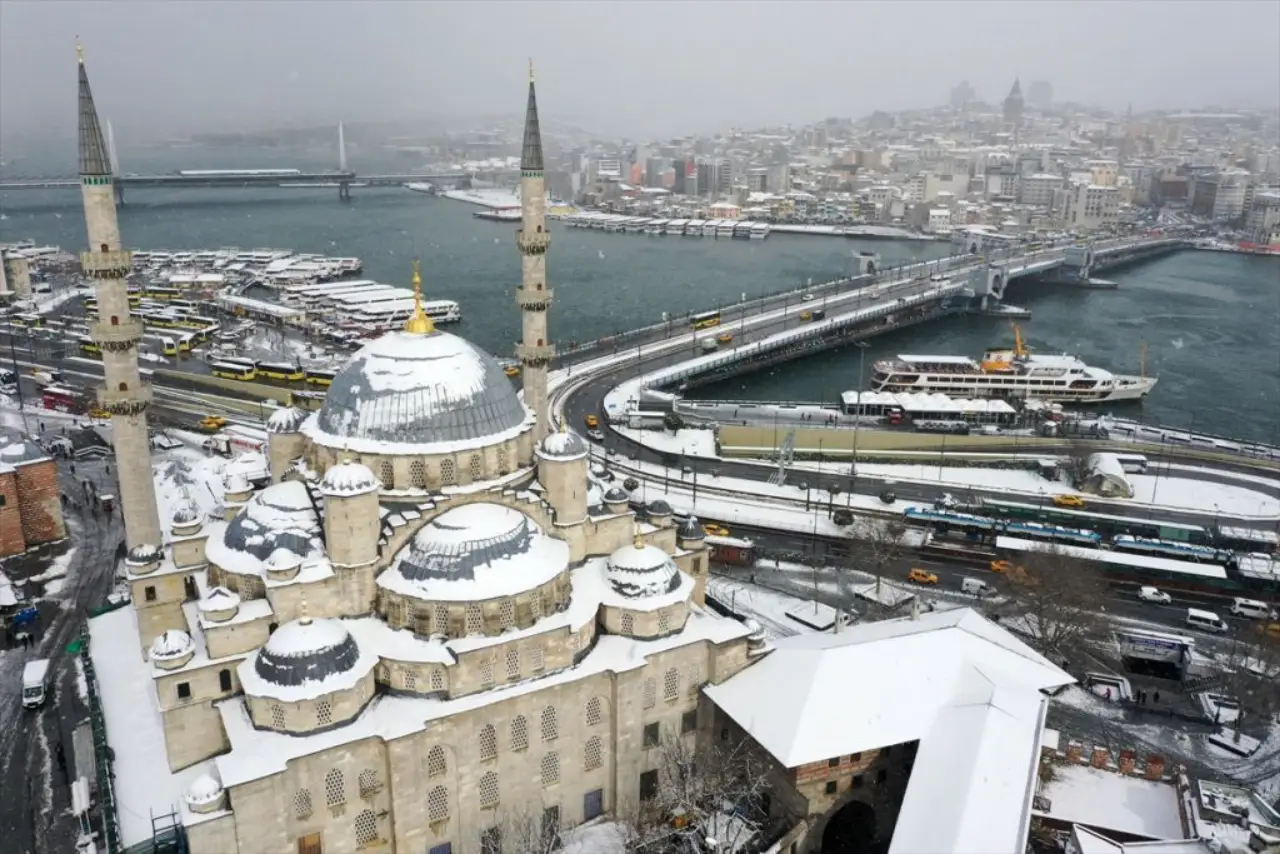
Air travel across Istanbul is disrupted today, with multiple airlines canceling more than 120 flights due to forecast snow and adverse weather, following operational restrictions imposed by Turkey’s Meteorological Emergency Committee.
Turkish Airlines cancels 54 flights at Istanbul Airport, AJet cancels 24 services at Sabiha Gökçen Airport, and Pegasus Airlines suspends 46 flights scheduled to operate into and out of the city. The measures are implemented to maintain flight safety as deteriorating weather conditions are expected to affect airport operations throughout the day.
The cancellations affect both domestic and international services at Istanbul’s two main commercial airports, creating knock-on impacts for passenger connections, ground transport demand, and regional schedules. Airlines advise travelers to monitor flight status updates through official channels as winter conditions continue to evolve.
Flight Cancellations and Operational Restrictions
Turkish Airlines confirms that 54 departures and arrivals at Istanbul Airport are canceled on Jan. 12 after the Meteorological Emergency Committee, known by its Turkish acronym MADKOM, orders capacity restrictions in response to expected adverse weather. The carrier states that the decision is precautionary and aimed at maintaining safe flight operations during periods of reduced visibility, potential icing, and runway contamination.
Turkish Airlines Communications President Yahya Üstün announces the decision in a social media post, stating: “Due to the adverse weather conditions expected in Istanbul on Monday, January 12th, restrictions will be placed on flight schedules as per the decision taken by the Meteorological Emergency Committee (MADKOM). Therefore, 54 flights departing from and arriving at Istanbul Airport on January 12th have been cancelled.” He adds that passengers can obtain information about canceled services through the airline’s website and digital channels, said Yahya Üstün.
At Istanbul’s secondary hub, Sabiha Gökçen Airport, low-cost carrier AJet cancels 24 flights operating on the same day. The airline attributes the decision to the same MADKOM capacity restriction order affecting air traffic in the region.
AJet Press Counselor Mehmet Yeşilkaya confirms the move, saying: “Due to adverse weather conditions in Istanbul and in accordance with the decision of the Meteorological Emergency Committee to restrict flights; 24 of our flights departing from and arriving at Sabiha Gökçen Airport on Monday, January 12th, have been cancelled,” said Mehmet Yeşilkaya.
Pegasus Airlines also announces the cancellation of 46 flights scheduled for Jan. 12, citing expected unfavorable weather conditions beginning the evening of Jan. 11 and intensifying into the following day. In a statement published on its website, the carrier says: “Due to adverse weather conditions expected to begin in Istanbul on Sunday evening, January 11th, and to have an impact on Monday, January 12th, some of our flights have been cancelled by decision of the Meteorological Emergency Committee (MADKOM).” The airline advises passengers to check flight status through its website and mobile application.
Combined, the three carriers account for at least 124 canceled flights across Istanbul’s airport system in a single operational day. Industry sources note that capacity reductions of this scale typically affect aircraft rotations and crew positioning beyond the immediate cancellation window, increasing the likelihood of residual delays even after weather conditions stabilize.
Airport operators continue snow and ice mitigation procedures, including runway inspections, de-icing coordination, and apron safety controls. Airlines are adjusting aircraft assignments and buffer schedules to preserve network stability while maintaining regulatory safety margins.
Data from FlightAware places Istanbul Sabiha Gökçen International Airport among the most disrupted origin airports globally, with 13 cancellations and 61 delays, representing approximately 15% of scheduled departures affected at the time of reporting. As a destination airport, Sabiha Gökçen records 13 cancellations and 31 delays, indicating inbound disruption as well.
Among airlines, Pegasus Airlines records 26 cancellations and 81 delays in FlightAware’s daily snapshot, underscoring the operational exposure of carriers with dense short-haul networks during winter weather events.
Land Transport and Sea Travel Impacts
Local authorities issue weather advisories warning of snowfall, falling temperatures, and icy road conditions across Istanbul and surrounding provinces. Municipal services deploy road treatment and snow-clearing resources to keep arterial routes open, although congestion increases on major corridors as private vehicle use rises due to reduced air capacity.
Public transport operators report slower-than-normal operating speeds on select bus and metro lines due to weather-related precautions. Commuter demand shifts toward rail corridors serving airport districts as passengers attempt to mitigate road delays and reach terminals earlier than scheduled.
Maritime transport in the Bosphorus and surrounding coastal waters also faces intermittent disruption as strong winds and rough seas reduce ferry operating windows. Local ferry operators temporarily suspend selected crossings during peak wind periods to comply with maritime safety thresholds, affecting commuter flows between the European and Asian sides of the city.
Port authorities maintain vessel traffic monitoring and advise smaller craft operators to remain in harbor until weather conditions improve. Cruise activity in the region remains minimal during the winter season, limiting the broader commercial impact on passenger shipping but affecting local commuter mobility and tourism-linked services.
Meteorological agencies forecast continued winter conditions over the short term, with snow and mixed precipitation expected to persist intermittently. Airlines indicate that further operational adjustments remain possible if weather intensity increases or runway conditions deteriorate.
Travel managers advise passengers to confirm connections well in advance, allow extended transit time to airports, and monitor official airline notifications for real-time changes. Hotels near airport zones report higher short-notice demand from stranded travelers and disrupted transfer passengers, reflecting the cascading effects of weather-driven capacity reductions.
Turkey’s aviation authorities emphasize that safety-driven restrictions remain standard practice during winter operations and are designed to prevent runway overruns, aircraft ground handling incidents, and airborne congestion during degraded weather conditions. Airlines continue to coordinate closely with air traffic control and airport operators to balance schedule reliability with operational safety.
As the weather system moves through the Marmara region, transport stakeholders assess restoration timelines while maintaining contingency staffing and equipment readiness. Further updates are expected as meteorological data clarifies the duration and intensity of snowfall affecting Istanbul’s transport network.