Trieste is set to become home to Italy’s first station museum, following a major redevelopment of the historic Campo Marzio railway site backed by a total investment of approximately €24.5 million. While Italy already has a national railway museum at Pietrarsa in Campania, the Trieste project will be the first to integrate a working rail hub, museum spaces, a panoramic restaurant, a shop and a 60-room railway-themed hotel within a single historic station building.
Luigi Cantamessa, Director General of Fondazione FS Italiane, announced the plan during a press conference held inside the construction site. The museum is scheduled to open between late 2026 and spring 2027, with the hotel expected to follow within two years.
The event was attended by Massimiliano Fedriga, President of the Friuli Venezia Giulia region, and Roberto Dipiazza, Mayor of Trieste. The project lead on site was designer Sabato Gargiulo, Head of Infrastructure and Works at Fondazione FS, who outlined both completed work and the remaining phases through to inauguration.
The museum is being created inside the former Trieste Campo Marzio station, a Liberty-style building first opened in 1906 as the terminus of the Jesenice-Trieste railway, constructed by the Austro-Hungarian authorities on land reclaimed from the sea. The station was originally known as Trieste Sant’Andrea before becoming Trieste Campo Marzio in 1923 when it passed to Italian State Railways. At its peak, the station had 24 tracks. Its last regular passenger service ended on 31 December 1958, after which the main building was abandoned until a partial restoration opened a railway museum on the site in 1984. The museum has been closed for renovation since 2017.
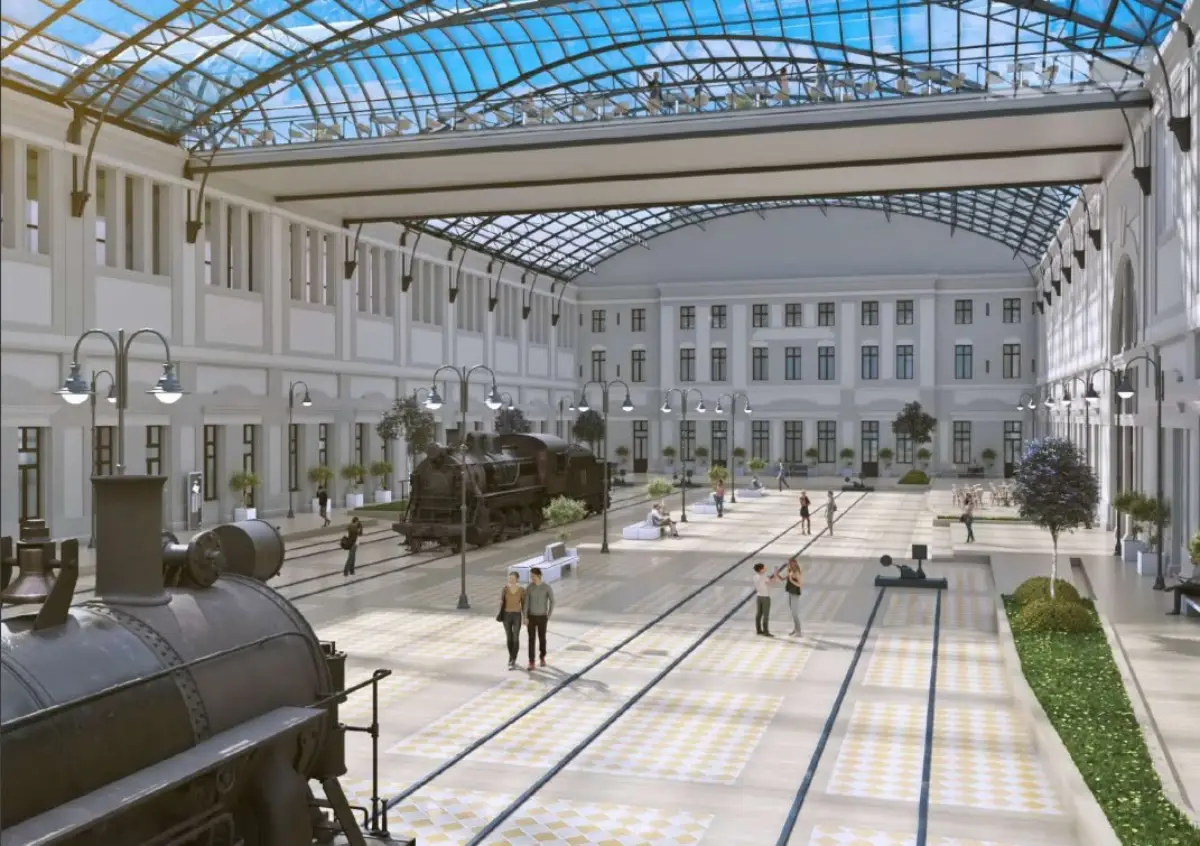
Of the total €24.5 million investment, €17.5 million comes from Italy’s Complementary National Plan, with the remainder covered by Gruppo FS (€5 million), Ales (€1.5 million) and the Autonomous Region of Friuli Venezia Giulia (€0.5 million). Key structural work includes the reconstruction of the original large steel and glass roof that was demolished in 1942.
The station forecourt will be fitted with four tracks, one of which will be electrified to allow the arrival of luxury and historic trains. Cantamessa has specifically mentioned the possibility of the Orient Express pulling in under the restored vault, alongside historic Italian locomotives including the ETR252 Arlecchino, the ALe601 and the legendary ETR302 Settebello, currently under restoration. Outside, visitors will be able to see further historic rolling stock including Austro-Hungarian and German locomotives and carriages received as post-war reparations.
The museum collection will focus on railway history across Friuli Venezia Giulia and the former Italian territories of Istria and Dalmatia, covering a period when the city and its surrounding territory passed through Austrian, Italian and Yugoslav control. When complete, Trieste Campo Marzio will become Italy’s second major national railway museum after the Museo Nazionale Ferroviario di Pietrarsa in Campania, which is housed in a former 19th-century industrial factory complex and attracts more than 260,000 visitors a year. Unlike Pietrarsa, the Trieste project will be the first to operate as a live station environment, with active rail connections running alongside the heritage displays.
A panoramic restaurant will open above the tracks, offering coffee with sea views in a city internationally recognised for its coffee culture. A railway-themed bookshop, model railway items and spaces for cultural activities will also form part of the complex.
The 60-room hotel will occupy the station’s remaining wing, with rooms inspired by sleeping cars and classic carriages. The wider redevelopment also aims to improve rail connections from Trieste Campo Marzio to Slovenia via the historic Monrupino crossing, strengthen the line to Villa Opicina via Rozzol, and enhance access to the Miramare stop, which provides direct access to the famous castle.