A new industry study shows that Gen Z and Millennials are now the biggest spenders at airports, outpacing older generations by as much as four times and transforming the economics of travel retail across Asia-Pacific and the Middle East.
Released on 05 February 2026 by Airports Council International Asia-Pacific & Middle East (ACI APAC & MID) in partnership with Auran and Steer, the research draws on data from 36 major airports in 21 countries and finds that 56% of airports now report commercial revenues above 2019 levels, even as buying behaviour — not passenger volume — becomes the key driver of growth.
The rise of duty-free as airports’ financial backbone
The study reveals a structural shift in how airports generate income. While passenger traffic has surpassed 2019 levels, travel retail growth now depends on passenger mix, behaviour, and preferences rather than sheer footfall.
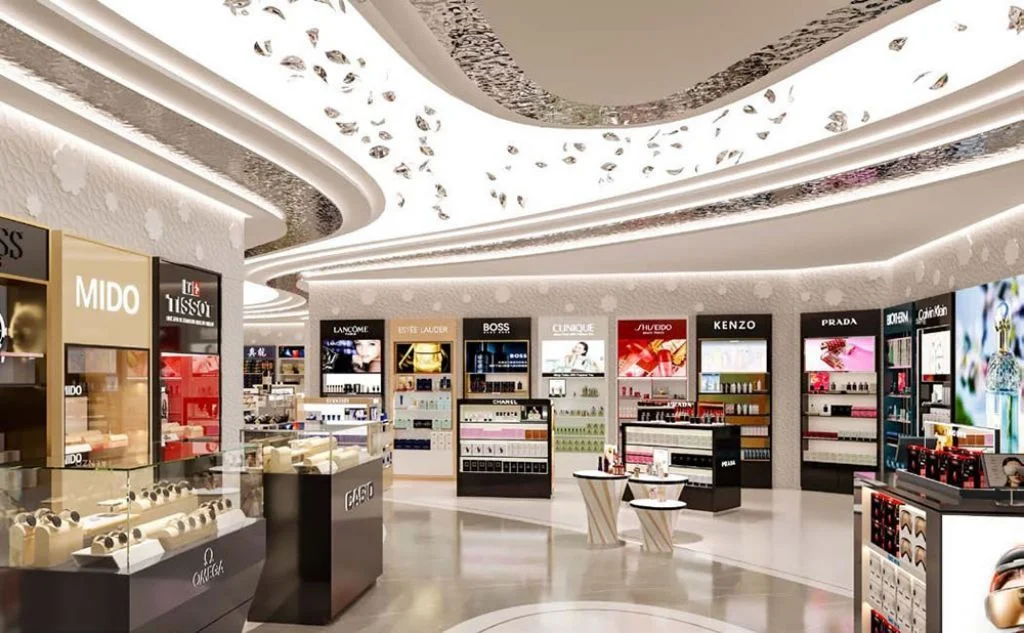
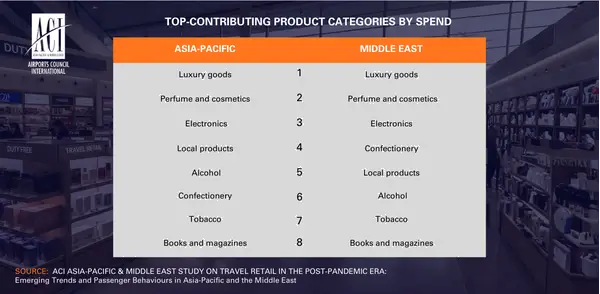
Perfume and cosmetics have emerged as the strongest-performing retail category since 2019, with luxury goods and electronics close behind. Across Asia-Pacific and the Middle East, these top three categories generate the highest net margins for airports, reinforcing terminals as trusted destinations for premium, duty-free and gifting purchases.
In the Middle East, duty-free is described as central to airport economics, with duty-free sales shares consistently high across the region: Saudi Arabia (31%), the UAE (36%), Qatar (38%), Bahrain (34%) and Oman (31%). The revenue dependence is even higher, reaching around 60% in Saudi Arabia and Qatar, and over 50% across the UAE, Bahrain and Oman.
“The traditional assumption that commercial performance scales automatically with passenger volumes is no longer reliable. What this study highlights is a structural change: as passenger behaviour becomes more segmented, revenue outcomes depend increasingly on who travels, not simply how many travel. This shift matters because airports operate with high fixed costs and long investment horizons. When financial growth is not volume driven, optimising the commercial performance becomes a matter of financial resilience. In that context, non-aeronautical revenues, and travel retail and duty free play a significant role in airport business models. Airports that align their commercial strategies with evolving passenger behaviour are better equipped to manage revenue volatility, sustain investment capacity, and remain competitive over the long term,” said Stefano Baronci, Director General of ACI Asia-Pacific & Middle East.
Regional performance data underlines how behaviour is shifting. In Asia-Pacific, a modest 2% rise in domestic traffic in 2025 (January to October) translated into a strong 13% increase in passenger spend (sales per passenger) compared with 2019, with luxury goods (+9%) and local products (+7%) leading the gains. In the Middle East, electronics spend climbed 14% as passengers leveraged tax advantages and sought out airport-exclusive collections that are unavailable in malls.
Gen Z’s shopping habits are changing what airports sell
The standout finding is how sharply younger travellers have overtaken older generations as the primary spenders at airports when indexed against Boomers. Gen Z and Millennials spend 3.5 times higher than Gen X and Boomers, and Gen Z travellers are 4 times more likely than Boomers to buy electronics. They are also 2.5 times more likely than Boomers to buy luxury products, while Boomers remain 1.4 times more likely than Gen Z to buy confectionary products.
These differences are not just about taste, but about how travel retail works. The study argues that older generations remain more price-sensitive and category-conservative, while Millennials and Gen Z are driving spending on luxury goods and perfumes and cosmetics. They also show a strong preference for local, culturally relevant products, shifting demand toward destination-linked purchases backed by storytelling and authenticity.
The report also identifies which nationalities are currently spending the most in airport retail. The strongest spenders originate from China, India, the United Arab Emirates, and the Kingdom of Saudi Arabia, reflecting the traveller segments, trip purposes and purchasing behaviours these markets generate. China leads recovery in both domestic and overseas spend, with luxury spend running at 2x the Asia-Pacific average. India is seeing massive growth in international and duty-free spend driven by brand aspiration and tax advantage, while outbound travellers from the UAE and Saudi Arabia are described as top spenders characterised by high disposable income and a strong gifting culture.
Even with rising digital use — especially among younger travellers — most purchases still happen in-store and in the moment. Around 70% of buying decisions are impulse-led, with digital engagement mainly supporting the journey and currently driving only 2% of additional sales.
What pushes travellers to buy is also more practical than many airport retailers might like. Product choice (39%) and pricing and promotions (29%) together account for nearly 70% of purchase motivation, while experience alone influences just 20% of purchase decisions. Ease of access, time efficiency and frictionless processes rank higher than environment or ambience, suggesting that convenience continues to win even as airports invest in glossy retail spaces.
Sustainability is another area where expectations and strategy do not yet align. While 65% of Gen Z travellers are willing to pay more for sustainable products, only 20% of airports currently see sustainability as a core factor shaping retail decisions, leaving a clear gap between passenger demand and airport retail planning.
For airports, the study’s message is blunt: growth is no longer guaranteed by swelling passenger numbers alone. With younger travellers and specific high-spending markets now shaping what sells — from perfumes and luxury goods to electronics and locally rooted products — airports that match their retail mix to passenger behaviour may be better positioned to protect non-aeronautical revenues and build resilience in the post-pandemic era.