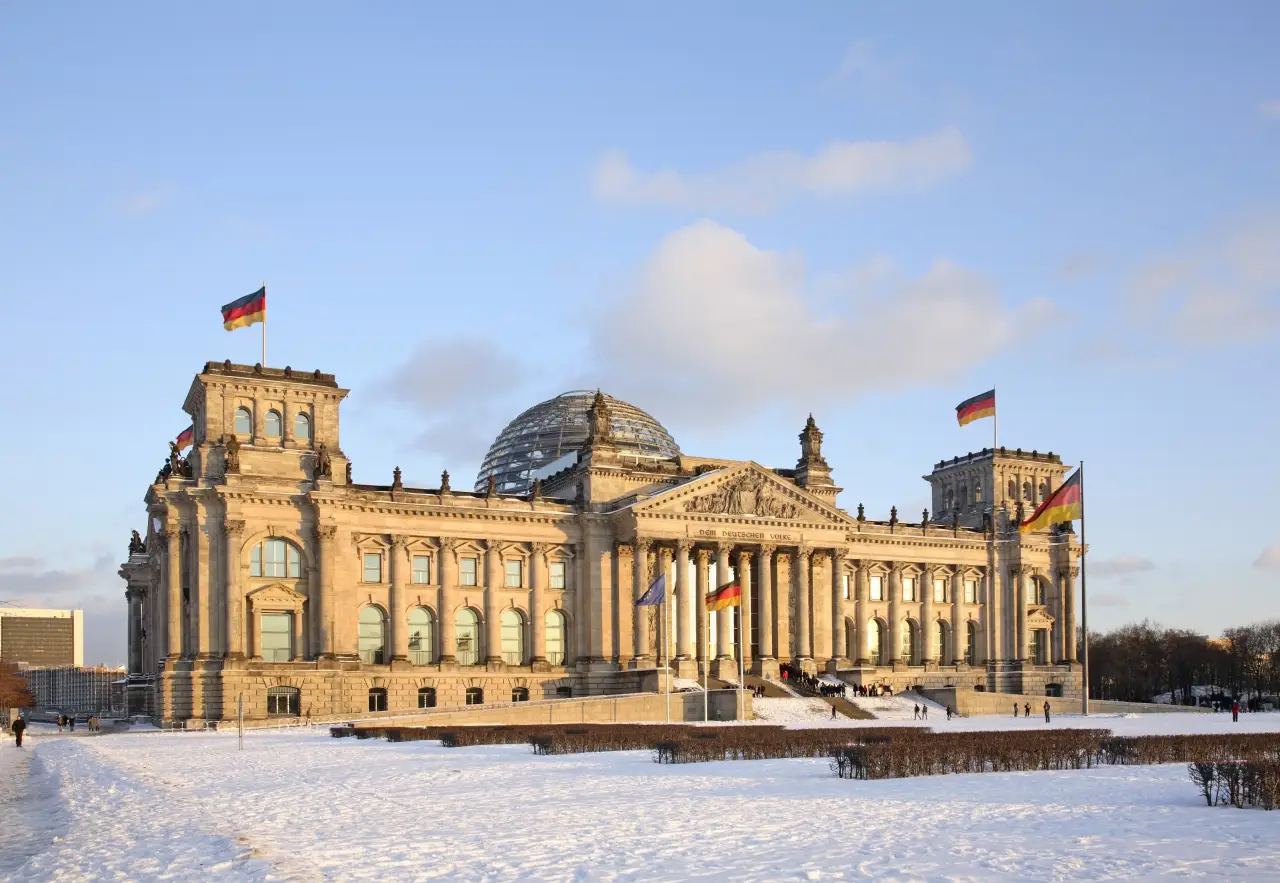
Storm Elli is sweeping across Germany with heavy snow, freezing rain and gale-force winds, prompting the German Weather Service to warn residents not to leave their homes as conditions deteriorate from Thursday afternoon.
Schools have already announced closures, fatal accidents have been reported, and forecasters expect up to 25 centimeters of fresh snow in parts of the north and northeast, with dangerous snowdrifts forming within minutes under strong winds.
A high-risk transition zone from Bremen through Hanover to Berlin faces freezing rain and extreme icy conditions, while gusts of up to 130 kilometers per hour are possible in exposed areas such as the Black Forest.
By Saturday, forecasters expect snow to blanket the entire country, with another wave delivering up to 25 centimeters from North Rhine-Westphalia through Baden-Württemberg to Bavaria, before temperatures plunge sharply overnight.
Meteorologists warn that parts of Saxony could wake to minus 20 degrees Celsius on Sunday, with widespread sub-zero readings elsewhere, making road salt ineffective and increasing the risk of highways grinding to a standstill for hours. Weather models also point to sharp swings next week, with a brief rebound toward 13 degrees Celsius before another plunge back into double-digit sub-zero temperatures.
Travel disruption and safety warnings
For travellers, the immediate concern is mobility and safety rather than sightseeing. Heavy snow in the north and northeast is already piling up into deep drifts, while western and southwestern regions are seeing snow quickly turn to heavy rain, creating slippery surfaces and localized flooding risks. In the central corridor, freezing rain threatens to coat roads, pavements and rail infrastructure in ice, increasing the likelihood of delays, closures and accidents.
Weather expert Dominik Jung explained the storm’s rapid arrival and scale. “It will start around 5 p.m. in the far west,” said Dominik Jung, Certified Meteorologist and Climate Expert. He added that the system would push eastward across the entire north and northeast, with “Up to 25 centimeters of fresh snow are possible,” before warning that drifting snow could worsen conditions far more quickly than many people expect.
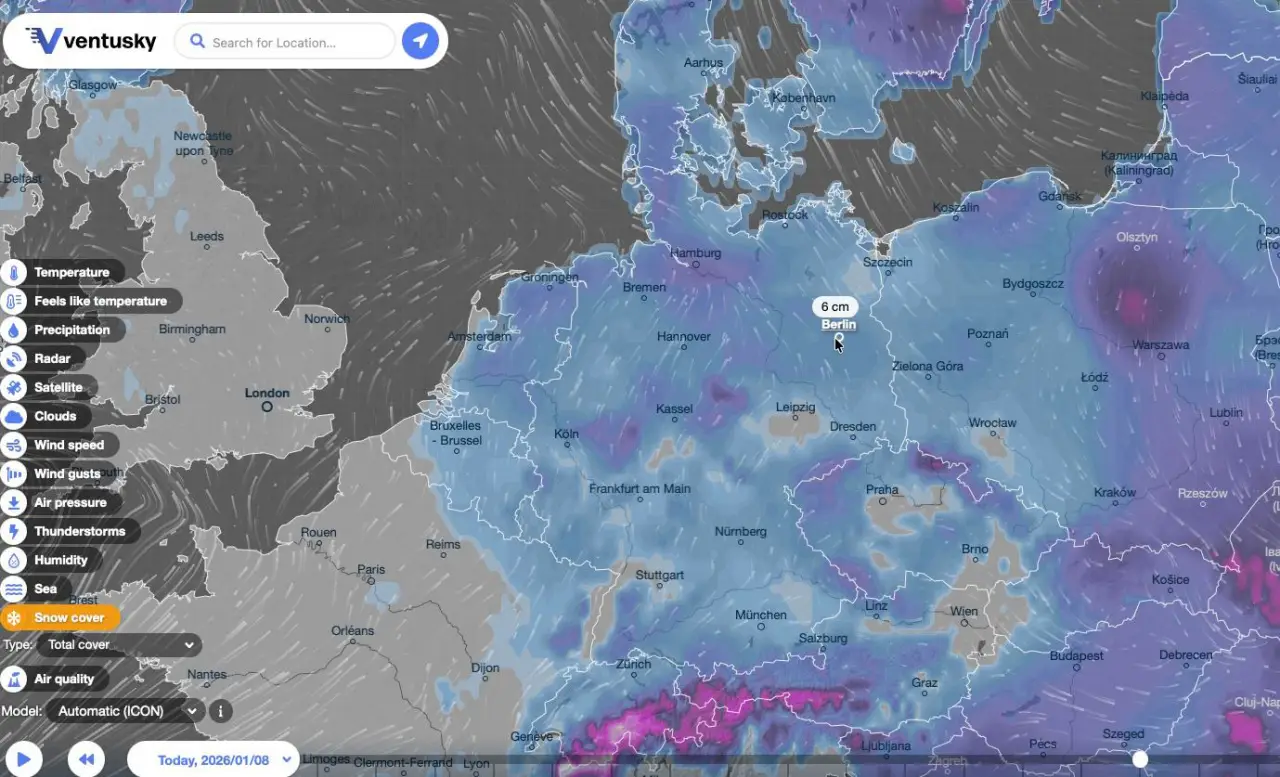
The transition zone is particularly dangerous because multiple hazards collide at once. “It will be dangerous in this transition zone,” said Jung, referring to the stretch from Bremen through Hanover to Berlin where freezing rain is forecast. In these areas, even short journeys on foot can become hazardous, while buses, regional trains and long-distance services may face operational limits if ice builds on tracks and overhead lines.
Further north, Lower Saxony and Hamburg are expected to bear the brunt of the storm’s complexity. “Lower Saxony will experience the most problems, according to all models. Difficult conditions are also expected in Hamburg,” said Dr. Karsten Brandt, Founder and Managing Director, Donnerwetter.de. He warned that snow, low temperatures and freezing rain are converging in the same areas, raising the likelihood of prolonged disruption.
Authorities are urging drivers to avoid unnecessary travel, especially overnight and in rural areas where snow clearance can take longer. Snowdrifts can bring traffic on highways to a complete halt, and in deep cold, mechanical failures and reduced visibility compound the risk. Pedestrians are also advised to stay away from forests, where wind and snow load can cause branches or entire trees to fall without warning.
What travellers should expect next
Once Storm Elli passes, the cold intensifies. In Berlin, temperatures are expected to fall sharply after sunset, with nighttime readings dropping well below minus 10 degrees Celsius. Across the country, early Sunday forecasts point to minus 12 degrees in Mecklenburg-Vorpommern, minus 17 degrees in parts of Lower Saxony and Thuringia, and as low as minus 20 degrees in Saxony, creating icy conditions that linger even after snowfall eases.
These temperatures limit the effectiveness of road treatments and slow down recovery efforts. “The large amounts of snow will freeze starting Saturday. Below minus ten degrees Celsius, even road salt will no longer be effective,” said Dr. Brandt. That means travellers should expect longer clearance times, possible standstills on major routes and continued caution around stations, platforms and parking areas.
Despite the deep freeze, the longer-term outlook remains volatile rather than stable. Models suggest a rapid warm-up next week, potentially reaching 13 degrees Celsius before another sharp drop into double-digit sub-zero temperatures a week later. This kind of fluctuation can further stress infrastructure and complicate travel planning, particularly for visitors unfamiliar with Germany’s winter extremes.
For those already in the country or due to arrive soon, flexibility is essential. Monitoring local transport updates, allowing extra journey time, and avoiding non-essential travel during peak storm hours can reduce risk. As Jung cautioned, “When severe weather warnings are issued, life-threatening conditions can always occur,” concluded Jung — a reminder that, for now, safety outweighs sightseeing as Europe experiences a sharp winter wake-up call.
Photo Credit: Shevchenko Andrey / Shutterstock.com