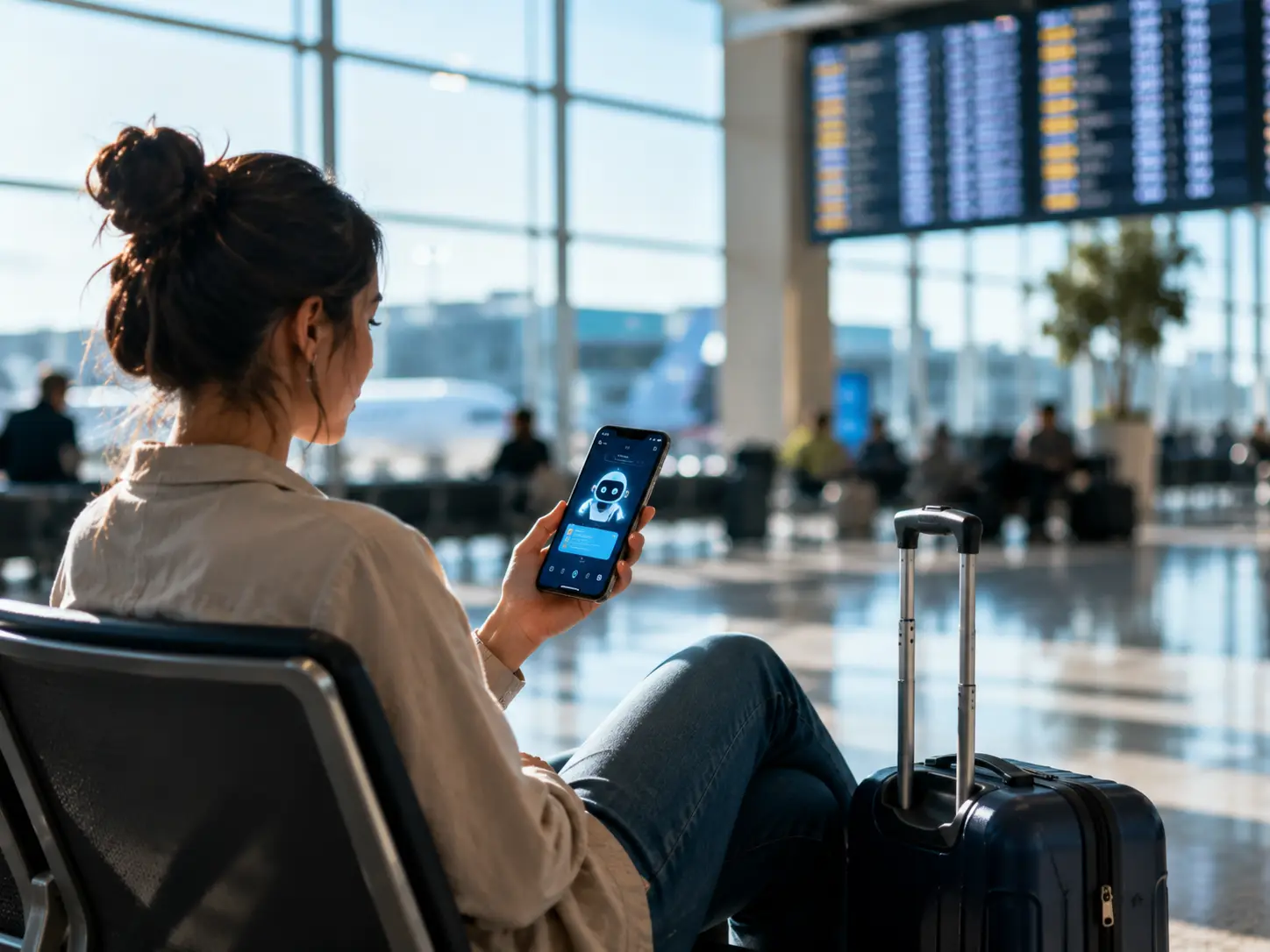
The travel industry is undergoing a major digital transformation as travelers increasingly expect smartphones, mobile services and artificial intelligence to support every stage of the journey.
Flights, hotels and sightseeing remain central to travel, but the modern journey now also includes booking apps, digital wallets, mobile entertainment, AI assistants, streaming services and gaming platforms used before, during and after a trip.
Rather than replacing travel, these digital services are becoming an extension of it. Airlines, airports, hotels, destinations and integrated resorts are responding by creating more connected experiences that combine physical travel with digital convenience.
The Rise of the Connected Traveler
Travelers increasingly want greater control over their journeys before they even leave home. The International Air Transport Association’s 2024 Global Passenger Survey found that passengers continue to prioritize faster and more convenient travel through digital identity, biometrics and mobile services.
SITA’s 2024 Passenger IT Insights report reached a similar conclusion, describing smartphones as the passenger’s “remote control for the journey.” Three out of four travelers said they would be comfortable storing their passport securely on their phone through a Digital Travel Credential, while nearly two-thirds identified shorter waiting times as the improvement they wanted most.
These findings highlight an important shift. Modern travelers no longer judge their journeys only by the destination. They increasingly evaluate the quality of every digital interaction along the way, from booking a ticket to boarding an aircraft or checking into a hotel.
Artificial Intelligence Is Becoming a Travel Companion
Artificial intelligence is now accelerating this transformation across the travel sector.
Many travelers already use AI-powered assistants to compare flights, build itineraries, translate conversations, recommend restaurants and answer destination questions before departure. During a trip, AI can help manage flight disruptions, suggest alternative transport, personalize hotel recommendations and provide real-time travel updates.
Travel companies are also adopting these capabilities. Airlines are introducing AI-powered customer support, airports are using artificial intelligence to improve passenger flow, and hotels are testing AI concierges that can answer guest questions around the clock.
Together, these technologies are creating more personalized and responsive travel experiences. As AI continues to evolve, it is becoming another layer of convenience that complements traditional hospitality rather than replacing it.
Digital Entertainment Has Become Part of the Journey
Entertainment habits are evolving alongside travel technology.
Travelers routinely spend time on their smartphones while waiting at airports, riding trains, relaxing in hotel rooms or recovering after sightseeing. Streaming services, podcasts, digital books, social media and mobile gaming have become common parts of these quieter moments.
Sensor Tower’s 2025 mobile gaming report illustrates the scale of this trend. Mobile gaming returned to growth in 2024, with in-app purchase revenue increasing by 4%, time spent rising 7.9% and total sessions growing by 12% year on year.
These figures suggest that mobile entertainment has become deeply embedded in everyday life. Rather than interrupting travel, these digital activities increasingly accompany travelers throughout their journeys.
Airports and Hotels Are Becoming Digital Experience Hubs
The digital transformation extends well beyond entertainment.
Many airports now encourage passengers to complete check-in, baggage tracking, boarding and retail purchases through mobile apps. Digital wayfinding, biometric gates and personalized notifications can help reduce stress while improving operational efficiency.
Hotels are also investing in connected guest experiences. Mobile room keys, app-based check-in, smart room controls, digital concierge services and in-room streaming platforms are becoming more common across international hotel brands.
For hospitality providers, digital convenience has become a competitive advantage rather than an optional extra.
Integrated Resorts Demonstrate the Blended Experience
Integrated resorts offer one of the clearest examples of how travel, entertainment and technology are converging.
In Las Vegas, commercial casino resorts on the Strip generated US$8.62 billion in gaming revenue during 2024 while welcoming about 41.7 million visitors, according to data from the American Gaming Association citing the Las Vegas Convention and Visitors Authority.
Singapore’s Marina Bay Sands also shows how diversified these destinations have become. The resort generated US$5.59 billion in net revenue during 2025, including US$1.38 billion from hotel rooms, food and beverage, retail, shopping mall and convention business.
These figures demonstrate that successful destinations increasingly attract visitors by combining accommodation, dining, retail, entertainment, events and digital services into one integrated experience.
New Opportunities for Travel Businesses
The growing overlap between travel and digital lifestyles is creating new commercial opportunities.
Airlines can enhance loyalty programmes through personalized digital services and onboard entertainment. Airports can improve passenger satisfaction by making waiting times more productive through mobile applications and real-time information.
Hotels can strengthen guest engagement through AI-powered concierge services, digital room controls and personalized offers. Destinations can extend the visitor experience before and after a trip through mobile apps, digital guides and loyalty programmes that encourage repeat visits.
For travel brands, technology is becoming a tool for building stronger customer relationships rather than simply improving operational efficiency.
Balancing Innovation With Human Experience
Despite rapid technological progress, digital convenience cannot replace the qualities that make travel memorable.
People still travel for authentic experiences, local culture, personal interaction and a sense of discovery. A smartphone cannot replicate the atmosphere of a vibrant city, the excitement of a live performance or the hospitality offered by local communities.
The industry must also address challenges including cybersecurity, data privacy, digital fatigue and ensuring that technology enhances rather than overwhelms the travel experience.
The Future of Connected Travel
The broader trend is not simply about mobile gaming or digital entertainment. It reflects the growing convergence of travel, artificial intelligence and connected lifestyles.
As AI becomes more sophisticated and mobile technology continues to evolve, travelers will increasingly expect every stage of their journey to be seamless, personalized and accessible from the palm of their hand.
The most successful airlines, airports, hotels and destinations will be those that combine memorable real-world experiences with intelligent digital services.
Travel will always be about discovering new places. Increasingly, however, it will also be about how effortlessly technology supports that discovery, making journeys smoother, more personalized and more enjoyable from beginning to end.