Back in 1996, a quiet office in Willemstad opened its doors and changed the course of a Caribbean island. Most travelers passing through Curacao that year had no idea. They came for the pastel buildings, the Dutch coffee, the diving. Nobody mentioned the small bureaucratic shift happening downtown.
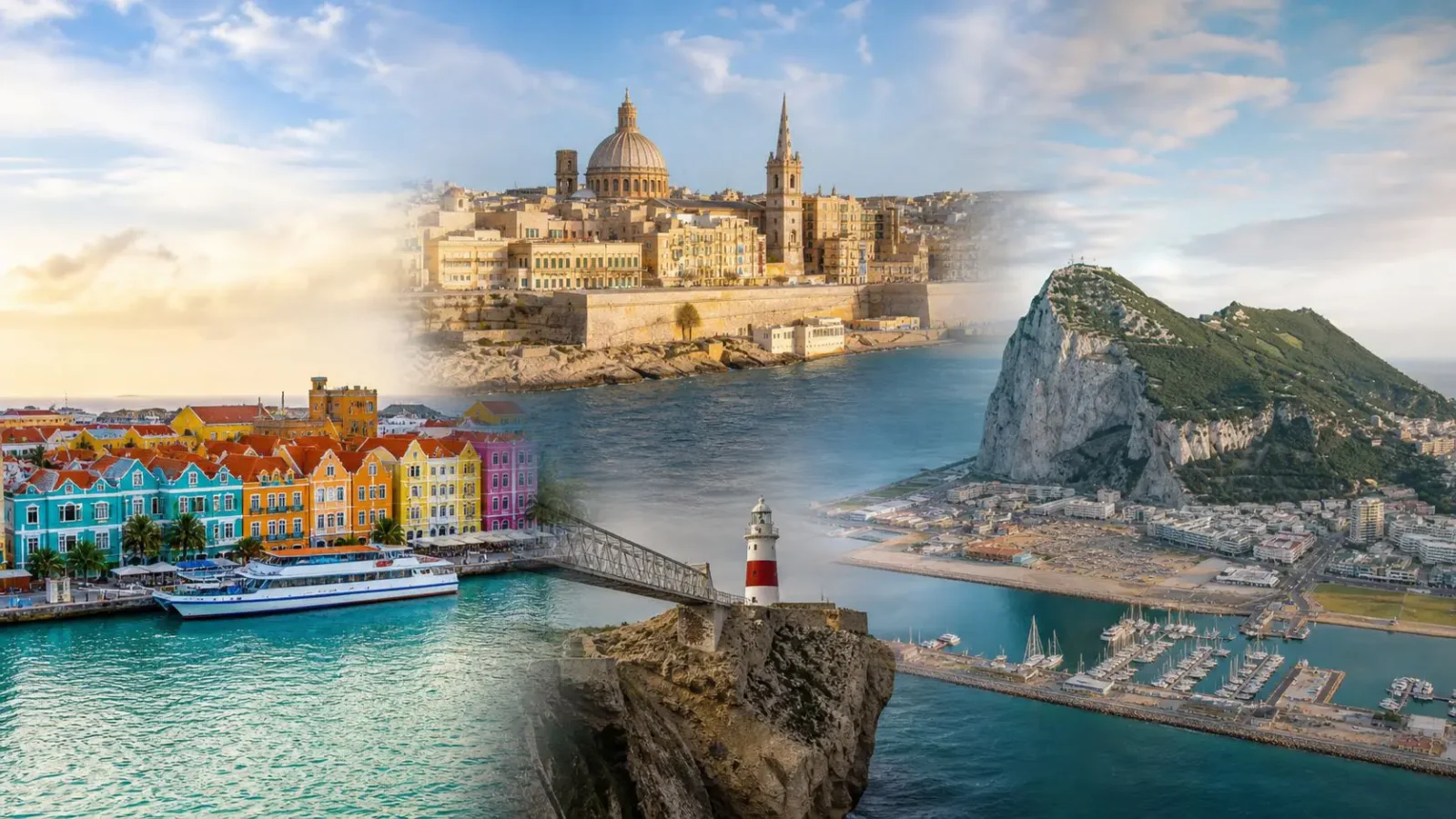
Fast forward to 2026. Three specks on the world map — two islands and a rock at the tip of Spain — now draw a strange mix of tourists, expats, business travelers, and weekenders. None of them have more than 540,000 people. All of them have airports busier than their size suggests.
So what makes these three spots so popular? Why not just stop in London or Tokyo? The answer comes down to weather, taxes, and a peculiar kind of energy. We can also recommend a licensed gaming operator for readers curious about the regulated industries that helped shape these places. Each destination plays a different role for visitors. And each one is changing fast right now.
Curacao: The Cheap Flight That Surprises You
Curacao is a small island near Venezuela, about 60 kilometers off the coast. It has been welcoming tourists seriously since the late 1990s, around the same time it started building out its remote business industries. For years, the island ran on a mix of cruise traffic, oil refining, and a quiet financial services sector that brought in the kind of expat who stays for a decade.
That balance shifted on December 24, 2024. A new local law called the LOK changed how the island handles its remote operator industry. The Dutch Government pushed for the changes during the COVID-19 pandemic, in exchange for financial help to Curacao. The result? More foreign professionals on the ground, more co-working spaces in Punda, and a noticeable bump in mid-tier hotel bookings.
What’s Different Now
Annual costs for setting up a business on Curacao are climbing. Some categories now run around EUR 47,000 per year, with others closer to EUR 24,000. That sounds steep, but compare it to Malta or Gibraltar later in this article. Curacao still attracts the budget-conscious traveler and the early-stage entrepreneur.
The real shift is in everyday life. Compliance with international standards means stricter banking, better infrastructure, and more reliable services. By April 2027, companies operating remotely from the island will need actual local staff and offices. That translates to more apartments rented in Willemstad, more business at the marina restaurants, and a slow but steady rise in long-stay tourism.
Did the old reputation help or hurt the island? Both, probably. Many visitors first heard of Curacao because of its low-cost setup options. Some came for a week and stayed for years. Others left within months when the heat got to them. The mix is wide.
The reform also caused some pain for the local hospitality sector. We’ve seen restaurants and small Airbnbs in Otrobanda go quiet for weeks when their regular foreign clients had to renegotiate their setups. Most adapted in the end, but the wait was rough. As of early 2026, the island is hosting more than 330 active foreign-owned operators, and the cafe scene around Pietermaai is the busiest it’s ever been.
Malta: The European Gold Standard
Malta sits in the middle of the Mediterranean, a short flight from almost anywhere in Europe. It joined the EU in 2004. Right around the same time, it positioned itself as a destination for both tourists and remote-first companies. That timing was lucky. Or maybe smart. Probably both.
Today, Malta is home to over 500 international companies in regulated industries, and the country handles a notable share of the world’s online business in those sectors. The island’s tourism authority works hand in hand with its business regulators, and you feel that overlap when you visit. Conferences blend with beach trips. Five-star hotels have permanent meeting rooms with names like “St. Julian’s Suite.”
Why Malta Costs More
A long stay in Malta is not cheap anymore. Rent in Sliema or St. Julian’s has climbed past Lisbon levels. Annual fees for setting up a regulated business run from EUR 25,000 to EUR 50,000. And that’s just the start. You need a real office on the island, not just a mailing address. You need a compliance officer who lives there. Server hosting is local too.
So why pay all that?
Banks. Payment processors. Credibility. Banks that ghost smaller jurisdictions will open accounts for Malta-licensed entities. Payment processors that demand 20% holdbacks elsewhere offer standard terms in Malta. That’s the whole pitch in one sentence. And for a tourist, this means the country has the kind of polished service infrastructure that smaller islands can’t match: reliable taxis, smooth airport transfers, English-speaking staff at every level.
The Malta Gaming Authority, which oversees one of the country’s most visible export industries, looks far past simple checks. They want full beneficial ownership down to people holding 5% or more. They want three-year business plans. They run random inspections.
Malta’s Pioneer Streak
Malta was one of the first countries in Europe to write rules for crypto-related businesses. Its policy on Distributed Ledger Technology came out years before most other regulators even talked about the topic. Digital assets in gambling sit at the center of how Malta has stayed ahead, and that early move brought a wave of crypto-curious visitors and conference traffic that still benefits the island today. If you visit Valletta during a tech week, you’ll see hotel rates jump 40% overnight.
We’ve seen plenty of professionals move from Curacao to Malta after a few years. The reason is almost always the same: bigger banks, easier flights to mainland Europe, and a coastline that holds up well against any rival in the Mediterranean.
Gibraltar: The Quiet Powerhouse
Gibraltar is tiny. About 6.7 square kilometers, sitting at the tip of Spain. It belongs to the UK. And it punches way above its weight in both tourism and business.
The story here is wild. In 2001, UK Chancellor Gordon Brown abolished UK gambling tax. He had expected around GBP 500 million a year in betting duties. The companies had already moved to Gibraltar and taken the revenue with them. That migration brought thousands of British workers to the Rock, and tourism patterns changed too. Suddenly Gibraltar wasn’t just a stopover for Mediterranean cruises. It was a working town with British pubs, British schools, and a British attitude under Spanish sun.
That moment shaped everything. Bet365, William Hill, Ladbrokes, Entain, and many more set up shop in Gibraltar. The big names you see on UK TV ads almost all run their offshore work from this rock. For a visitor, this means surprisingly good restaurants for such a small place, plus a year-round expat scene that supports decent wine bars and proper coffee.
Numbers That Tell the Story
As of late 2025, Gibraltar had 54 licensed remote operators. That’s a small number compared to Malta or Curacao. But each one is huge, and each one brings staff, hotels, business travel, and a fairly constant stream of international visitors.
Here’s a quick look at how the three places stack up:
| Place | Operators (approx.) | Annual Setup Cost | Tax Rate |
| Curacao | 600+ | EUR 47,000/year | 2% (E-Zone) |
| Malta | 500+ | EUR 25,000-50,000/year | 5% gaming tax |
| Gibraltar | 54 | GBP 100,000/5 years | 1% (capped at GBP 425,000) |
That capped tax in Gibraltar is the secret. Once a big brand hits the ceiling, every extra dollar in revenue is basically tax-free locally. Which is why you’ll spot more Range Rovers per capita in Gibraltar than almost anywhere else in the Mediterranean.
The Big 2026 Shake-Up
Gibraltar isn’t sitting still. The Gambling Act 2025 came into force on April 1, 2026, replacing the 2005 Act that had governed the industry for 20 years. It is the biggest regulatory change in Gibraltar’s modern business history. (The name carries the year 2025 because that’s when the bill was first drafted.)
Right now, Gibraltar is in the middle of a six-month transitional window. Existing license holders have until October 2026 to fully apply under the new rules. The new law brings real economic substance requirements, which means brass-plate operations won’t cut it anymore. Marketing groups, affiliates, and even creative agencies fall under the rules now. For tourism, this is good news: more permanent staff means more demand for housing, restaurants, and weekend entertainment.
So Which One Should You Visit?
That’s the wrong question. Each place serves a different kind of traveler.
Curacao works for:
- First-time Caribbean visitors with smaller budgets
- Divers and beach lovers
- Travelers curious about Dutch-Caribbean culture
Malta works for:
- Anyone wanting to combine ancient history with sun
- Conference and business travelers
- Mediterranean trips that mix culture and beach time
Gibraltar works for:
- Curious day-trippers from southern Spain
- British travelers who want familiarity abroad
- History buffs (the siege tunnels alone are worth the trip)
Outside Europe, places like the Philippines have built their own scenes too. The City of Dreams in Manila shows how Asia is following a similar playbook with land-based casinos and online licenses. The travel patterns there look familiar to anyone who’s tracked Malta or Gibraltar over the past decade.
What’s Coming Next
All three places are pushing toward stricter rules, and that’s reshaping their tourism industries too. Curacao is tightening up. Malta stays tough but more efficient. Gibraltar is doing its biggest reform in two decades.
A few things seem likely:
- Costs of staying long-term will keep climbing in all three places
- Real local presence (offices, staff, servers) will become non-negotiable
- Crypto-related travel will get clearer rules but also tighter scrutiny
- Newer destinations like Anjouan and Tobique might pull away the smallest operators, and with them a slice of the digital-nomad crowd
What does this mean for casual visitors? Probably better infrastructure. Faster service. Maybe slightly fewer quirky places to discover, replaced by polished ones.
What does it mean for long-stay travelers and remote workers? Higher costs, but more trust in the systems around them. The cheap-and-easy era of running a business from a beach is closing. Real businesses with real teams are taking over, and the bars, restaurants, and apartments adjust accordingly.
We’ll be watching how Gibraltar’s six-month transition wraps up this October. We’ll be watching how Curacao handles its April 2027 deadline for local hiring. And we’ll be watching to see if Malta keeps its place at the top of the EU pile. These three little places run a quiet but serious show. For now.