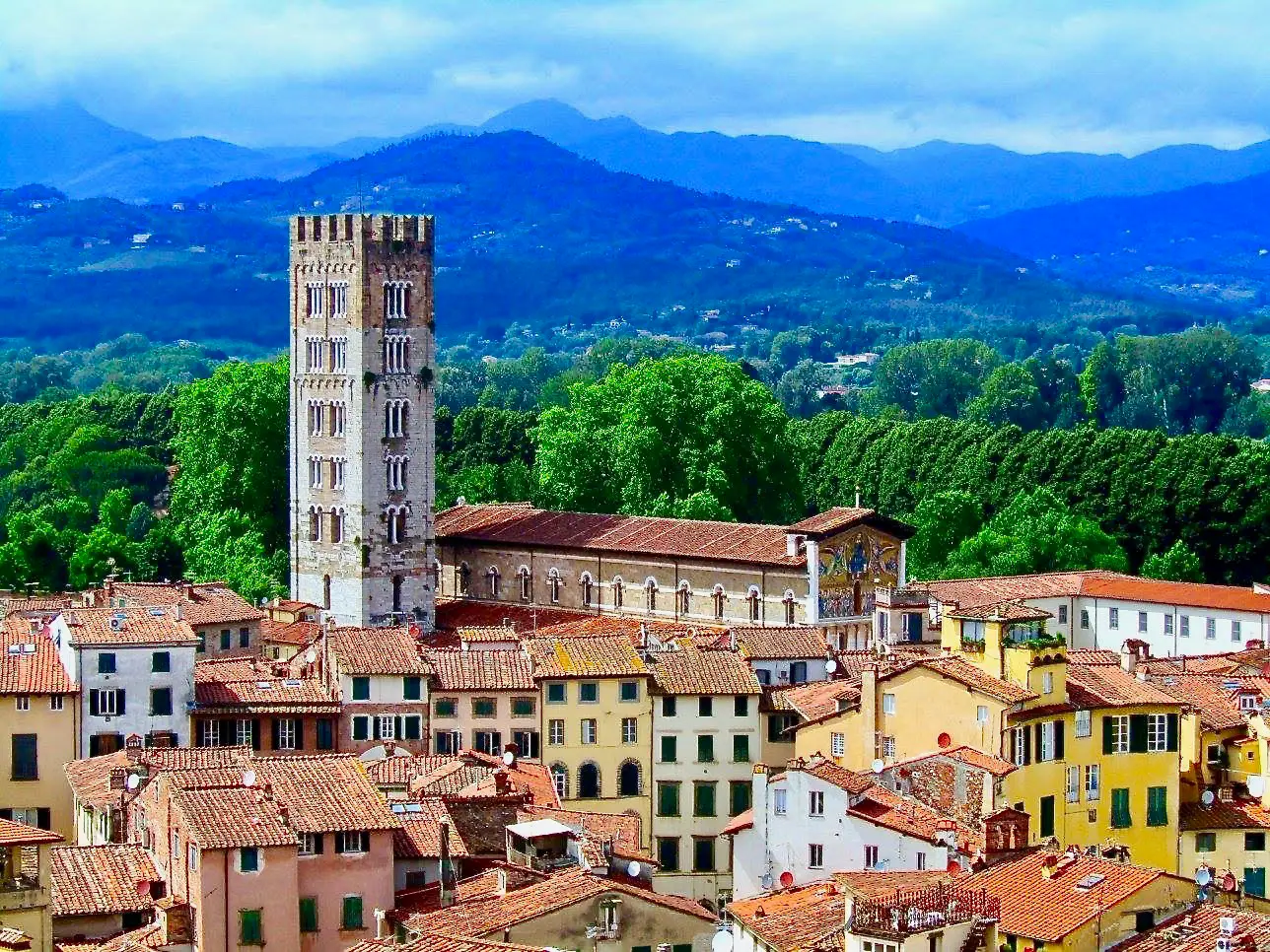
As Florence continues to grapple with record visitor numbers and the growing political pushback against overtourism across Italy’s most photographed cities, a quieter Tuscan destination is rapidly rising in the international travel agenda. Lucca, the walled city in northwestern Tuscany once considered a secondary stop on the regional tourism map, is now being repositioned by tour operators, luxury travel agencies, and accommodation providers as the most compelling alternative to its overburdened neighbor.
The shift mirrors a broader European trend that has accelerated throughout 2025 and into 2026, with travelers increasingly avoiding flagship destinations in favor of nearby cities that promise authenticity without the crowds. Following Barcelona’s renewed cruise tax measures, Venice’s ongoing entry fee program, and growing tensions in Florence over short-term rental regulations, Lucca’s positioning has become unusually strategic.
A Walled City Designed for the Post-Overtourism Traveler
Industry analysts now point to Lucca as a textbook case of how a mid-sized historic city can absorb high-value travel demand without triggering the social friction. Inquiries for Lucca villas to rent have grown sharply among American, British, and Northern European travelers seeking the Tuscan experience without the queues at the Uffizi or the price tags of central Florence hotels.
The numbers behind the shift tell a consistent story. Florence reported a 12% year-on-year increase in tourist arrivals during the 2025 summer season, prompting local authorities to expand restrictions on new short-term rental licenses in the historic center. In contrast, Lucca’s tourism office has registered stronger growth in longer-stay bookings, with average length of stay extending beyond five nights — a key indicator monitored by destination marketing organizations.
Why Tour Operators Are Repositioning Their Tuscany Programs
Luxury tour operators across the U.S. and U.K. markets have begun restructuring their Tuscany itineraries to anchor multi-night stays in Lucca, with day trips to Florence, Pisa, and Siena treated as excursions rather than core lodging stops. The logic is operational as much as experiential:
- Lucca is located 25 minutes from Pisa International Airport, making it more accessible than most rural Tuscan destinations
- The city sits within 80 minutes of Florence by train, allowing flexible cultural day trips without exposure to peak crowds
- The surrounding countryside hosts a dense concentration of restored historic estates with the amenities expected by international luxury clientele
- Lucca’s hospitality sector has remained free of the licensing freezes and regulatory uncertainty currently affecting Florence and Venice
Several major DMCs working the Italian market have confirmed they are advising their North American partners to shift recommended itineraries in this direction, citing client satisfaction scores that consistently outperform Florence-anchored programs.
Private Estates Replace Hotels in the High-End Segment
Perhaps the most significant transformation is happening at the top of Lucca’s accommodation market. The city and its surrounding countryside have become one of Italy’s most active markets for private villa rentals, with estates ranging from restored 16th-century country houses to fully serviced contemporary villas equipped with infinity pools, tennis courts, private chefs, and concierge teams. International buyers and renters are responding to a value proposition that few hotels in Florence can match.
What’s Driving the Villa Segment
Industry observers identify several converging factors behind the segment’s strong performance:
- Multi-generational American family travel, which has become one of the fastest-growing categories in post-pandemic tourism
- Destination wedding bookings, increasingly directed toward private estates rather than hotel banquet halls
- Corporate retreats and small-group incentive travel, where exclusivity and privacy outweigh brand recognition
- The continued rise of “slow travel” itineraries, which favor a single base over multi-stop circuits
For trade buyers, the takeaway is straightforward. The villa product in and around Lucca has reached a level of maturity, service depth, and infrastructure that allows it to compete directly with five-star urban hotels on price-per-experience metrics.
Lucca’s Cultural Calendar Reinforces Its Year-Round Appeal
Beyond accommodation trends, Lucca’s positioning is reinforced by a dense cultural calendar that increasingly attracts higher-spending visitors throughout the shoulder seasons. The Lucca Summer Festival continues to draw major international music acts. The Puccini Festival in nearby Torre del Lago has expanded its programming. Lucca Comics & Games, held annually in October and November, remains one of Europe’s largest cultural events of its kind and has become a significant driver of off-season hotel and villa bookings.
For destination managers, this calendar diversification is critical. It moves Lucca away from the seasonal compression that hampers many Tuscan destinations and provides a more stable, year-round demand curve.
What Trade Partners Should Watch in 2026
Looking ahead, several developments are likely to consolidate Lucca’s positioning as the preferred Tuscan alternative for international high-value travelers:
- Continued tightening of short-term rental regulations in Florence, expected to push more bookings outward into the wider Tuscan countryside
- Expanded direct flight connectivity into Pisa from secondary U.S. markets, currently under discussion among regional aviation authorities
- Further investment in the restoration of historic estates around Lucca, several of which are scheduled to enter the rental market during 2026
- Growing interest from luxury travel networks and consortia, with several major U.S.-based agencies adding Lucca-based properties to their preferred partner programs this year
The broader implication for the Italian tourism industry is significant. Lucca’s success suggests that the redistribution of demand toward secondary cities is not a temporary correction but a structural shift, one that operators, accommodation providers, and tourism boards will need to plan around well beyond 2026. For now, the city behind the Renaissance walls is no longer Tuscany’s hidden alternative. It is becoming the region’s defining destination of the moment.