From cultural capitals to economic dynamos, our 2026 World’s Best Cities Report identifies the Top 100 urban powerhouses across more than 270 cities worldwide.
Backed by Resonance Consultancy’s fusion of data-driven analysis and real-life perception in its latest report on the 2026 World’s Best Cities, this ranking highlights the most globally influential and economically ascendant cities to live, visit and invest in.
The 2026 World’s Best Cities Report ranking is based on an assessment of more than 270 global cities with populations above one million, using sources such as Google, Instagram and TikTok. Resonance evaluates 46 metrics across 30 categories that measure education, culture, connectivity, nightlife, safety and other key indicators that are organised under three pillars: Livability, Lovability and Prosperity. Performance data was gathered from more than 21,000 respondents in 31 countries.
The top 10 cities for 2026 are:
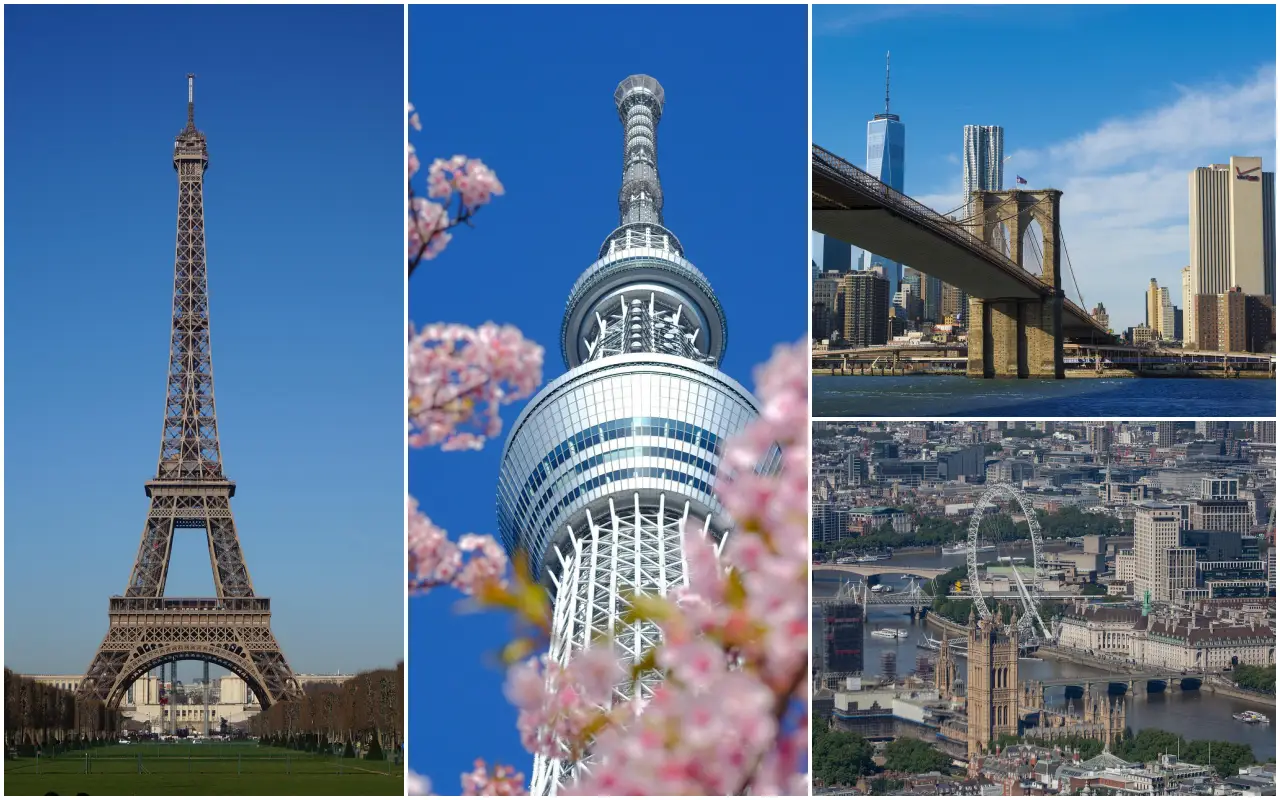
- London
- New York
- Paris
- Tokyo
- Madrid
- Singapore
- Rome
- Dubai
- Berlin
- Barcelona
- London
London has retained the No. 1 position for the 11th year in a row. The city’s robust recovery post-pandemic is reflected in its strong international traveller spending, which in 2024 reached almost $22 billion (up from $17.4 billion in 2023) and outpaced destinations like New York and Dubai.
Benefiting from a softer pound, London has remained a compelling bucket-list destination. Heathrow Airport recorded record-breaking arrivals, exceeding pre-pandemic passenger levels, and Gatwick Airport’s recent $320-million upgrade underscores London’s infrastructural excellence.
The city’s luxury hospitality renaissance is reflected by the opening of several properties. The Peninsula London, which opened in September 2023 near Hyde Park Corner, offers sweeping views of Hyde Park, and amenities such as a world- class spa and Rolls-Royce fleet. Raffles London at The OWO, the meticulously restored Old War Office, has revitalised the previously quiet Whitehall area into a chic nightlife hotspot.
- New York
New York, described as the “perpetual heartbeat of America,” ranks second overall, topping Google Trends. After welcoming nearly 65 million visitors in 2024, New York is tracking roughly 64 million in 2025, which brought in $70 billion by the city’s accounting – and crucially, it is diversifying beyond Manhattan. Expect a fresh spike in 2026 as MetLife Stadium across the Hudson hosts the FIFA World Cup final and the airports’ new capacity comes online.
The crown jewel is JFK’s New Terminal One, now weather-tight and racing toward a mid-2026 Phase A opening with the first 14 gates; the full build-out to 23 gates and over 300,000 square feet of dining, retail and lounge space will follow by decade’s end.
- Paris
After the Olympic-fuelled 2024 surge, 2025 is anticipated to see 51 million visitors with strengthening spend patterns. The city now hosts 123 Michelin-starred restaurants.
Cultural infrastructure moves with characteristic ambition. The Louvre’s $936-million “New Renaissance” renovation, approved in early 2025, will open in 2031. Next year brings the Musée d’Orsay’s new 13,000-square-foot wing, housing Impressionist narratives in new light. The Bourse de Commerce welcomes major retrospectives while the Giacometti Museum and School will open in the former Gare des Invalides train station in 2028.
Long-neglected airport infrastructure is also getting overdue attention, with the planned 2027 launch of the CDG Express, a high-speed train connecting the airport to central Paris.
- Tokyo
Visitor numbers are smashing records on the back of a weak yen, with Japan welcoming almost 37 million international arrivals in 2024 and seeing monthly highs throughout 2025. The global voraciousness for the capital has it doubling down on access, wayfinding and crowd-friendly public space. The Haneda Airport Access Line is under full construction for a 2031 debut.
Hospitality had its own banner year. Janu Tokyo (Aman’s sister brand) settled into Azabudai Hills in 2024 with 122 rooms and a 43,000‐sq‐ft wellness centre, joining The Tokyo EDITION, Ginza and a swelling roster of luxury flags. Azabudai’s retail gravity also jumped with the opening of a major Hermès flagship, while teamLab Borderless returned in 2024 as the district’s magnetic cultural anchor.
- Madrid
The hospitality sector is booming with optimism, while new properties in Lavapiés and Chamberí opened mid-year to meet demand from visitors drawn by Madrid’s cultural magnetism. Global hotel operators have staked claims across the city’s southern districts, anticipating the passenger flows that will follow Barajas airport’s $2.8-billion expansion, a project that begins interim improvements in 2026.
The Bosque Metropolitano, Madrid’s audacious attempt to create Europe’s largest metropolitan forest, continues its steady advance around the city’s perimeter, promising a 47-mile ring of trees that will reshape both climate and character. The forest will feature over 450,000 new trees and other vegetation, part of a broader urban rewilding that includes the recently completed Santander Park. Madrid’s electric bus fleet, now among Europe’s most extensive, hums quietly through streets where plane trees offer precious shade.
- Singapore
Singapore may top the Standard of Living subcategory, but the city is pursuing so much more. Orchard Road continues its reinvention with the opening of mixed-use luxury towers and retail concepts blending sustainability and experience-first shopping. Singapore’s skyline remains works in progress. Marina Bay Sands has advanced construction on its fourth hotel tower and 15,000-seat arena, both now targeting a 2031 debut. The National Museum of Singapore will also be unveiling two newly renovated wings in 2026.
Bolstered by $5 billion in Google cloud infrastructure investment and parallel expansions by Microsoft and Apple, Singapore’s once-stealthy tech might be having its moment. Add in the Changi East Industrial Zone and airport expansion, and the city is poised to improve its already impressive Top 10 rankings in several categories.
- Rome
In 2025, the Jubilee placed the city on centre stage, drawing an estimated 35 million pilgrims in addition to the millions of annual tourists already thronging its piazzas (over 22 million in 2024). And the intrigue at the Vatican and the new Pope kept Rome in even more global conversations.
Streets have been resurfaced, monuments scrubbed and new cultural showcases unveiled. Largo di Torre Argentina (where Julius Caesar met his end) has reopened as a public archaeological park, while Caravaggio’s masterpieces are featured in blockbuster exhibitions across the city, with the Trevi Fountain being restored.
The hospitality surge that began in 2023 has only accelerated. Bulgari Roma, Six Senses Rome and the upcoming Thompson Rome anchor a luxury wave joined by Nobu, Corinthia and Rosewood, while the recently debuted Romeo Roma (featuring a glass-bottom spa pool suspended over ruins!) redefines what it means to “sleep in history.”
- Dubai
Passenger traffic set fresh records at DXB in 2024 (92.3 million, making it the world’s busiest airport) and kept surging in 2025, estimated to end at 96 million, even as the city readies the generational hand-off to a far larger Al Maktoum International (DWC). The $35-billion DWC build-out features over 400 aircraft stands and an eventual 260-million-passenger design capacity.
On the ground, Dubai’s 2040 Urban Master Plan is shifting from policy to pilot. Al Barsha 2 is the first “20-minute city” model district, adding more than 10 miles of shaded walking and cycling paths and local mobility hubs to put daily needs within a short stroll or ride. And the 18-mile, 14-station Metro Blue Line should open by late 2029, knitting dense eastern communities and Dubai Creek into the driverless network.
The skyline keeps grabbing headlines. One Za’abeel’s skybridge, The Link, is the world’s longest cantilever and anchors a two-tower mixed-use node where One&Only One Za’abeel opened with a chef-driven dining roster and SIRO next door, adding a performance-wellness hotel concept.
- Berlin
Berlin’s hospitality and arts machine is humming (the city’s techno culture is now UNESCO‑recognised). At the Kulturforum, the long‑awaited Museum of the 20th Century (rebranded “berlin modern”) is on track for a 2027 opening.
The biggest urban‑economic canvas is the 1,200‑plus‑acre Berlin TXL redevelopment at the former Tegel Airport. Two districts anchor it: Urban Tech Republic (almost 500 acres of research/industry infrastructure) and the Schumacher Quartier (more than 5,000 homes for 10,000+ residents).
Berlin’s unique, democratised urban playground is also expanding with projects like the Reethaus – a 40‑foot‑tall, hand‑thatched “modern temple” – part of an evolving campus that’s putting serious design back on the Spree riverfront.
- Barcelona
Barcelona is finally approaching the end of its most audacious project: Antoni Gaudí’s Sagrada Família, scheduled for completion in 2026.
The city’s 12 million annual visitors (double its metro population) have returned with post-pandemic vigour, testing some of Europe’s most stringent vacation rental regulations.
The urban laboratory continues regardless. The $56-million Consell de Cent corridor, which transformed 21 blocks of major thoroughfare into verdant pedestrian promenade, exemplifies Barcelona’s commitment to reclaiming public space through its expanding “superblocks” network.