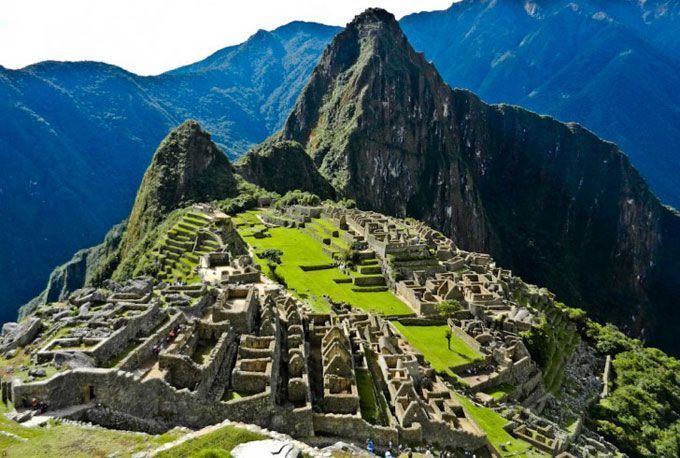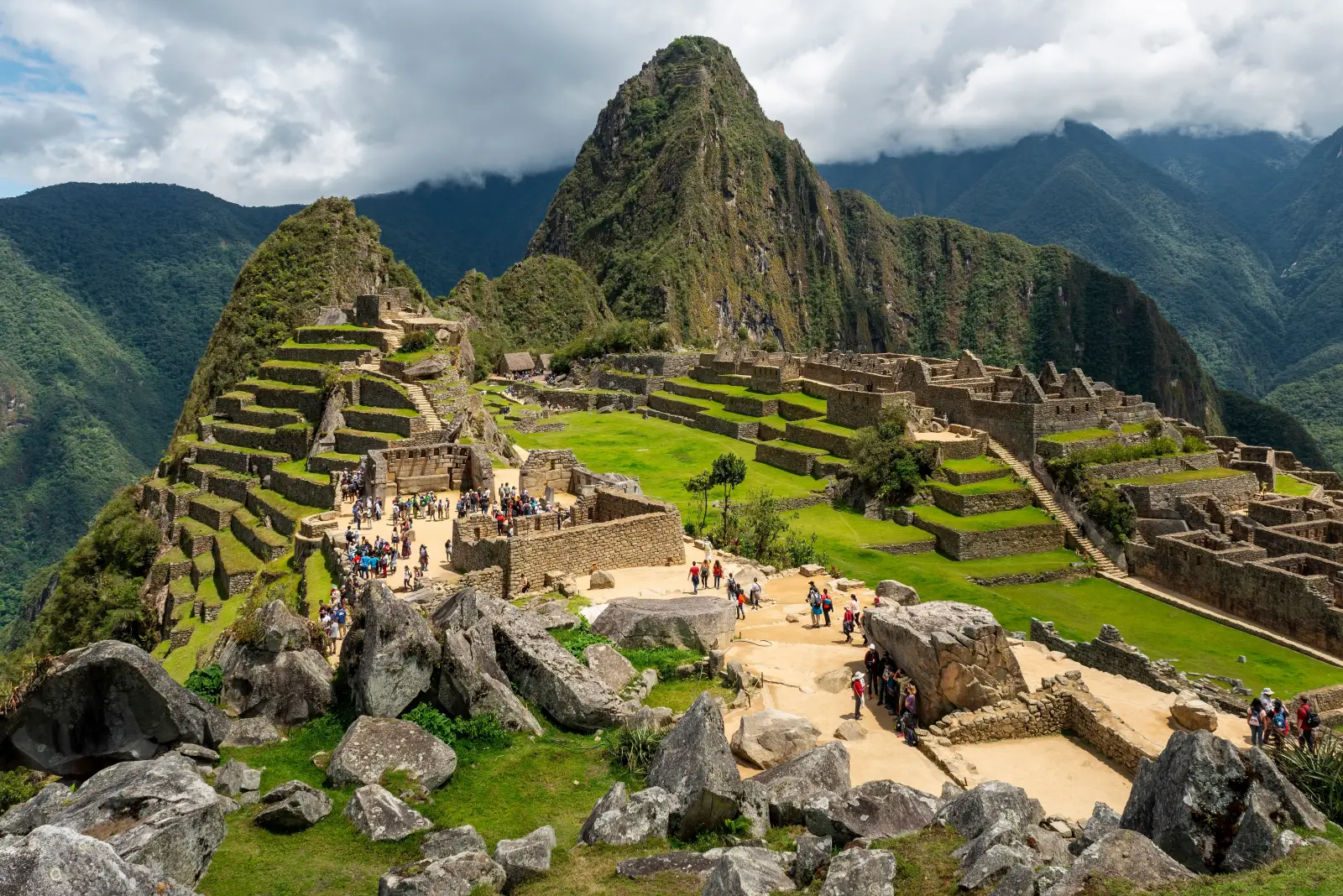
Tourists are evacuated from the Machu Picchu area as renewed tensions over bus access disrupt travel to Peru’s most visited archaeological site.
The latest incident stems from an ongoing dispute between transport companies in Aguas Calientes, where conflicts over licensing and control of the lucrative bus service have escalated into protests and blockades. Authorities intervene to remove obstacles from the railway line and organise emergency train departures after around 1,400 visitors become stranded.
The dispute centres on Consettur, the firm that has operated the shuttle buses to Machu Picchu for 30 years, and San Antonio de Torontoy, a rival company awarded rights that Consettur is now challenging in court. As legal and community pressures intensify, transport access becomes unstable for the thousands of tourists who rely on trains and buses to reach the mountain-top site. Local officials and tourism leaders warn that without a resolution, the travel experience around Machu Picchu will remain vulnerable to further disruptions.
Licensing conflict disrupts access routes
Consettur manages the 20-minute bus link from Aguas Calientes to the ruins, transporting roughly 4,500 passengers per day. With no road access from the Sacred Valley, visitors must take a 2–3.5 hour train to reach the town before boarding a bus or attempting a steep two-hour climb. When protestors blocked the railway with rocks in September to oppose Consettur’s replacement, the access shutdown forced authorities to use special trains to evacuate tourists.
The conflict began when Consettur’s long-standing licence expired and San Antonio de Torontoy was selected to take over operations. Community members argue the bidding process lacked transparency, while others claim Consettur has held an unfair monopoly over a profitable route. A round-trip bus ticket costs $24 for foreign visitors and $15 for Peruvians, creating strong financial incentives for local groups seeking participation in the service. However, legal appeals have delayed the new company from starting, leaving Consettur to continue running buses despite the licence expiration.
Consettur rejects accusations of monopolistic control. Cristian Alberto Caballero Chacón, Head of Operations for Consettur, says, “This is not a monopoly. Consettur is made up of 12 different companies with various partners.” He adds that the owners “are people who come from around here,” noting that the local district council holds a 38% stake. San Antonio de Torontoy, by contrast, is based in the wider Urubamba Province, fuelling local debates about who should benefit from tourism spending.
Rising frustration over prices and uneven benefits
While the bus fight dominates public attention, tourists face broader concerns about the high cost of reaching Machu Picchu. Train tickets to Aguas Calientes are among the most expensive in Latin America, starting at $140 for a round trip and rising to $2,000 for luxury classes. Australian visitor Annalise Jaksic says, “We thought it was one train… and we thought if there was any more transport to get up there it would all be included, because you pay so much money for the train.”
Her travel companion, Todd Carland, adds that buying entry tickets “was a nightmare for us,” describing difficulties purchasing access without relying on costly guided packages. Admission to the site costs $57 for adults, adding to the cumulative price of the journey.
Local authorities share concerns over revenue distribution. Elvis La Torre, Mayor of Aguas Calientes, says only 10% of ticket revenue remains in the region, while the Ministry of Culture handles most funds for national heritage management. He argues that more income must be directed toward the town to expand tourism services and improve living conditions for residents.
In the streets of Aguas Calientes, vendors echo these frustrations. Dina Huillca, who travels from her village to sell produce, says “more needs to be done for the local communities,” citing the lack of basic services such as running water, proper schools and medical facilities. Their concerns illustrate how the tourism economy, despite its scale, delivers uneven benefits across the population.
Regional tourism officials also call for systemic reform. Carlos González, President of the Chamber of Tourism for the Department of Cusco, says, “We are pushing for an update in the law so that the vice ministry of tourism can take care of all the travel resources in our country.” He argues that Peru needs a unified national framework to remain competitive and proposes redesigning the visitor experience with distinct areas for spiritual groups and younger travelers.
However, he warns that political instability—Peru has cycled through six presidents in six years—complicates long-term planning. González notes that inconsistent leadership has made regulatory progress difficult: “I have lost count of how many ministers, vice ministers and congress people I have spoken to.”
Back in Aguas Calientes, Consettur’s operations chief signals a willingness to coexist with the rival firm. “If they are given the final approval we don’t have a problem with working with them,” said Cristian Alberto Caballero Chacón. “We won’t stop them.” Until legal challenges conclude, however, the transport system remains fragile, and access to Machu Picchu may continue to face sudden interruptions.
Photo Credit: SL-Photography / Shutterstock.com