Passengers in the United States will no longer be required to remove their shoes at airport security checkpoints as part of a major policy shift by the Transportation Security Administration (TSA). The agency officially lifted the mandate at select airports equipped with advanced screening systems in July 2025.
Homeland Security Secretary Kristi Noem described the change as the start of a broader modernization of air travel security. “We’ve entered a new phase of aviation screening,” she said. “This is just the beginning.”
The new shoe policy was made possible by the deployment of advanced CT scanners and artificial intelligence-based detection systems at over 250 U.S. airports. These tools allow TSA officers to detect threats without requiring travelers to remove footwear, a practice that has been in place since 2001.
Following the announcement, Noem indicated that the TSA’s long-standing limit on carry-on liquids may be the next rule to be revised.
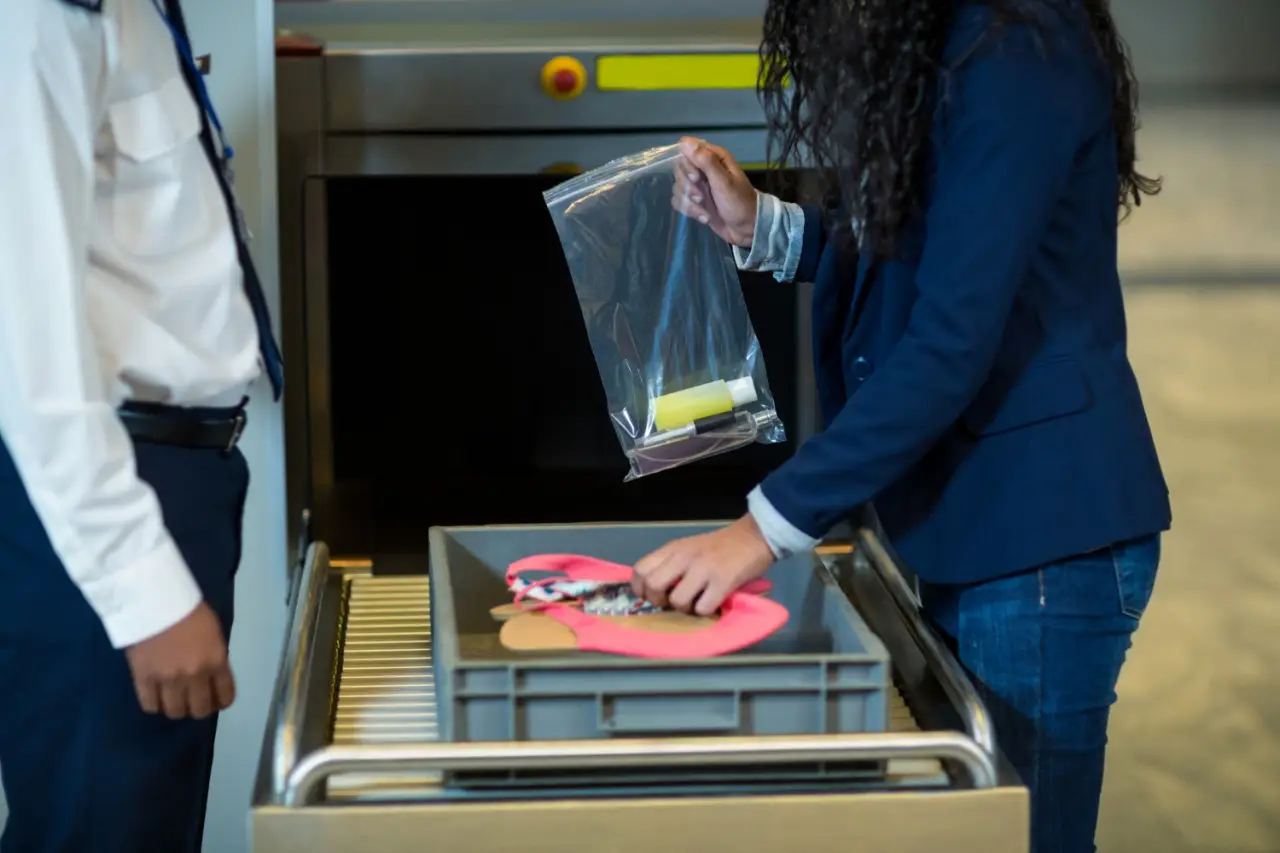
The 3-1-1 rule, which restricts travelers to liquids in containers of 3.4 ounces or less, placed inside a single quart-size plastic bag, was introduced in 2006 following a terror plot involving liquid explosives. However, TSA officials are now reviewing the necessity of its use in light of newer scanning technology.
Noem, speaking at The Hill Nation Summit, said, “The liquids, I’m questioning. So that may be the next big announcement is what size your liquids need to be.”
According to the Associated Press, approximately 255 of the 432 commercial airports in the U.S. now utilize CT scanners that provide 3D imaging of carry-on contents, allowing TSA officers to analyze the materials inside without unpacking.
The TSA confirmed that changes to the liquids rule are under review, but gave no timeline for implementation. The agency emphasized that full removal of the rule would depend on scanner availability and consistent security performance nationwide.
Several international airports have already lifted their liquids ban after installing similar technology. The U.S. could follow a phased approach, allowing liquid limits to be eased at certain airports first.
Experts have urged caution. Jeffrey Price, an aviation security professor at Metropolitan State University of Denver, said uneven deployment of CT scanners could lead to confusion. “If one airport allows large liquids and another does not, passengers are going to be caught in a grey area,” he said.
In addition, a former TSA official noted that clear public messaging will be essential if the rule is revised. “The devil is going to be in the details,” they said.
Currently, the TSA advises travelers to continue following the 3-1-1 liquids rule unless otherwise notified. At some airports using CT scanners, passengers may be allowed to leave liquids and laptops in their bags, but policies are not yet standardized.
In the long term, the TSA is exploring the possibility of walk-through screening systems that allow passengers to pass through security checkpoints without removing electronics, shoes, or liquids at all. Officials believe that as biometric technology and AI continue to advance, a more seamless travel experience is possible.
“Our goal is to provide the highest level of security with the least amount of disruption,” Noem said. “That’s the future of air travel.”