Airlines worldwide have begun implementing stricter rules on smart luggage and portable batteries as part of new international aviation safety regulations that took effect on October 1, 2025.
The updated guidelines, focused on lithium-ion battery use in carry-on and checked luggage, restrict certain types of smart suitcases and other powered travel devices from being carried on flights unless specific conditions are met.
The regulation applies to all lithium-based batteries, including those found in external power banks and smart suitcases equipped with built-in motors or charging functions. Airlines and regulators say the new measures are designed to reduce the risk of fires, explosions, or gas leaks linked to overheating batteries during air travel. The move reflects a growing focus on flight safety and standardization across the global aviation industry.
Smart Luggage Must Have Removable Batteries
Under the new rules, smart suitcases may only be carried in the cabin if their lithium batteries are removable, turned off, and not charged during the flight. Bags that do not meet these requirements will not be allowed on board or in the cargo hold. Airlines have advised passengers to review their carrier’s baggage policy carefully before flying to ensure their luggage complies with the updated restrictions.
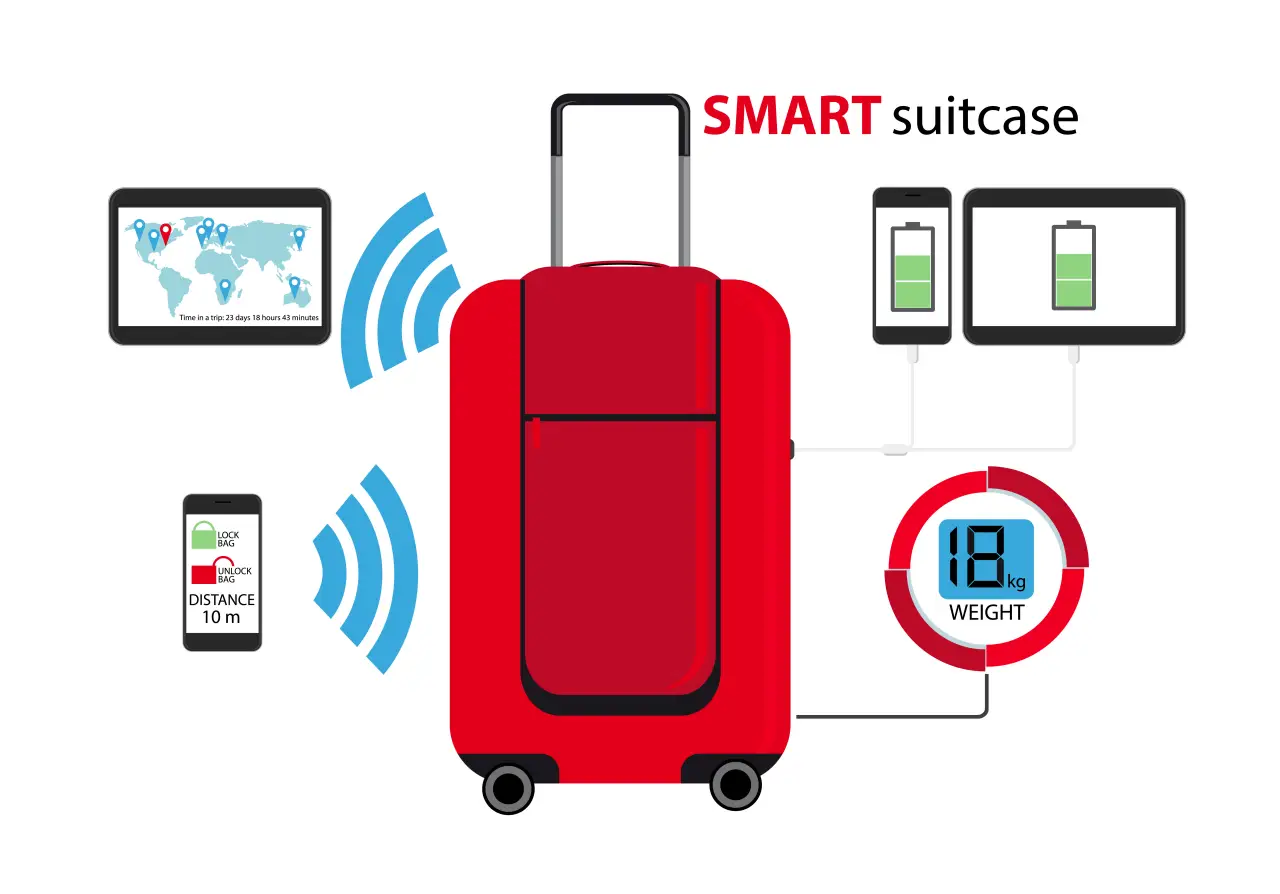
Smart luggage has become increasingly popular among frequent travelers due to its high-tech features, such as GPS tracking, built-in scales, and motorized propulsion. However, these same features rely on rechargeable batteries that can pose safety concerns at high altitudes. The new standards aim to ensure that passengers using such devices can do so safely without compromising in-flight security.
Emirates has been among the first major international airlines to confirm that the new restrictions apply to all its flights. The airline issued a statement outlining its updated baggage policy: “Smart bags are permitted as checked baggage if the battery is removed and carried in the cabin. If the smart bag exceeds the size or weight limits for checked baggage, or if the battery is non-removable, it cannot be transported on an Emirates flight. This restriction excludes smart luggage designed as motorized vehicles for passenger transport.”
Other global carriers are expected to adopt similar policies in the coming months as regulators align their safety frameworks under new International Civil Aviation Organization (ICAO) guidelines. Airlines in North America, Europe, and Asia are gradually updating their baggage rules to match these standards.
Safety Concerns Behind the Restrictions
The stricter regulations are driven by safety concerns surrounding lithium-ion and lithium-polymer batteries, which are common in most modern portable electronics. These batteries contain volatile chemical compounds that, if damaged or improperly stored, can overheat and ignite. Such incidents can be particularly dangerous inside pressurized aircraft cabins, where containment and extinguishing are challenging.
According to aviation safety experts, several incidents in recent years have highlighted the risks associated with battery fires in luggage. Although rare, even a single malfunctioning power source can release flammable gases or cause thermal runaway, leading to fires in confined spaces. The new rules aim to minimize those risks by requiring batteries to be removable and properly stored during flight.
The growing prevalence of battery-powered travel accessories has further motivated regulators to act. Power banks, wireless chargers, and smart backpacks are now common among travelers. While most pose minimal risk when used correctly, airlines must account for the possibility of mechanical damage, overheating, or improper charging during transit. Restricting non-removable batteries helps ensure that cabin crews can respond quickly if overheating occurs.
In addition to tightening safety rules, airlines hope to improve efficiency in airport security screening. Clearer battery restrictions reduce the need for manual inspections or last-minute baggage removals at boarding gates. The new standard also simplifies enforcement by providing uniform criteria across different carriers and regions.
Global Implementation and Passenger Guidance
The new battery policy is expected to apply across most international airlines by the end of 2025. Passengers are advised to check each airline’s website or customer service channels before traveling, as enforcement timelines and procedures may vary depending on jurisdiction. Some low-cost carriers and regional airlines may introduce temporary exemptions while adapting to the new regulations.
Industry analysts note that the transition period will require coordination between airlines, airport authorities, and passengers. Travelers using smart suitcases are encouraged to remove and carry batteries separately, ensuring they remain accessible during security checks. Many smart luggage manufacturers have already begun redesigning their products to include easily detachable power packs in compliance with the updated aviation standards.
The new restrictions also affect external power banks, which must typically not exceed a capacity of 100 watt-hours (Wh) to be allowed in cabin baggage. Devices with larger capacities require airline approval and may not be placed in checked luggage. Passengers carrying multiple batteries are often limited to two spare units per person, depending on the airline’s policy.
While the regulation introduces new limits, it also aims to reassure passengers that enhanced safety protocols are in place. By standardizing battery-related restrictions, airlines seek to reduce confusion for international travelers and prevent potential in-flight emergencies.
Aviation safety authorities emphasize that the initiative is not intended to discourage innovation but to establish safer design standards for emerging technologies. As smart luggage, e-mobility devices, and personal electronics continue to evolve, further updates to international aviation safety codes are likely. Until then, travelers are advised to remain informed and comply with their airline’s baggage guidelines to ensure smooth and secure journeys.
The global implementation of these new rules represents a significant step toward harmonizing safety standards across the airline industry. For passengers, it signals a shift toward more careful scrutiny of travel technology — especially for those relying on smart devices to power their journeys.
Photo Credit: Scharfsinn / Shutterstock.com