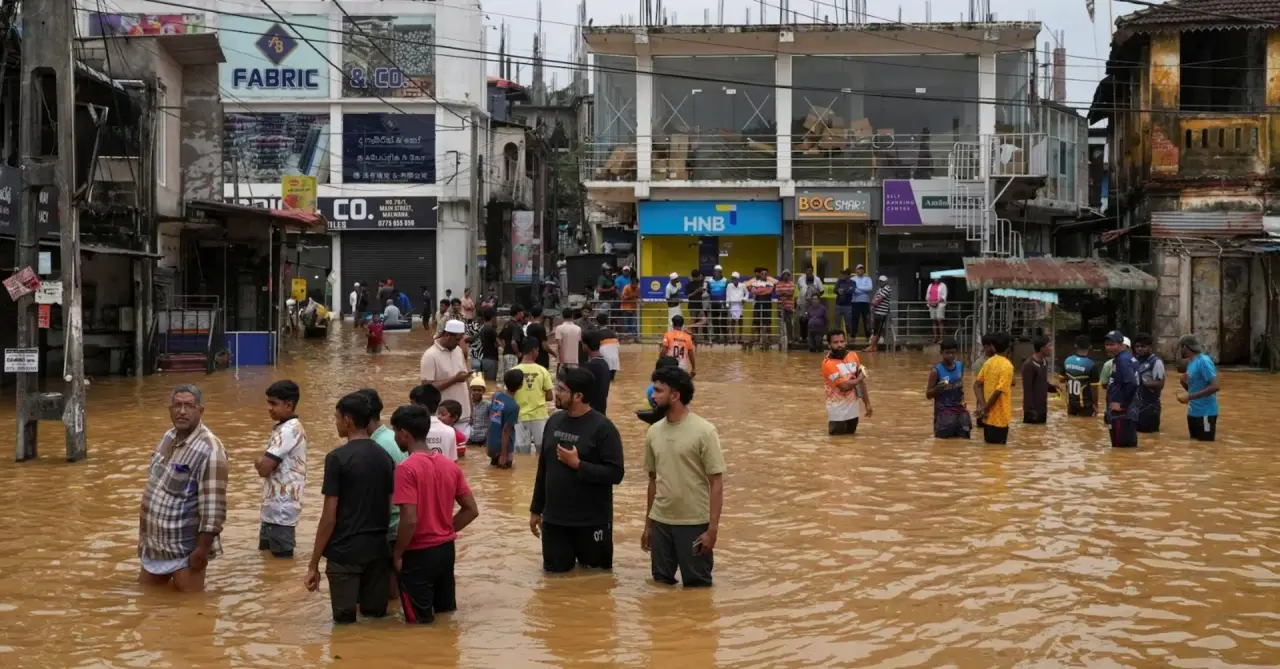
Cyclone Ditwah causes nationwide disruption in Sri Lanka as flooding, landslides, and infrastructure failures halt travel across multiple regions and impede access to major tourist areas. Authorities report at least 410 deaths and 336 people missing as of 2 December, while emergency teams continue rescue operations in areas still cut off by landslides and damaged roads.
The government issues travel warnings and operational advisories as airports, roads, and rail services experience severe interruptions. Tourism officials introduce temporary visa leniency measures for stranded visitors while airlines adjust schedules following the cyclone’s impact on transport networks.
Scale of Damage and Impact on Transport
Cyclone Ditwah brings torrential rain and destructive winds across the island in late November, causing extensive flooding and landslides in urban and rural districts. Reuters reports that “Sri Lanka’s cyclone death toll climbs to 355 with 366 missing” in initial counts, followed by updated official figures of 410 dead and 336 missing after further assessments. Major highways are submerged or blocked, and some communities remain inaccessible as rescue teams work to clear debris.
International and domestic travel operations face widespread disruption. The main international airport experiences flight delays and temporary diversions as weather conditions and logistical challenges affect aircraft handling. According to the Independent, multiple regions remain unsafe due to high water levels, unstable terrain, and ongoing landslide risks that hinder overland travel.
Tourism Sector Response
The cyclone affects key tourist zones, including mountain and coastal regions known for hospitality and ecotourism. Landslides in the central highlands trap residents and foreign visitors. The Guardian reports that families of stranded British tourists describe deteriorating conditions as supplies dwindle in isolated mountain areas. Hotels and tour operators assess property damage, while booking cancellations increase as governments issue or update travel advisories.
Tourism authorities and the immigration department implement emergency measures to assist foreign nationals. Skift states that Sri Lanka eases its visa rules by waiving penalties and offering automatic extensions for visitors unable to exit the country due to transport disruptions. Airlines are encouraged to offer flexible rebooking policies as the government works to stabilize operations.
Humanitarian Conditions and Economic Effects
The humanitarian toll rises as floodwaters destroy homes, agricultural lands, and public infrastructure across multiple provinces. The United Nations and international aid agencies release images showing large-scale displacement and damaged facilities. Relief efforts focus on evacuations, supply distribution, and restoring essential services such as electricity and clean water.
Economic impacts extend beyond immediate disaster response. Tourism, a significant source of foreign revenue, faces reduced arrivals due to safety concerns and operational challenges. Travel and Tour World reports that the storms cause extensive damage to tourism assets and create health risks associated with contaminated floodwaters. Rebuilding efforts are expected to take months, with long-term implications for local communities dependent on visitor spending.
Media outlets note that transportation limitations hinder both relief operations and the resumption of tourism services. Reuters describes families “grappling with trauma and loss” in affected regions as recovery teams navigate blocked or destroyed access routes. Damage assessments continue as national agencies work to restore mobility and reopen affected districts.
Travel advisories issued internationally emphasize monitoring conditions and following official guidance as cleanup and reconstruction efforts progress. While entry into Sri Lanka remains technically possible, authorities warn that conditions vary significantly by region and that many areas remain unstable due to flood and landslide debris.
Emergency services, government departments, and tourism boards continue coordinating recovery operations as the country works to stabilize essential infrastructure, restore transport links, and assess long-term economic effects. The trajectory of Sri Lanka’s tourism recovery will depend on reconstruction speed, safety assurances, and the restoration of key travel corridors.
Photo Credit: DMC Sri Lanka